Draining the fuel tank on a Chevy Silverado becomes necessary during fuel pump replacement, contamination emergencies, or long-term storage preparation. Whether you are dealing with stale fuel from a truck that has been sitting for months or accidentally filled your diesel Duramax with gasoline, knowing how to safely remove fuel from your tank prevents costly engine damage and saves significant repair time. This guide covers proven methods tailored specifically to Chevy Silverado models, from older TBI trucks to modern direct injection systems, so you can complete the job correctly the first time.
Choose the Right Drain Method for Your Silverado

Not all fuel drainage techniques work equally well on every Silverado generation. The best method depends on your truck’s age, engine type, and the reason for draining in the first place. Modern anti-siphon devices, high-pressure fuel systems, and rust-prone frames all influence which approach makes sense for your situation.
Match the Method to Your Goal
Your objective determines the optimal technique:
- Pump replacement? Use relay jump combined with fuel line disconnect.
- Contaminated fuel? Activate the fuel pump quickly and do not start the engine.
- Old fuel removal? Siphon if accessible, or dilute and burn off only if the engine runs smoothly.
- Emergency fuel access? Siphoning is possible but slow and unreliable in crisis situations.
Siphoning typically leaves 1 to 2 gallons behind, while tank dropping removes 100% of the fuel. Consider what level of drainage you actually need before beginning any work.
Compare Speed, Risk, and Effectiveness
| Method | Drain Level | Time Required | Risk to Vehicle |
|---|---|---|---|
| Two-Tube Siphon | 80 to 90% | 30 to 60 min | Low (if no flapper) |
| Bulb Siphon | 80% | 45+ min | Medium (flapper damage) |
| Relay Jump + Hose | 95% | 15 to 30 min | Low |
| Drop Tank | 100% | 2+ hours | High (rust failure risk) |
| Drilling Tank | 100% | 10 min | Critical (leak/fire hazard) |
The relay jump method offers the best balance of speed, completeness, and safety for most Silverado owners.
Use the Two-Tube Siphon Safely
This low-cost, non-electrical method uses air pressure instead of suction to start a siphon, eliminating the dangerous practice of mouth-starting a fuel hose. It works ideally for older Silverados without anti-siphon screens and remains reliable when done correctly.
Insert and Seal Both Tubes
- Cut two lengths of flexible tubing (approximately 1/2 inch inner diameter, 6+ feet long).
- Feed Tube A deep into the filler neck until it touches the bottom of the tank.
- Place the other end into a gas-approved container positioned lower than the tank.
- Insert Tube B only a few inches into the filler neck and keep its tip above fuel level.
- Wrap a tight rag around both tubes where they enter the neck to create an airtight seal.
Ensure the collection container is grounded to prevent static sparks during fuel transfer.
Pressurize to Start Flow
Blow hard into Tube B. The added pressure inside the tank forces fuel up Tube A and into the container. Once fuel begins flowing over the crest, remove the rag. Gravity maintains the siphon until fuel drops below the intake tube.
Pro Tip: Tilt the truck slightly toward the filler side to access residual fuel near the end of the drain.
Avoid Filler Neck Damage
Modern Silverados, especially 2000s and newer models, often have spring-loaded flapper valves that block tube insertion. Forcing a stiff hose can snap the plastic arm, triggering EVAP system faults and fuel vapor leaks.
❌ Never force a tube past resistance. If it hangs up, switch to the relay method instead.
Activate the Fuel Pump via Relay Jump
This is the fastest and most effective way to drain a Chevy Silverado fuel tank, especially when siphoning fails due to anti-theft devices or flapper valves. By bypassing the fuel pump relay, you run the factory pump continuously and empty the tank in minutes.
Locate the Fuel Pump Relay
The relay is typically in the engine bay fuse box near the battery or under the dash. Refer to your owner’s manual or the fuse box diagram lid to identify the correct slot labeled “fuel pump” or “FP.”
🔍 Look for a black, cube-shaped relay identical to others (such as horn or A/C). You can swap it temporarily with a matching relay to confirm you have the right one.
Bridge the Relay Circuit
- Remove the fuel pump relay from its socket.
- Identify the two main power terminals, usually labeled 30 (power) and 87 (load).
- Use a heavy-gauge jumper wire or paperclip to connect these two terminals.
- This sends constant power to the fuel pump, bypassing the ECU and oil pressure switch.
⚠️ Never leave the pump running unattended. Extended dry running can overheat and damage the pump motor.
Connect Drain Hose and Run the Pump
- Disconnect the fuel line at the filter (on the frame rail) or attach a hose to the Schrader valve on the fuel rail.
- Route the hose into a grounded, approved container.
- Reconnect the battery if previously disconnected.
- The pump runs continuously, emptying the tank in 15 to 30 minutes.
Shut off the pump by removing the jumper wire. Cap or reconnect lines immediately afterward.
Disconnect Fuel Lines for Gravity Drain
While gravity alone rarely empties a modern tank fully, combining line disconnection with pump activation maximizes fuel removal. This method gives direct access to the fuel stream and works on most Silverado models.
Find the Fuel Filter Access Point
The fuel filter is mounted along the driver-side frame rail, protected by a plastic cover. It has quick-disconnect fittings for the inlet (from tank) and outlet (to engine).
🛠️ Use a fuel line disconnect tool (plastic or metal) to avoid damaging the retaining clips.
Attach Hose to Outflow Line
After disconnecting the line from the tank side:
- Slip a 5/16 inch or 8mm fuel-resistant hose over the open port.
- Clamp or secure it tightly to prevent spray.
- Route the hose into your collection container, ensuring it sits below tank level.
Residual pressure may cause initial spurting, so wear safety glasses during this step.
Combine With Pump Activation
Gravity drains only a few gallons at most due to internal tank baffles. To empty completely:
- Keep the hose connected.
- Jump the fuel pump relay as described earlier.
- Let the pump push fuel through the disconnected line.
This hybrid method achieves near-total drainage without dropping the tank.
Handle Model-Specific Fuel Systems

Different engine types require different approaches. Applying a TBI-era trick to a modern direct injection engine can lead to serious damage. Know your truck’s fuel system before proceeding.
TBI Systems (1988 to 1995)
Throttle Body Injection trucks have low fuel pressure and return lines, making fuel access easier.
- Best method: Disconnect the line at the throttle body or filter.
- The “run engine until stall” trick works here. Connect a hose to the Schrader valve and idle the engine to burn fuel.
- Siphoning works well because older models lack anti-siphon screens.
✅ Ideal for beginners due to simpler plumbing and lower pressure.
Vortec Engines (Mid-1990s to 2007)
These higher-pressure systems feature a Schrader valve on the fuel rail, which serves as a perfect drainage port.
- Attach a hose directly to the valve using a fuel pressure gauge adapter or snug-fitting tubing.
- Activate the pump via relay jump.
- No need to disconnect lines, and minimal spill risk results.
🔧 Use a rag to depress the valve core while attaching the hose to prevent spraying.
Direct Injection (2015+ Models)
Modern Silverados use ultra-high-pressure fuel systems with no return lines. The “engine run-off” method is not safe because running contaminated or stale fuel can destroy injectors.
- Do not start the engine if fuel quality is questionable.
- Use relay jump combined with Schrader valve drain for safe, controlled removal.
- Siphoning often fails because flapper valves block tube insertion.
❌ Avoid improvised methods on these systems. Repairs are extremely expensive.
Prevent Filler Neck and Flapper Damage
Forcing tools into the fuel filler neck is a common mistake that leads to costly repairs. The flapper valve prevents vapor leaks and theft, but it breaks easily.
Recognize Anti-Siphon Barriers
Modern Silverados use several types of barriers:
- Spring-loaded flappers that close when not fueling
- Internal baffles or screens that block long tubes
- Ball-check valves that seal when tilted
If your hose stops 6 to 8 inches in, you have hit a barrier.
Never Force the Tube
Using a screwdriver to hold the flapper open may work, but only with extreme care. One slip can snap the plastic hinge, requiring a $200+ filler neck replacement.
🚫 Broken flappers cause:
– Check Engine Light (P0440, EVAP fault)
– Fuel odors inside the cabin
– Failed emissions tests
If siphoning fails, switch to the relay method for a safer and more effective outcome.
Drop the Tank Only When Necessary

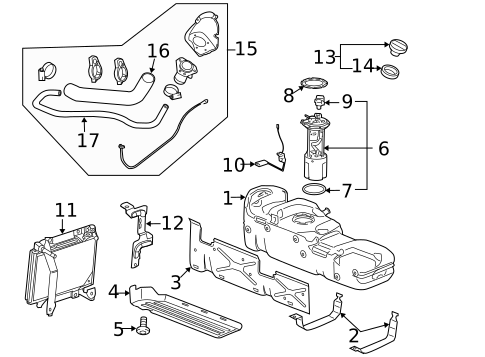
Removing the fuel tank guarantees 100% drainage and allows inspection for rust, debris, or pump issues. However, the process is labor-intensive and risky, especially on older trucks.
Assess Frame and Strap Rust First
Trucks from northern climates often have severely rusted frame crossmembers supporting the front tank strap. There are real cases of tanks falling off on highways because the supporting metal rusted through.
Before jacking up:
- Inspect both tank straps and frame rails with a flashlight.
- Look for holes, thin metal, or crumbling welds.
- Support the tank with a transmission jack or wooden blocks before unbolting.
⚠️ If rust is advanced, cut the straps carefully and lower the tank slowly.
Prepare for Tank Removal
- Drain as much fuel as possible using the relay method first.
- Disconnect the negative battery terminal.
- Lower the exhaust or skid plate if blocking access.
- Disconnect fuel lines, EVAP hoses, and electrical connectors.
- Unbolt or cut retaining straps.
- Lower the tank with a helper or jack.
Inspect the tank interior for rust flakes and clean or replace if needed.
Respond to Fuel Contamination Fast

Putting gasoline in a diesel Silverado or water in any tank requires immediate action. Starting the engine can destroy injectors and cost thousands in repairs.
Gas in a Diesel Engine? Do Not Start
Even 15 gallons of gas in a Duramax diesel can cause catastrophic failure due to reduced lubricity.
- Do not crank the engine.
- Use the relay jump method to pump all fuel into approved drums.
- Flush lines and replace filters before refueling with clean diesel.
💡 Disposal note: Contaminated fuel must go to a hazardous waste facility, not poured out or reused.
Remove Water or Stale Fuel
Water sinks to the bottom and causes corrosion and stalling.
- Siphon or pump out fuel until flow stops.
- Inspect for cloudiness or separation.
- If the tank is heavily contaminated, drop and clean it.
For stale fuel with a varnish smell or dark color:
- If the engine runs: Dilute with fresh premium fuel and add Techron or Seafoam.
- If the engine will not start: Pump out old fuel and avoid risking clogged injectors.
⚠️ Excessive Seafoam (such as 1.5 cans) may cause heavy exhaust smoke, which is normal during cleaning.
Follow Critical Safety Rules
Gasoline is highly flammable and toxic. One spark in a confined space can cause fire or explosion. Always follow these protocols.
Work Outdoors With Ventilation
Never drain fuel in a garage or enclosed space. Fumes accumulate quickly and can ignite from pilot lights, tools, or static electricity.
✅ Best location: Open driveway or concrete pad, away from buildings.
Eliminate Ignition Sources
- No smoking, welding, or open flames nearby.
- Turn off nearby appliances with pilot lights.
- Use explosion-proof tools when possible.
- Keep a Class B fire extinguisher within reach.
Ground Containers and Yourself
Static electricity from clothing or hoses can spark vapors.
- Place the fuel container on the ground, not in the truck bed.
- Touch a metal part of the truck before handling hoses.
- Use a grounding strap if available.
Protect Yourself
- Wear nitrile gloves and safety glasses.
- Avoid skin contact because gasoline strips natural oils and can cause dermatitis.
- Wash hands thoroughly after handling fuel.
Reuse or Dispose of Fuel Properly
Never dump old fuel on the ground, in drains, or in the trash. This practice is illegal and environmentally harmful.
Can You Reuse Old Gas?
- Slightly stale gas can be mixed with fresh fuel at no more than 25% old fuel.
- Contaminated fuel (water, diesel, dirt) should never be reused.
- Gas in a diesel tank must be professionally disposed of.
❌ Old fuel loses volatility and can gum up injectors over time.
Take Fuel to a Recycling Center
Most auto parts stores (such as AutoZone or O’Reilly) accept small amounts of old gas. For large volumes:
- Contact your local hazardous waste facility.
- Expect fees around $35 per 55-gallon drum.
Label containers clearly with “Used Gasoline – Do Not Use.”
Prevent Future Drainage Needs
Avoid the hassle of draining by maintaining fuel quality and inspecting components regularly.
Stabilize Fuel for Storage
If your Silverado will sit for over 30 days:
- Fill the tank to reduce condensation.
- Add fuel stabilizer (such as Sta-Bil or Seafoam Storage).
- Run the engine for 10 minutes to circulate the treated fuel.
This keeps fuel fresh for up to 12 months.
Replace the Filter After Draining
Draining stirs up sediment. Always install a new fuel filter afterward to protect the pump and injectors.
🔧 Recommended: Change the filter every 30,000 miles or whenever the pump is replaced.
Inspect the Tank During Pump Replacement
When the tank is down:
- Shine a flashlight inside and look for rust flakes or sludge.
- If present, clean with a tank-safe solvent or replace the tank.
- Check the pickup screen for debris.
A clean tank extends the life of a new pump significantly.
Frequently Asked Questions About Draining a Chevy Silverado Fuel Tank
What is the fastest way to drain a Chevy Silverado fuel tank?
The relay jump method combined with fuel line disconnection is the fastest approach. It empties the tank in 15 to 30 minutes by running the factory electric pump continuously into a collection container.
Can I siphon fuel from a modern Silverado with anti-siphon devices?
Siphoning often fails on modern Silverados because spring-loaded flapper valves and baffles block tube insertion. Forcing the tube risks breaking the flapper and triggering EVAP system faults. The relay jump method is a safer alternative.
Is it safe to start the engine to burn old fuel?
Starting the engine to burn off old fuel is only safe on older TBI systems with low fuel pressure. Modern direct injection engines (2015+) should never run on questionable fuel because it can destroy expensive injectors.
How do I drain a diesel Silverado filled with gasoline?
Do not start the engine. Use the relay jump method to pump the contaminated fuel into approved drums, then flush the lines and replace the filters. Even small amounts of gasoline can cause catastrophic failure in a Duramax diesel.
Where is the fuel pump relay located on a Silverado?
The fuel pump relay is typically in the engine bay fuse box near the battery or under the dash. Check the fuse box diagram lid or your owner’s manual for the exact location labeled “fuel pump” or “FP.”
How should I dispose of old or contaminated gasoline?
Take old fuel to a hazardous waste facility or an auto parts store that accepts small amounts. Disposal fees run around $35 per 55-gallon drum. Never pour fuel on the ground, down drains, or into regular trash.
Key Takeaways for Draining Your Chevy Silverado Fuel Tank
The relay jump method combined with fuel line disconnection offers the best balance of speed, safety, and completeness for most Silverado owners. Always match your drainage technique to your specific engine type, because TBI, Vortec, and direct injection systems each require different approaches. Work outdoors with proper grounding and ventilation, and never start the engine when fuel contamination is suspected.
Your next step: Identify your Silverado’s engine type and fuel system, then gather the appropriate tools before beginning. If contamination is involved, act immediately using the relay jump method rather than attempting to start the truck.