If your Chevy Silverado feels sluggish when towing or you are planning a gear swap, knowing the axle ratio is critical. This number determines how many times the driveshaft rotates for every wheel revolution, and it directly affects fuel economy, towing power, and engine performance. The good news? Finding your Silverado’s axle ratio is straightforward if you know where to look. Whether you are verifying factory specs or confirming a modified setup, this guide walks you through every reliable method, from decoding RPO codes to physically measuring gear turns, so you can make informed decisions about upgrades, tuning, or maintenance.
Locate RPO Code on SPID Label

The fastest and most accurate way to find your Silverado’s original axle ratio is by checking the Regular Production Option (RPO) codes. These factory-assigned codes tell you exactly what components were installed, including the rear axle gear ratio.
Check Glove Box or Door Jamb
For most Silverados built before 2018, the RPO label, officially called the Service Parts Identification (SPID) sticker, is located inside the glove box or on the driver’s side door jamb. Open the glove compartment and look on the sidewall or back panel. If it is not there, check the door frame when the door is fully open. The label is usually white with black text, listing codes in alphabetical order.
Scan QR Code (2018+ Models)
Chevy updated the system for 2018 and newer models. Instead of a printed RPO list, you will find a QR code on the driver’s side door jamb labeled “Certification.” Use the official GM RPO app (available for iOS and Android) to scan the code. It pulls VIN-linked build data, including all factory RPOs. No internet? Write down the VIN and access RPOs via a dealership or online decoder.
Decode G-Codes for Axle Ratio
Once you have the SPID label, look for codes starting with G or H, as these relate to drivetrain and axle specs. Focus on G-codes for standard ratios:
- GU4 = 3.08
- GU6 = 3.42 (common on 1500 models)
- GT4 = 3.73 (common for towing)
- G84 = 4.10
If you see G80 listed, your truck has a limited-slip differential (LSD). This often pairs with GU6 or GT4. Remember: RPO codes reflect factory settings only. If gears were swapped later, this data will not match reality.
Read Axle Code on Door Sticker

Sometimes, the axle ratio appears directly on the certification label without needing to cross-reference RPOs. This is especially common on diesel models or trucks used for heavy-duty applications.
Find the AXLE Field
On the same door jamb sticker, look for a line labeled “AXLE” or “Rear Axle.” It may show a simple code like 3L, which means:
- 3 = 3.73 gear ratio
- L = Limited slip differential
Other examples include 2L (2.73 with LSD) and 6L (3.42 with LSD). This field is crucial for diesel tuners and transmission programmers, as incorrect ratio input can cause shifting or calibration issues.
Use VIN to Retrieve Factory Specs
If labels are missing or unreadable, your 17-digit VIN can unlock the original build sheet. This method is 100% reliable for stock configurations.
Visit a GM Dealership
Take your VIN to any Chevrolet dealership. Their service department can access GM’s Global Warranty Management System (GWMS) to pull the full RPO list. This is the gold standard for verifying factory specs, especially when buying a used Silverado.
Try Online VIN Decoders
Free third-party tools can interpret your VIN and list RPO codes. While convenient, accuracy varies, so always double-check critical codes like GU6 or GT4 with physical verification if the truck has been modified.
Inspect Differential Cover Tag
When paperwork fails, go straight to the source: the rear axle. A quick visual inspection can reveal the current gear ratio, regardless of factory specs.
Locate the Rear Axle Housing
Park on level ground and engage the parking brake. Slide under the rear of the truck and locate the differential housing (the round “pumpkin” in the center of the axle). Look at the cover bolts, especially the lower ones.
Check for Metal Tag or Sticker
One of the bolts often holds a small metal tag stamped with the gear ratio (e.g., “3.73”) and a date code. Some models use a paper sticker on the housing. If present, this tag shows the installed ratio, even if it was changed post-factory.
Warning: Tags can be lost during service or replaced incorrectly. Corrosion may make numbers unreadable. Use this as a clue, not proof, unless confirmed by tooth count.
Perform Driveshaft Turn Test
No tools? No problem. The driveshaft turn test gives a real-time read of your axle ratio using simple rotation math. This method works whether your truck is stock or modified.
Prepare Vehicle Safely
- Park on a flat surface.
- Chock the front wheels.
- Raise the rear axle with a floor jack.
- Place jack stands under the frame or axle tubes.
- Shift transmission into Neutral.
- Mark one rear tire (chalk line) and the driveshaft (tape on U-joint).
Spin Wheel and Count Turns
First, determine your differential type by rotating one rear wheel by hand. If the other wheel spins the same direction, you have a limited-slip (G80). If it spins opposite, it is an open differential.
For Limited-Slip Differentials
Keep both wheels off the ground. Rotate the marked wheel one full turn and count how many times the driveshaft spins.
For Open Differentials
Lift only one rear wheel. Rotate the lifted wheel one full turn and count driveshaft revolutions. Alternatively, lift both wheels and rotate one wheel two full turns, then divide the driveshaft count by 2.
Match Turns to Axle Ratio
Compare your count to standard ratios:
- ~2.75 turns = 2.73
- ~3.08 turns = 3.08
- ~3.42 turns = 3.42
- ~3.75 turns = 3.73
- ~4.10 turns = 4.10
If you get 3.75 turns, it is almost certainly a 3.73 (41:11 gear count). Slight variance is normal, so round to the nearest factory ratio.
Count Ring and Pinion Teeth

For absolute certainty, especially after a gear swap, remove the differential cover and count the gears. This is the only 100% accurate method.
Remove Differential Cover
- Drain gear oil into a pan.
- Remove cover bolts in a crisscross pattern.
- Carefully pry off the cover (avoid metal shavings).
- Wipe the ring gear clean to read the stamp.
Read or Count Gear Teeth
Look for a stamped number on the ring gear’s edge, like “41 11”. The first number represents ring gear teeth and the second represents pinion gear teeth. If numbers are worn, manually count both gears.
Calculate Final Ratio
Use this formula:
Axle Ratio = Ring Gear Teeth ÷ Pinion Gear Teeth
Example:
41 ÷ 11 = 3.727 → rounds to 3.73
37 ÷ 10 = 3.70 → 3.70
43 ÷ 12 = 3.58 → likely 3.55
This result is definitive with no guesswork required.
Understand Performance Impact
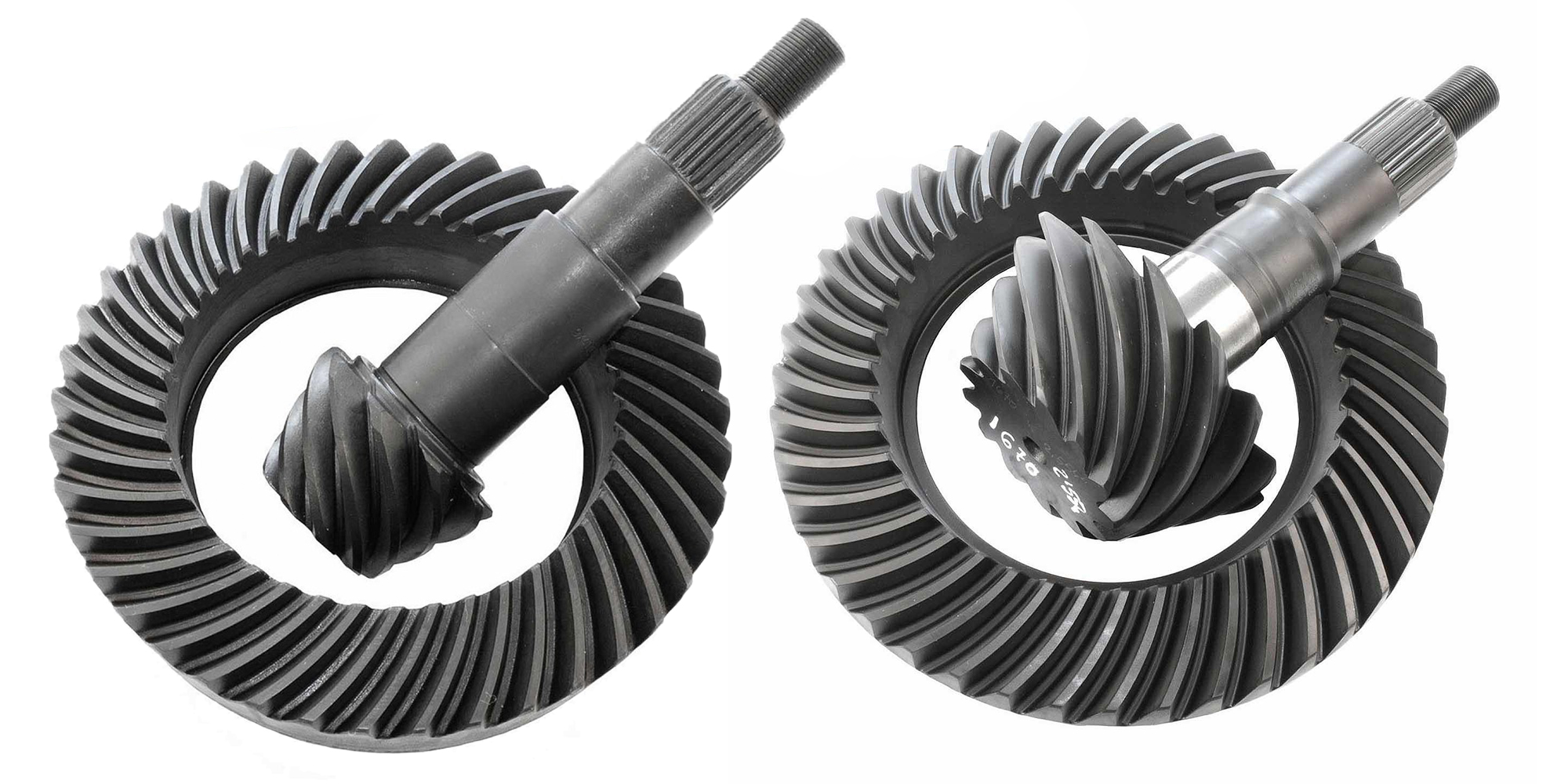
Knowing your axle ratio is not just technical trivia. It directly affects how your Silverado drives, tows, and saves fuel.
High vs Low Ratio Trade-offs
-
3.73 or 4.10 (High Numerical):
More torque at wheels. Better for towing, hauling, off-roading.
Downside: Higher RPM at 65 mph, lower fuel economy. -
3.08 or 3.42 (Low Numerical):
Fewer engine revolutions per mile. Better highway MPG.
Downside: Slower acceleration, struggles with heavy loads.
Match Ratio to Use Case
- Daily Driver? 3.08 or 3.42 balances economy and power.
- Towing a Trailer? 3.73 is ideal for 1500 and HD models.
- Off-Roading? 4.10 or higher improves crawl ratio.
- Diesel Tuning? Always verify ratio, as DCS and EFI Live need it for accurate transmission shifts.
Know 2025 Model Trends
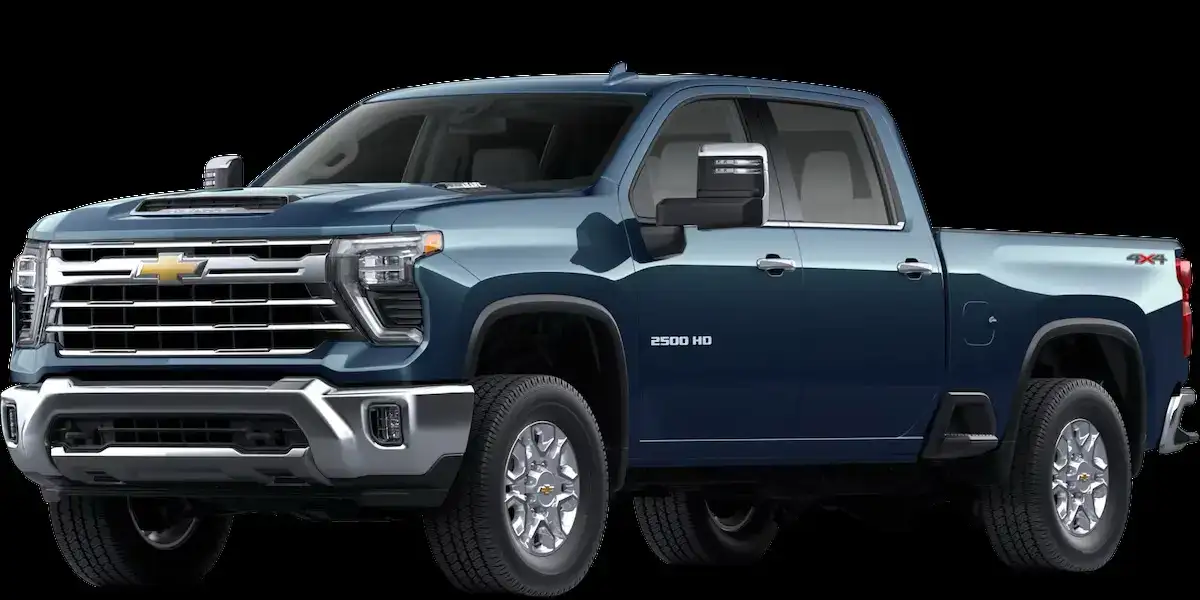
New Silverados follow predictable ratio patterns based on engine and trim:
- 1500 with Gas V6/V8: Typically 3.42 (GU6)
- 1500 with Duramax Diesel: Usually 3.73 (GT4)
- 2500HD/3500HD Gas (6.6L V8): Often 3.73
- HD Duramax Diesel: Commonly 3.42 for better highway efficiency
These pairings optimize performance for each drivetrain. Always confirm with RPO or physical check, since options vary by trim and towing package.
Frequently Asked Questions About Silverado Axle Ratios
Where is the RPO code label on a 2017 Silverado?
On pre-2018 Silverados, the SPID label with RPO codes is most commonly found inside the glove box on the sidewall or back panel. If it is not there, check the driver’s side door jamb when the door is fully open.
What does the G80 RPO code mean?
The G80 code indicates a limited-slip differential (LSD), also known as a Positraction rear axle. This code tells you the differential type but does not specify the gear ratio. You will need a separate G-code (like GU6 or GT4) to find the actual ratio.
How accurate is the driveshaft turn test?
The driveshaft turn test is very reliable for an approximate reading. Expect slight variance (for example, a 3.73 ratio often reads as 3.75 turns). Round to the nearest standard ratio for an accurate result.
Can I tell the axle ratio by the casting number on the differential housing?
No. Casting numbers only identify the housing itself, not the gear ratio inside. The same housing casting is commonly used for multiple ratios, so casting numbers cannot be used for ratio identification.
What axle ratio is best for towing with a Silverado 1500?
A 3.73 ratio is generally ideal for towing with a Silverado 1500. It provides strong low-end torque for pulling heavy loads without sacrificing too much fuel economy during daily driving.
Will changing tire size affect my axle ratio reading?
Changing tire size does not change the actual axle ratio, but it affects speedometer accuracy and effective gear ratio. Larger tires effectively lower your numerical ratio, which can impact performance and require recalibration.
Key Takeaways for Finding Your Silverado Axle Ratio
Start with the RPO code in your glove box or door jamb. Codes like GU4, GU6, or GT4 will tell you what you have from the factory. If the truck has been modified, skip the paperwork and do the driveshaft turn test or count ring gear teeth for truth.
Always verify your ratio before tuning, towing, or upgrading tires. Incorrect ratio data can cause speedometer errors, poor shift quality, and reduced fuel economy. When in doubt, a quick visit to any Chevy dealership with your VIN can confirm the original factory specs in minutes.