Charging your Chevy Silverado EV the right way saves time, money, and battery life. With up to 460 miles of estimated range and 350 kW DC fast charging capability, this truck is built for flexibility. But choosing the wrong charger or skipping key preparation steps can leave you waiting hours instead of minutes.
This guide covers every charging method available for the Silverado EV, from Level 1 home outlets to Tesla Superchargers. You will learn exact charge times by trim, how to cut your electricity costs in half, and how to use your truck as a backup generator during power outages.
Choose the Right Charging Level for Your Silverado EV
The Silverado EV supports three charging levels, each designed for different situations. Picking the correct one keeps your battery healthy and your schedule on track.
Use Level 1 Charging Only for Emergencies
Level 1 charging plugs into a standard 120V household outlet using the included Dual Level Charge Cord. It adds roughly 12 miles of range per hour, making it the slowest option available.
- Best for: Emergency top-ups or very light daily driving under 30 miles
- Full charge time: Over 50 hours from empty on lower trims
- Limitations: Far too slow for regular daily use
- Safety note: Only use outlets in good condition and never share the circuit with high-draw appliances
Keep this method as a backup plan, not your primary routine.
Install Level 2 Charging for Daily Driving
Level 2 (240V) charging is the recommended method for everyday Silverado EV ownership. It balances speed, cost, and convenience for overnight home charging.
- Charging speed: 12 to 19 miles of range per hour depending on equipment and trim
- Equipment needed: Dedicated 240V circuit and a Level 2 home charger
- Recommended setup: 48A charger delivering 11.5 kW
- Full charge time: As quick as 5.9 hours for RST trims with compatible hardware
Match Your Home Charger to Your Electrical Panel
Before buying a Level 2 charger, evaluate your home’s electrical capacity:
- Use a dedicated 240V circuit to prevent overloads
- A 48A charger hits the sweet spot for most owners
- Higher amperage options (like 80A) often require costly panel upgrades with minimal overnight benefit
Pick a Charger With the Right Features
When shopping for a Level 2 home charger, focus on these essentials:
- J1772 connector for standard AC charging compatibility
- Wi-Fi connectivity to schedule off-peak sessions and track energy use
- UL certification for verified safety standards
- Future-proofing if you plan to upgrade to an RST trim that supports 19.2 kW
Trusted brands include ChargePoint, Emporia, and Siemens.
Optimize Charging Speed by Silverado EV Trim
Your truck’s trim level directly affects how fast it charges at home. Understanding these differences helps you avoid paying for equipment you cannot fully use.
LT Extended Range: 11.5 kW Maximum
The LT Extended Range trim caps AC charging at 11.5 kW, making it a great match for a standard 48A home charger.
- Max AC input: 11.5 kW
- Ideal home charger: 48A delivers full capability
- Charging speed: About 12 miles per hour standard, up to 19 mph at enhanced stations
- Full charge time: 10 to 12 hours on Level 2
This trim offers excellent value for owners who do not need the fastest possible home charging.
RST Trims: 19.2 kW Maximum
RST trims nearly double the AC charging capacity, but only with the right equipment.
- Max AC input: 19.2 kW
- Required hardware: High-capacity Level 2 charger (up to 80A) plus a compatible electrical panel
- Charging speed: Up to 19 miles of range per hour
- Full charge time: As fast as 5.9 hours with proper setup
Most homes cannot support 80A without significant upgrades. A 48A charger still works well and charges faster than Level 1 or basic Level 2 setups.
Charge Fast on the Road With DC Fast Charging
DC fast charging is essential for long trips, delivering rapid range recovery at public stations along highways and in cities.
Use 350 kW DC Fast Charging for Quick Stops
The Silverado EV accepts up to 350 kW, placing it among the fastest-charging EVs available today.
- Range gain: About 100 miles in 10 minutes
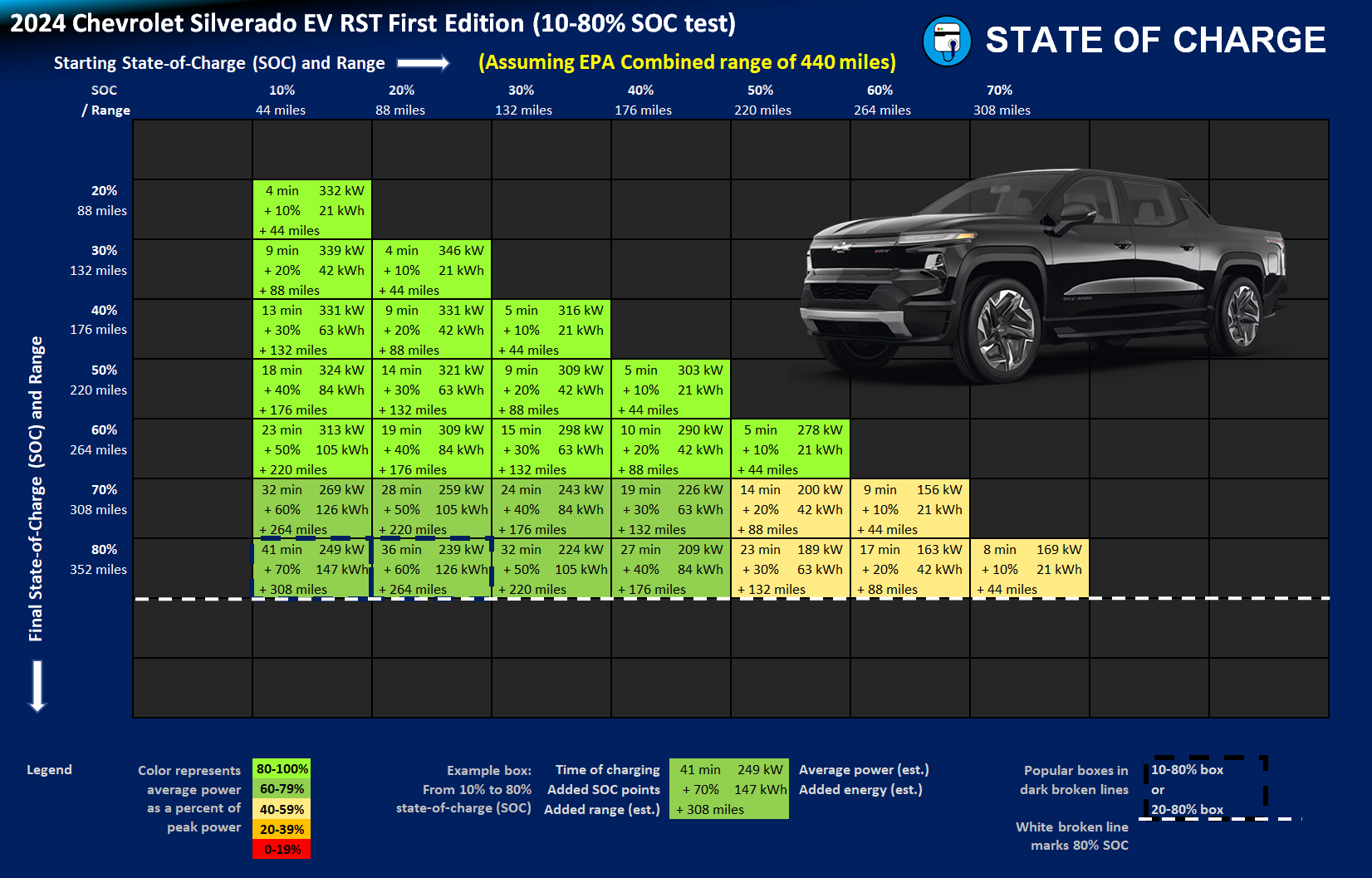
- 10% to 80% charge: As little as 41 minutes on RST Max Range
- Connector: CCS1 native support
- Ideal for: Highway driving, road trips, and quick top-ups
Find Compatible Charging Stations With Apps
Use these tools to locate working chargers and plan your route:
- GM Built-In Navigation for EV-optimized routing
- PlugShare for real-time availability and user reviews
- ChargePoint for station details and pricing
- Electrify America for high-power DC fast charging locations
Access Tesla Superchargers With an Adapter
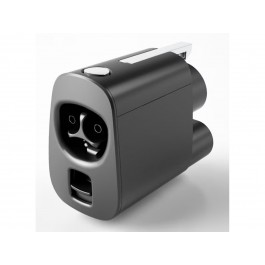
Despite using CCS1, your Silverado EV can connect to Tesla Superchargers with the right adapter.
- Required accessory: NACS to CCS adapter (sold separately)
- Key benefit: Access to thousands of additional charging stations, especially in rural areas
- Speed: Full 350 kW capability retained when the Supercharger supports it
Carry the adapter in your truck at all times. It expands your travel options dramatically for cross-country trips.
Reduce Charging Costs With Smart Habits
Electricity prices vary widely based on where and when you charge. A few simple strategies can cut your fueling costs significantly.
Charge at Home to Save Money
Home charging costs far less than public stations, based on an average residential rate of $0.162 per kWh.
| Trim | Cost per 100 Miles | Full Charge Cost |
|---|---|---|
| LT Extended Range | $8.10 | $17.33 |
| RST Extended Range | $8.42 | $17.33 |
| RST Max Range | $8.42 | $33.21 |
Schedule charging during off-peak hours (typically overnight) when rates drop to their lowest.
Avoid Expensive Public DC Fast Charging
Public DC fast charging averages $0.35 per kWh, nearly double the home rate. These figures exclude idle fees and session charges.
| Trim | Cost per 100 Miles | Full Charge Cost |
|---|---|---|
| LT Extended Range | $17.50 | $37.45 |
| RST Max Range | $18.20 | $71.75 |
Protect your wallet with these habits:
- Avoid lingering after charging (idle fees start around $0.40/minute on some networks)
- Stop at 80% unless you need the full range
- Save public fast charging for road trips, not daily top-ups
Enable Vehicle-to-Home Power for Emergencies
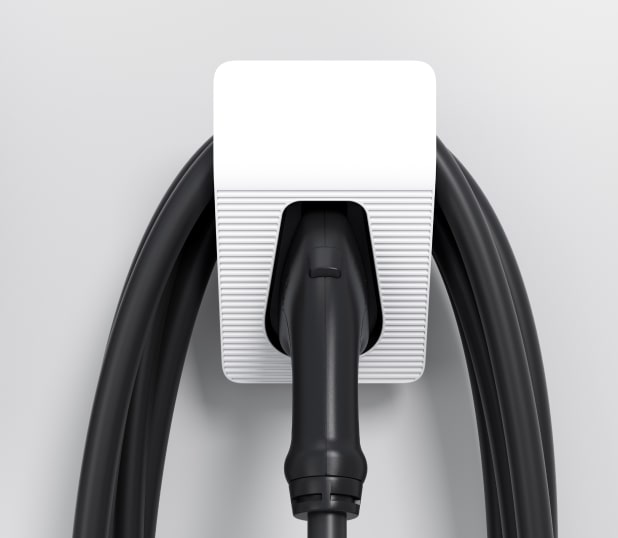
The Silverado EV can power your home during blackouts using bidirectional charging technology. This feature transforms your truck into a mobile energy source.
Use GM Energy Powershift for Backup Power
The Vehicle-to-Home (V2H) system delivers impressive performance during outages.
- Function: Powers your home during blackouts or peak demand periods
- Power output: Up to 32 miles of range equivalent per hour (67% faster than standard charging)
- Use cases: Emergency backup, grid outages, peak load shaving
- Requirements: GM Energy Powershift hardware, professional installation, and a compatible home electrical system
This setup can sustain essential home circuits (refrigerator, lights, furnace) for hours or even days depending on usage.
Maximize Charging Efficiency in Real-World Conditions
Several factors affect actual charging speed and battery health. Adjust your habits to get the most from every session.
Manage Temperature Effects on Charging
Extreme temperatures impact charging performance, especially during DC fast charging.
- Cold weather: Slows charging significantly. Use scheduled departure to precondition the battery
- Hot weather: May throttle charging to protect cells. Park in shade when possible
Use the Charge Schedule feature to start sessions when temperatures are milder.
Understand the Charging Curve
Charging speed is not constant throughout a session. Knowing the curve helps you plan efficient stops.
- Fastest charging happens between 10% and 80%
- Speed tapers above 80% to extend battery life
- Avoid frequent 0–100% cycles; daily charging to 80–90% is optimal
Avoid Common Charging Mistakes
Sidestep these errors to protect your truck and your wallet:
- Never use extension cords with Level 1 charging (fire hazard)
- Do not charge on circuits shared with high-draw appliances
- Keep up with firmware updates that can improve charging performance
- Never leave your vehicle plugged in at public stations after reaching your target charge
Match Your Charging Strategy to Your Driving Needs
Different situations call for different charging approaches. Use these guidelines to stay efficient year-round.
Daily Commuting: Level 2 Overnight
- Plug in when you get home
- Set a charging schedule for off-peak hours
- Wake up to a full battery every morning
- Estimated cost: $0.08 per mile or less
Road Trips: DC Fast Charging Strategically
- Plan stops every 200 to 250 miles
- Target 10% to 80% charges (41 minutes maximum on 350 kW)
- Combine charging with meal breaks or rest stops
- Use Tesla Superchargers with your adapter for more route options
Emergency Charging: Level 1 as Backup
- Use the included Dual Level Charge Cord
- Plug into any 120V outlet at a garage, RV park, or friend’s house
- Gain about 12 miles per hour, enough to reach a faster charger
- Reserve this method for true emergencies
Power Outages: Activate V2H Mode
- Connect via the GM Energy Powershift system
- Power essential circuits like refrigeration and lighting
- Monitor battery level to avoid draining the truck completely
- Sustain your home for hours or days depending on consumption
Frequently Asked Questions About Charging the Chevy Silverado EV
How long does it take to charge a Silverado EV at home?
Level 2 charging at home takes about 5.9 hours for RST trims with a 48A charger and 10 to 12 hours for the LT Extended Range trim. Level 1 charging takes over 50 hours and is not recommended for regular use.
Can the Silverado EV use Tesla Superchargers?
Yes, the Silverado EV can access Tesla Superchargers using a NACS to CCS adapter. This adapter is sold separately and expands your public charging options significantly.
What is the fastest way to charge a Silverado EV on a road trip?
DC fast charging at 350 kW stations is the fastest method. You can add about 100 miles of range in 10 minutes or charge from 10% to 80% in roughly 41 minutes on RST Max Range trims.
How much does it cost to charge a Silverado EV at home?
Home charging costs approximately $8.10 to $8.42 per 100 miles, depending on trim. A full charge ranges from $17.33 for LT and RST Extended Range models to $33.21 for the RST Max Range, based on an average rate of $0.162 per kWh.
Can the Silverado EV power a house during a blackout?
Yes, with the GM Energy Powershift system, the Silverado EV can provide bidirectional Vehicle-to-Home power. It delivers up to 32 miles of range equivalent per hour and can run essential home circuits during outages.
What charger do I need for home charging?
A 48A Level 2 charger on a dedicated 240V circuit is recommended for most Silverado EV owners. This setup delivers 11.5 kW and matches the LT trim’s maximum capacity while still providing strong performance for RST models.
Key Takeaways for Charging Your Silverado EV Efficiently
Use Level 2 home charging as your primary method to wake up to a full battery every morning at the lowest possible cost. Save DC fast charging for road trips, where 350 kW stations can add 100 miles in just 10 minutes. Match your home charger to your trim level, and consider the GM Energy Powershift system if you want backup power during outages.
Start by scheduling a professional electrical assessment to determine your home’s Level 2 readiness, then install a 48A charger to unlock fast, affordable overnight charging.