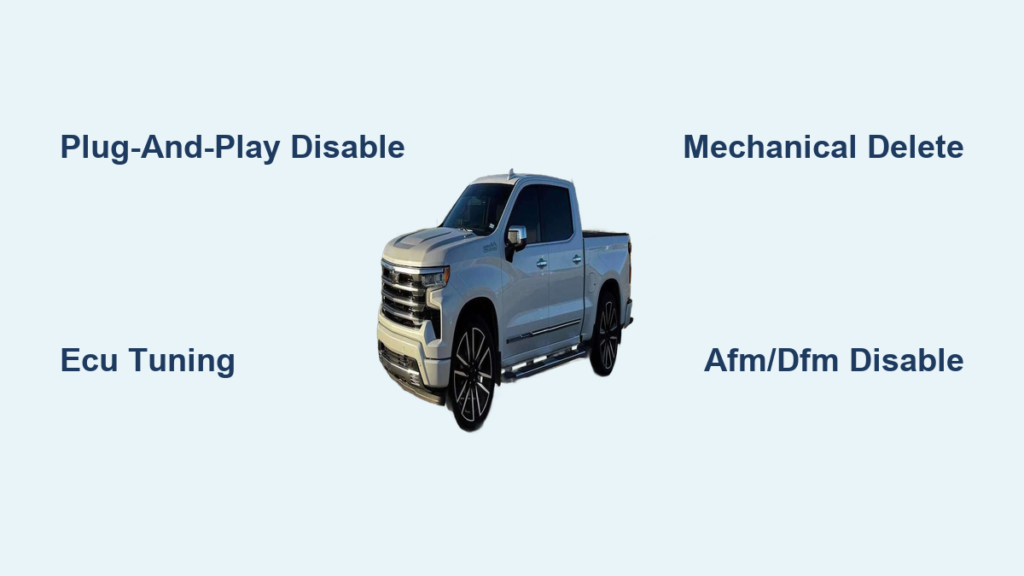
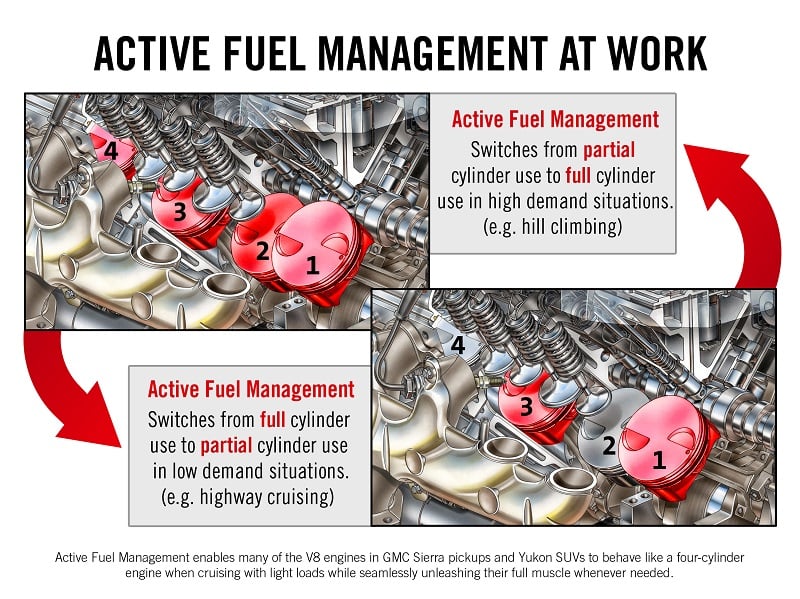
If your Chevy Silverado with the 5.3L V8 shudders at highway speeds or hesitates when you hit the gas, you’re feeling cylinder deactivation at work. Officially called Active Fuel Management (AFM) or Dynamic Fuel Management (DFM), this GM system shuts down four cylinders under light loads to save fuel. The promised 5–15% efficiency gain rarely shows up in real-world driving, where most owners see only 1–2 MPG. Worse, the system introduces rough transitions, oil consumption issues, and a serious risk of lifter failure that can cost thousands to repair.
Turning off cylinder deactivation on your Chevy Silverado keeps all eight cylinders firing at all times. You’ll eliminate the V4 drone, enjoy smoother throttle response, and dramatically reduce the chance of catastrophic engine damage. This guide walks through every proven method so you can pick the right one for your model year, transmission, and budget.
Plug-and-Play AFM Disablers: The Fastest Fix
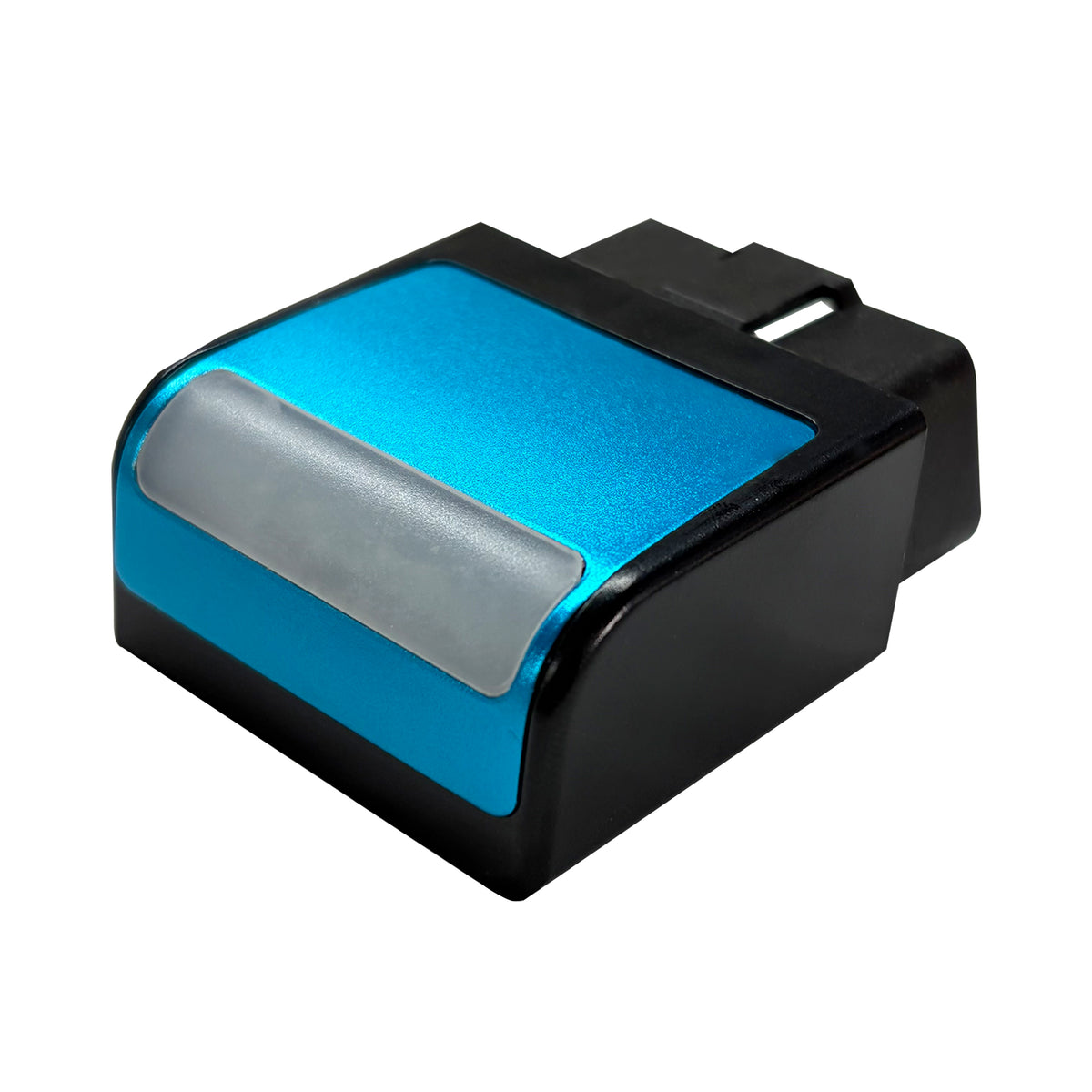
For most Silverado owners, especially those with older trucks or active warranties, a plug-and-play OBD-II disabler is the easiest, cheapest, and most reversible way to disable cylinder deactivation.
How These Devices Work
A small module plugs into your truck’s OBD-II port and intercepts communication between the Powertrain Control Module (PCM) and the cylinder deactivation system. Instead of allowing the engine to drop into V4 mode, the device sends a constant signal that keeps all eight cylinders active. The result is no shudder at 55 mph, no hesitation during acceleration, and no risk of lifter failure from oil starvation.
Best Devices to Consider
- Range Technology AFM Disabler: Reliable and widely used. Choose the tow-hitch version to avoid battery drain from older firmware.
- TruckTok GM AFM/DFM Disabler (RA003): Built specifically for 5.3L V8s from 2010–2020. Installs in under a minute and kills vibrations immediately.
- Boost AFM & DFM Disabler: Works with 2022.5–2025 models running Dynamic Fuel Management.
- Bully Dog Triple Dog: Offers basic tuning features alongside AFM disable.
Installation in Under a Minute
- Locate the OBD-II port under the driver’s side dash.
- Plug the device in firmly.
- Turn the ignition to “On” or start the engine.
- The device configures itself automatically with no setup needed.
- Drive and confirm the engine stays in V8 mode by listening for smooth idle.
Pro Tip: Remove the device before any dealership visit. It leaves no digital footprint, so your warranty stays intact.
ECU Tuning: The Permanent Software Solution

If you want a clean, permanent fix or own a newer Silverado with a 10-speed transmission, ECU tuning is your best (and sometimes only) option.
Why Tuning Beats Plug-Ins on Newer Models
Starting around 2022.5, GM upgraded Silverados with 10-speed transmissions and encrypted TCM-ECM communication. Standard plug-in devices can’t bypass this security, making ECU flashing the only reliable way to disable DFM on these trucks.
Tools You’ll Need
- HP Tuners VCM Suite: The industry standard for DIY tuning. Requires the MPVI interface and software credits.
- DiabloSport Predator/Intune: A handheld tuner that disables AFM and adds performance gains.
- SCT X4: Another handheld option with custom tune support.
- BlackBear Performance: Premium off-the-shelf and custom tunes that disable AFM while removing torque management.
Step-by-Step: Disable AFM with HP Tuners
- Connect the MPVI to your OBD-II port and laptop.
- Read the stock PCM file and save a backup.
- Open VCM Editor and navigate to Engine > Fuel.
- Find the AFM/DFM enable switch and set it to Disabled.
- (Optional) Adjust throttle response, shift points, and torque management.
- Write the new file to the ECU.
- Start the engine and confirm no check engine light appears.
Warning: Flashing the ECU increments a flash counter that dealerships can detect, which may void your powertrain warranty.
2020+ Models: ECM Unlocking Required
On 2020 and newer trucks, the ECU is locked. You must remove the ECM from the truck and send it to a specialist for unlocking, which costs $1,500–$2,000. After unlocking, you can flash your custom tune. This process is expensive and permanently changes your vehicle’s software.
Mechanical AFM Delete: Full Hardware Removal
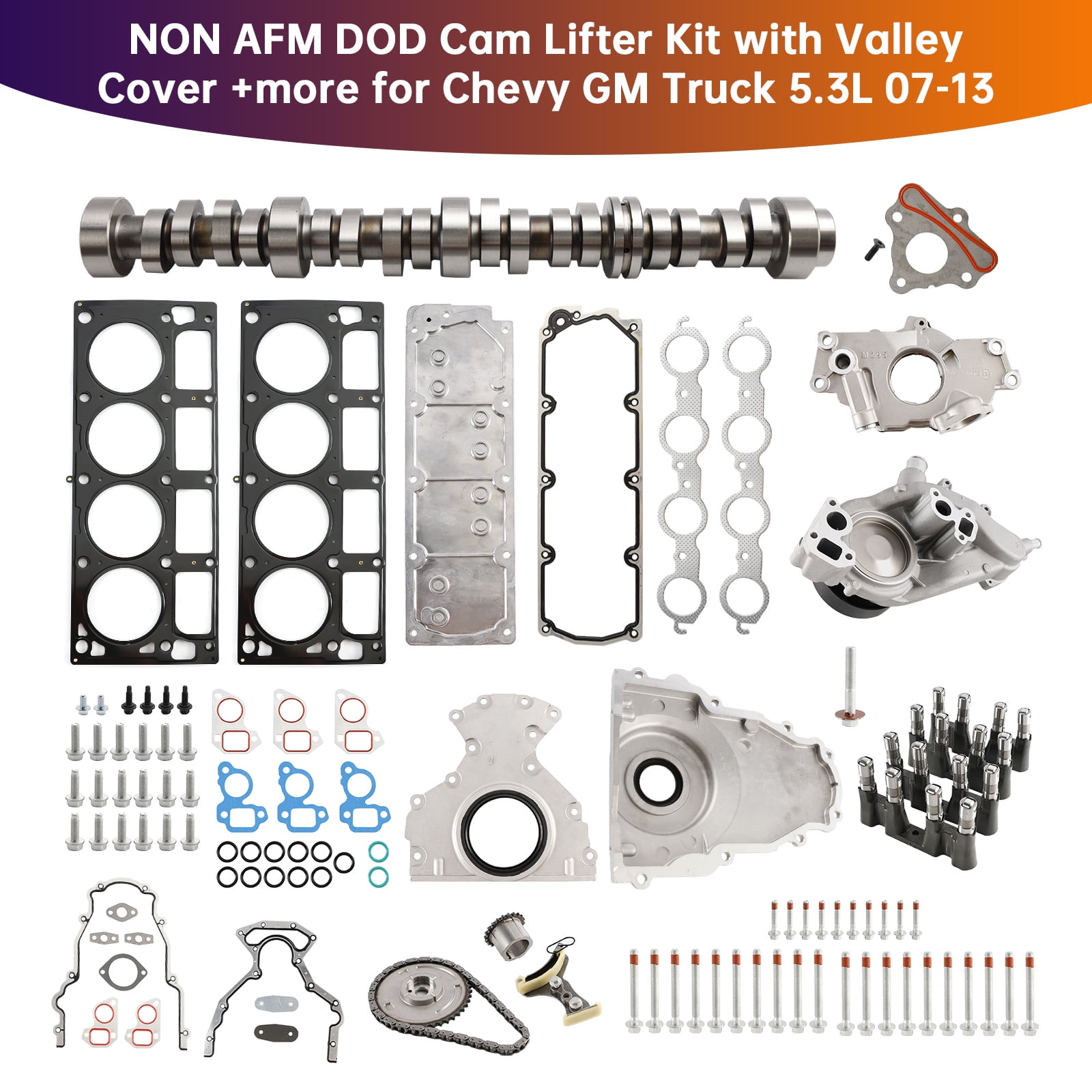
For maximum reliability, especially if you’ve already experienced lifter failure, replacing AFM hardware with standard components is the gold standard.
What Gets Replaced
The mechanical delete swaps out:
- AFM lifters for standard hydraulic lifters
- AFM camshaft for a non-AFM cam
- Pushrods (often upgraded)
- Valve covers (sometimes required)
- Oil manifold assembly (optional)
Even after hardware removal, you must still tune the ECU to disable AFM logic and prevent check engine lights.
When to Consider a Mechanical Delete
- You’ve already experienced lifter failure or camshaft damage
- You’re planning a performance build with an aggressive cam or forced induction
- You want to eliminate all future AFM-related risks permanently
Cost and Labor Breakdown
| Component | Cost |
|---|---|
| Non-AFM Lifter & Cam Kit | ~$1,000 |
| Labor (25+ hours) | $3,000–$3,750 |
| Custom Tune | ~$500 |
| Total | $4,500–$5,250 |
This is not a DIY-friendly job. Engine disassembly, cam break-in procedures, and precise tuning are all required.
Expert Note: Only consider this route if your engine is already apart or severely damaged. For a healthy engine, it’s overkill.
Workarounds with Limited Effectiveness
If you’re not ready to invest in a permanent fix, these temporary methods may help, though none are foolproof.
Manual Transmission Mode Trick
On older Silverados with 6-speed automatics:
- Shift into “Manual” mode
- Limit gears to 1–5 (avoiding 6th gear/overdrive)
- Some users report this prevents AFM engagement
Downsides: Higher RPMs at highway speeds, increased noise, and reduced fuel economy. Many report AFM still activates at low speeds around 10–20 mph.
Throttle Management
Keep throttle input above 10% to stay in V8 mode. This isn’t practical for daily driving or light cruising.
AFM Solenoid Blockers
Small plugs inserted into the Lifter Oil Manifold Assembly (LOMA) block oil flow to AFM lifters. This prevents cylinder deactivation but doesn’t fix the underlying software. It requires partial engine disassembly and still needs tuning to avoid error codes.
Model Year Compatibility Guide

Your Silverado’s year and transmission determine which method will actually work.
2010–2019 (6-Speed or 8-Speed)
- Engines: 5.3L with AFM
- Best Method: Plug-and-play disabler
- Alternatives: ECU tuning or mechanical delete
- Compatibility: All solutions work
2019–2022 (8-Speed or Early 10-Speed)
- Engines: 5.3L with AFM or DFM
- Best Method: Plug-in for 8-speed; tuning for 10-speed
- Note: DFM is more complex, cycling through 17 cylinder modes. Disabling is highly recommended.
2022.5+ (10-Speed Transmission)
- Engines: 5.3L with DFM
- Critical Limitation: Plug-and-play devices do not work
- Only Option: ECU tuning with ECM unlocking
- Cost: $1,500–$2,000+ due to unlocking fees
- Warranty: Voided upon flashing
Real Impact: MPG, Performance, and Reliability
Fuel Economy: Is It Worth Disabling?
- GM Claim: 5–15% improvement
- Real-World Result: 0–2 MPG gain
- After Disabling: Average loss of about 1 MPG
- Trade-Off: Pay roughly $20 extra per month in fuel to avoid a $5,000 engine repair? Most owners say yes.
Performance Gains
- Horsepower: No increase in peak power
- Throttle Response: Feels more responsive with no mode switching
- Driving Feel: Smoother, more consistent power delivery
- Exhaust Note: Eliminates uneven V4 drone and returns the classic V8 rumble
Engine Longevity
- Oil Consumption: Often returns to normal after disabling
- Lifter Wear: Prevents uneven wear from oil starvation
- Camshaft Protection: Avoids collapse damage from failed lifters
- Repair Prevention: A single lifter failure can cost $3,000–$6,000, so disabling AFM pays for itself in risk reduction
Frequently Asked Questions About Disabling Cylinder Deactivation
Will disabling AFM trigger a check engine light?
No, if done correctly. Plug-in devices and proper tunes prevent the PCM from requesting AFM, so no codes are thrown. Mechanical deletes require tuning to avoid CELs.
Can I disable DFM on a 2024 Silverado?
Yes, but not with a plug-in device. You must use ECU tuning with ECM unlocking. It’s expensive and voids your warranty, but it’s the only way.
Does disabling AFM improve power?
Not peak horsepower, but perceived performance improves due to eliminated hesitation and smoother transitions. Tuning can further enhance throttle and shift response.
Is the Range Technology device safe to leave plugged in?
Newer versions are safe. Earlier models had battery drain issues when left plugged in. Use the tow-hitch version or unplug during long storage.
What’s the difference between AFM and DFM?
AFM switches between V8 and V4 (4 cylinders off). DFM is more advanced and can deactivate any combination of cylinders across up to 17 modes. DFM is more complex and failure-prone.
Will my truck sound different after disabling AFM?
Yes. The uneven, droning exhaust note in V4 mode disappears. Idle and cruise become smoother and more like a traditional V8.
Final Recommendations by Silverado Owner Type
Daily Driver Under Warranty
✅ Use a Plug-and-Play Disabler
– Best options: TruckTok RA003 or Range Technology
– Pros: Reversible, undetectable, and affordable
– Ideal for: 2010–2022 models
Performance Enthusiast
✅ Go with ECU Tuning
– Best option: HP Tuners paired with a BlackBear Performance tune
– Pros: Full control, better throttle response, and shift tuning
– Ideal for: All models, especially already-tuned trucks
2022.5+ Owner
✅ ECU Tuning Is Mandatory
– Prepare for ECM unlocking costs of $1,500 or more
– No plug-in options exist for these trucks
– Warranty will be voided
High-Mileage or Failed Lifter
✅ Mechanical Delete Plus Tune
– Fixes the root cause
– Allows for future performance builds
– Costly, but ensures long-term reliability
Budget Option (Older Models)
✅ Try Manual Mode or a Used DiabloSport
– Manual mode: Free, but limited effectiveness
– Used Predator: Around $200, with full AFM disable and basic tuning
Bottom Line: Cylinder deactivation on your Chevy Silverado delivers minimal fuel savings while posing serious mechanical risks. Disabling it is a smart move for reliability, smoothness, and peace of mind. Match the method to your model year, budget, and warranty status, then enjoy a smoother, more dependable V8 driving experience.