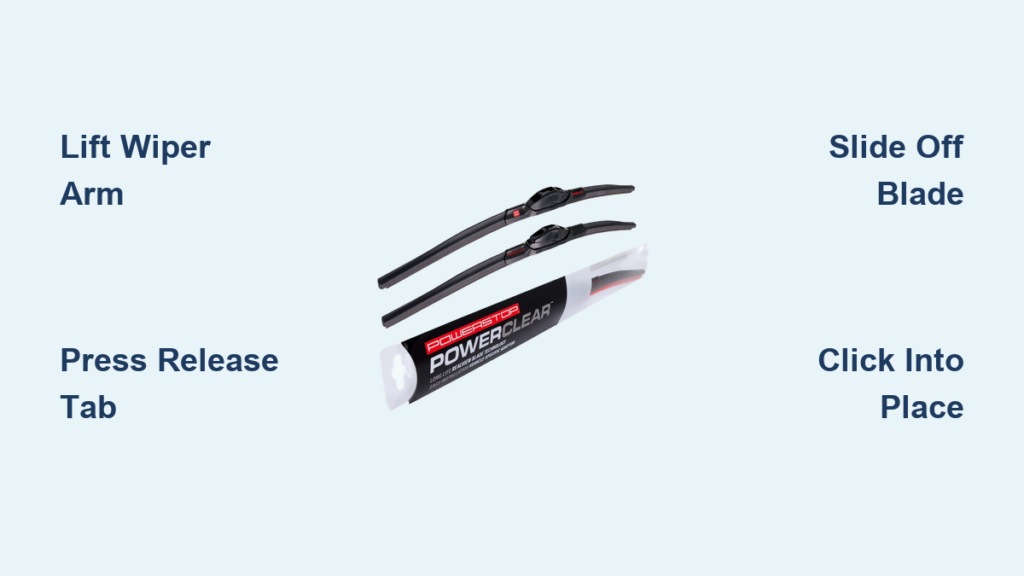
Replacing wiper blades on your Chevy Silverado is a quick, affordable maintenance task that keeps your windshield clear in rain, snow, and sleet. Over time, sun exposure, temperature swings, and road grime degrade the rubber edge, leading to streaks, squeaks, and poor visibility. Worn blades compromise safety during sudden storms or night driving, when clear glass matters most.
You don’t need special tools or mechanical experience to complete this job. With the correct blade sizes and a few minutes, you can restore crisp wiping performance on your own. This guide covers when to replace your blades, how to pick the right size for your model year, and the exact steps to remove and install new ones without damaging your windshield or wiper arms.
Spot the Signs Your Wiper Blades Need Replacement

Streaking and Squeaking on the Glass
If your wipers leave streaks across the windshield or produce loud squeaking sounds, the rubber is breaking down. These symptoms mean the blade can no longer maintain full contact with the glass. Even light streaking reduces visibility in rain or low light, which raises your risk on the road.
Cracked, Split, or Curled Rubber Edges
Inspect the blade edge up close. If the rubber shows cracks, splits, or curling, it has lost its ability to seal against the windshield. A broken seal causes uneven water clearing and patchy visibility. This damage typically starts at the ends of the blade and spreads with continued use.
Seasonal Inspection Habits
Check your wiper blades at the start of winter and spring. Winter ice and road salt grind down rubber quickly. Summer sun speeds up UV damage, drying out the blade material. Replacing blades twice a year, especially before winter, keeps performance strong when weather turns harsh.
Choose the Correct Blade Size for Your Silverado

Driver and Passenger Sides Are Different Lengths
Chevy Silverados use asymmetrical wiper sizing. The driver side blade is longer than the passenger side blade. Installing mismatched sizes leaves sections of the windshield uncleaned or causes the two arms to collide during operation.
Size Variations by Model Year
Blade dimensions vary slightly depending on your truck’s generation and trim. Common configurations include:
- 2014–2018 Silverado 1500: 26-inch driver side, 16-inch passenger side
- 2019–2026 Silverado 1500: 26-inch driver side, 18-inch passenger side on most trims
Always confirm sizes in your owner’s manual or by entering your VIN into a retailer’s online fit guide. This step ensures compatibility with your specific LT, Z71, or High Country trim.
Replace Both Blades at the Same Time
Even if only one blade shows visible wear, swap both. Rubber degrades at similar rates on both sides, so the “good” blade is usually close to failure. Matching new blades deliver even pressure, quiet operation, and full windshield coverage.
Remove the Old Blades Without Damaging Your Truck
Lift the Wiper Arm Safely
Park on a flat surface and turn off the ignition. Lift the wiper arm away from the windshield until it locks in an upright position. Support the arm with one hand throughout the process. If the arm snaps back, the metal frame can crack your windshield.
Find the Release Tab
Look at the underside of the blade where it meets the metal arm. Locate the small plastic release tab near the center of the connection point. This tab secures the blade to the J-hook mounting system.
Slide the Blade Off the Hook
Press and hold the release tab while sliding the blade downward off the hook. Keep pulling until the blade clears the arm completely. Set the old blade aside for proper disposal.
Install Your New Wiper Blades

Match the Connector to the Hook
Take the new blade and align its connector slot with the J-hook on the wiper arm. Make sure the blade curves match the windshield shape. Installing a blade backward reduces wiping effectiveness and causes noise.
Lock the Blade in Place
Slide the blade upward onto the hook until you hear a click. That sound confirms the locking tab has engaged. Tug the blade gently to verify it is secure. If it moves or feels loose, reseat it until the click is firm.
Lower the Arm Carefully
Slowly lower the wiper arm back to the windshield. Let it settle gently without dropping it. Repeat the full process for the second blade before moving on to testing.
Pick the Best Replacement Blades for Your Climate

Standard vs All-Weather Designs
Standard rubber blades perform well in mild climates but harden in freezing temperatures, leading to chatter and ice buildup. All-weather blades use enclosed rubber and aerodynamic frames that resist snow, ice, and UV damage. Silverado owners in regions with harsh winters benefit most from these upgraded options.
Trusted Brands with Direct Fit
Brands like Bosch, AERO, and Rain-X offer direct-fit blades designed for Silverado models. Look for packaging labeled “Fits Chevy Silverado 1500” and confirm the hook style. J-hook attachments are standard across most model years. Avoid universal adapters unless the manufacturer specifically recommends them.
Verify Trim-Level Compatibility
Higher trims such as High Country or ZR2 may feature slightly different wiper arm designs. Cross-reference your trim with the blade manufacturer’s fit chart before purchasing. If you’re unsure, bring the old blade to an auto parts store for a side-by-side comparison.
Test Your Installation and Maintain Long-Term Performance
Run a Full Sweep Test
After installing both blades, spray washer fluid and activate the wipers. Watch the sweep pattern for these results:
- Full contact across the entire windshield
- No skipping, jumping, or uneven wiping
- No squeaking or chattering sounds
If problems appear, recheck the installation and confirm the locking click is fully engaged. Misaligned blades are the most common cause of noise and poor performance.
Extend Blade Life with Simple Habits
Never use wipers to clear ice or snow. Scrape the windshield first to prevent tearing the rubber edge. Clean blades monthly with soapy water to remove road film and debris that cause scratching and streaking.
Schedule Preventive Replacements
Replace wiper blades every 12 months even if they appear fine. UV exposure breaks down rubber faster than mechanical use. A proactive swap before winter ensures reliable performance during storms and reduces driver fatigue.
Frequently Asked Questions About Chevy Silverado Wiper Blades
How often should I change wiper blades on my Chevy Silverado?
Replace wiper blades every 6 to 12 months, or immediately if you notice streaking, squeaking, or cracked rubber. Inspect blades at the start of winter and spring to catch wear early.
What size wiper blades does a Chevy Silverado use?
Most Silverado 1500 models use a 26-inch driver side blade. Passenger side sizes vary: 16 inches for 2014–2018 models and 18 inches for 2019–2026 models. Always confirm in your owner’s manual.
Can I replace just one wiper blade?
You can, but replacing both blades at the same time is recommended. Rubber degrades at similar rates on both sides, and matching new blades ensure even pressure and consistent clearing performance.
Do I need tools to change wiper blades?
No tools are required for most Silverado models. The J-hook attachment system allows you to remove and install blades by hand using the release tab mechanism.
What happens if a wiper arm snaps back during replacement?
The metal frame can strike the windshield hard enough to crack the glass. Always support the arm with one hand and lower it slowly to avoid this risk.
Are all-weather wiper blades worth it for a Silverado?
All-weather blades resist hardening in freezing temperatures and UV damage in summer sun. They are a smart upgrade for Silverado owners who face snow, ice, or heavy rain regularly.
Final Thoughts on Changing Wiper Blades on Your Chevy Silverado
Changing wiper blades on your Chevy Silverado takes less than 10 minutes and delivers safer, clearer driving in every season. Recognize the early signs of wear, confirm the correct size for your model year, and follow secure installation steps to avoid windshield damage. Whether you drive through Midwest blizzards or Southern thunderstorms, fresh blades are your first defense against poor visibility. Make blade replacement an annual habit, inspect seasonally, and always verify fit for your specific trim. With this simple maintenance routine, your Silverado stays ready for any weather conditions the road brings.