If your Chevrolet Silverado feels sluggish off the line or under load, you’re not alone. Many owners of 5.3L, 6.0L, and 6.2L V8 trucks want to make their Silverado faster without sacrificing reliability. The solution lies in strategic modifications that unlock hidden power, improve airflow, and reduce wasted energy. Factory settings prioritize fuel economy and emissions, often leaving significant performance on the table.
This guide covers proven upgrades to transform your truck from stock to street-ready. You’ll learn which modifications deliver the best return on investment, the correct order to install them, and how to avoid common pitfalls. Whether you want better daily drivability or serious quarter-mile performance, the path to a faster Silverado starts here.
Unlock Hidden Performance with Engine Tuning

Tuning is the single most effective way to make a Silverado faster. Your truck’s ECU runs conservative factory settings that limit power output. A performance tune recalibrates fuel mapping, ignition timing, and throttle response to extract more power without touching engine internals.
Choose a Handheld Programmer
Devices like the Diablo Sport In-Tune and Hypertech 2.0 plug into your OBD-II port and reprograms the ECU in minutes. An 87-octane tune delivers noticeable gains on a stock 5.3L, transforming a reluctant launch into instant tire spin on 33-inch tires. For maximum output, a 91 or 93-octane tune unlocks additional power, especially when paired with other bolt-ons.
- Best for daily drivers: 87-octane tune
- Best for performance builds: Premium fuel tune
- California drivers: Choose CARB-compliant options like Hypertech
Upgrade to Custom Tuning
For the ultimate gains, HP Tuners with a custom tune outperforms any pre-loaded handheld. You send data logs to a professional tuner who builds a map tailored to your engine, intake, exhaust, and driving style. Services like Diabloworks offer fast turnaround, often 24 to 48 hours, and deliver a noticeably smoother, more aggressive power curve than canned tunes.
Pro Tip: Complete your other modifications first, then get a custom tune. This ensures your tuner has accurate data for maximum efficiency.
Understand the Trade-offs
- Warranty impact: Tuning typically voids the factory powertrain warranty
- Emissions legality: Non-CARB tunes may fail inspections in regulated states
- Reversibility: Most tuners let you revert to stock for dealership visits
Improve Airflow with a Cold Air Intake
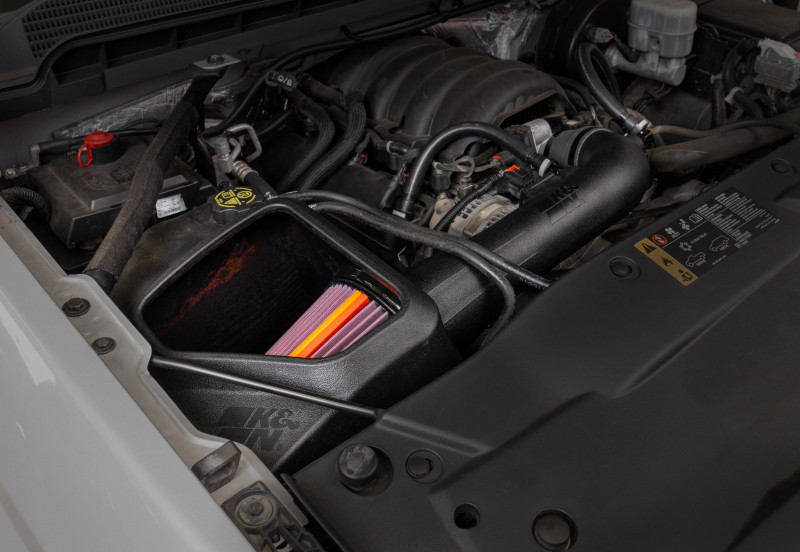
Your engine can only produce as much power as the air it breathes. Stock airboxes restrict flow and draw in hot underhood air. A cold air intake (CAI) delivers cooler, denser air for more efficient combustion.
Install a Quality CAI System
A good CAI adds 6 to 11 horsepower on its own and up to 20 HP when combined with a tune and exhaust. Top options include:
- K&N: Quiet at cruise, aggressive at wide-open throttle
- Volant: Full system around $230 with sealed box and high-flow filter
- Budget eBay kits: Around $100 for modest gains and improved sound
Some argue the stock intake tube flows adequately, but aftermarket kits relocate the filter to cooler areas and remove restrictive baffling for measurable improvement.
Add an Oil Catch Can
Blow-by gases containing oil vapors and carbon recirculate into the intake and coat valves over time. An oil catch can captures these contaminants, maintaining airflow and preventing long-term power loss. It won’t add horsepower immediately, but it preserves performance and keeps your intake clean.
- Essential for: Turbocharged trucks and high-RPM driving
- Install location: Between the PCV valve and intake manifold
Free Up Power with Exhaust Upgrades

Stock exhaust systems prioritize quietness over performance. They create backpressure that chokes engine output. Upgrading reduces restriction and improves exhaust pulse scavenging.
Upgrade to a Cat-Back System
A cat-back exhaust replaces everything from the catalytic converter back. Expect 10 to 20 HP and a deeper, more aggressive tone. Popular options include:
- MagnaFlow #15268: Smooth flow, great sound, no interior drone
- Dynomax Ultra Flow #39529: Loud outside, but some report interior drone
- 3.0-inch piping: Ideal for 5.3L and 6.2L V8 engines
Build a True Dual Exhaust with X-Pipe
For maximum gains, install true duals with an X-pipe. This setup improves exhaust pulse scavenging, balancing pressure between banks and boosting mid-range torque. Validated by Motor Trend and Engine Master, it delivers measurable gains, especially when paired with a tune.
- X-pipe benefit: Smoother power delivery and better throttle response
- Best paired with: Headers and high-flow downpipes
Replace Manifolds with Headers
Stock exhaust manifolds are restrictive. Long-tube headers improve flow dramatically but require professional installation. Gains reach 25 to 40 HP when combined with supporting modifications.
Optimize Ignition and Cooling Systems
More power generates more heat and stress. Upgrading supporting systems ensures your truck runs reliably under load.
Upgrade Spark Plugs and Coils
Weak spark causes incomplete combustion. Factory coils degrade over time, limiting performance potential.
- Bosch 4-prong plugs: Longer life and better spark, replace annually in tuned trucks
- MSD Blaster coils with performance wires: Around $450 total for stronger spark, better fuel economy, and increased power
Expert Note: A strong ignition system maximizes the benefits of tuning, intake, and exhaust upgrades.
Switch to Electric Cooling Fans
The factory clutch fan creates parasitic drag, consuming up to 20 HP when engaged. It also moves only 2,200 CFM of air. Replace it with dual electric fans capable of 10,000 CFM total to:
- Free up horsepower
- Improve cooling efficiency
- Eliminate parasitic drag
Tested in 110°F+ conditions, electric fans prevent overheating during towing or aggressive driving. A simple dollar bill test confirms strong airflow at idle.
Improve Drivetrain Efficiency
Speed depends on how effectively power reaches the ground. Drivetrain modifications sharpen acceleration and improve towing capability.
Install 3.73 Rear Gears
Stock gear ratios (often 3.23 or 3.42) prioritize fuel economy. Swapping to 3.73 gears improves acceleration and keeps the engine in its powerband longer.
- Best for: Trucks with 33-inch or larger tires, towing rigs, and performance builds
- Effect: Feels like a free power upgrade with sharper launches and better hill climbing
Professional installation is required, along with re-tuning for speedometer calibration.
Reduce Unnecessary Weight
Every 100 pounds reduces efficiency by 1 to 2%. Remove heavy floor mats, unused tools, excess cargo, and unnecessary interior accessories. Even small reductions improve 0–60 times, braking, and fuel economy.
Achieve Extreme Gains with Forced Induction
For maximum power, forced induction pushes output into the stratosphere. Superchargers and turbos deliver gains no bolt-on can match.
Add a Supercharger to the 6.2L V8
The Hennessey HPE600 package for the 6.2L Silverado includes a twin-screw supercharger and custom ECU calibration. Results include:
- 600 HP (up from 420 HP stock)
- 550 lb-ft of torque
- Comprehensive dyno and real-world testing at Pennzoil Proving Ground
- Full warranty coverage, rare for forced induction
Consider Turbocharging the 5.3L or 6.0L
Turbos offer massive gains across the RPM range. A well-tuned turbo setup on a 5.3L can exceed 500 HP. However, this requires intercooling, fuel system upgrades, and transmission support. Best suited for experienced builders or professional shops.
Caution: Forced induction increases stress on engine internals. Upgrade rods, pistons, and the transmission if pushing beyond 500 HP.
Follow the Proven Upgrade Sequence
To make your Silverado faster efficiently, follow this order:
- Cold air intake and true dual exhaust to improve airflow
- Performance tune to unlock hidden power
- Electric fans and ignition upgrade to support higher output
- 3.73 gears for sharper launches and better drivability
- Forced induction for maximum power beyond 600 HP
This sequence ensures each modification builds on the last, maximizing return on investment.
Real-World Performance Benchmarks

| Mod Combo | Estimated 0–60 | Quarter-Mile | Notes |
|---|---|---|---|
| Stock 5.3L | ~7.5 sec | Low 16s | Factory tune, stock exhaust |
| Intake, exhaust, and tune | ~6.2 sec | Mid 15s | Tire spin on launch |
| Full build with 3.73 gears | ~5.8 sec | High 14s | Competitive street truck |
A tuned 5.3L with intake, X-pipe, and electric fans achieved 15-second quarter-miles and burned through 35-inch tires during testing.
Cost vs. Performance Breakdown

| Upgrade | Cost Range | HP Gain | Best For |
|---|---|---|---|
| Handheld tune | $300–$400 | High (tune-dependent) | Best overall value |
| Cold air intake | $100–$230 | 6–11 HP | Sound and foundation |
| Cat-back exhaust | $300–$600 | 10–20 HP | Aggressive tone |
| Electric fans | $200–$400 | Parasitic loss removed | Cooling and efficiency |
| 3.73 gears | $1,200–$1,800 | Feels like +30 HP | Towing and larger tires |
| Hennessey supercharger | $20,000+ | +180 HP | Ultimate performance |
Savings Tip: Purchase tuners or intakes through forums or retailers like AutoAnything for approximately 20% off.
Frequently Asked Questions About Making a Silverado Faster
What is the cheapest way to make a Silverado faster?
A handheld tune offers the best value, delivering significant throttle response and power gains for $300 to $400. Pairing it with a cold air intake ($100 to $230) amplifies results without major investment.
Does a cold air intake actually add horsepower?
Yes. A quality CAI adds 6 to 11 HP on its own and up to 20 HP when combined with a tune and exhaust. The gains come from cooler, denser air and reduced restriction.
Will tuning void my Silverado’s warranty?
Tuning typically voids the factory powertrain warranty. Cold air intakes and exhaust systems are generally safe, but the tune itself is the primary warranty trigger. Most tuners allow you to revert to stock for dealership visits.
What rear gear ratio is best for acceleration?
3.73 gears provide the best balance of acceleration and drivability for most builds. They keep the engine in its powerband longer and restore lost torque when running larger tires.
How much horsepower can a supercharger add to a 6.2L Silverado?
The Hennessey HPE600 package increases output from 420 HP to 600 HP, adding 180 HP and 130 lb-ft of torque with full warranty coverage.
Is it worth upgrading spark plugs and coils?
Yes. Upgrading to Bosch 4-prong plugs and MSD Blaster coils ensures complete combustion, maximizing gains from tuning and exhaust modifications while improving fuel economy.
Final Thoughts on Making Your Silverado Faster
Making a Silverado faster comes down to strategic optimization, not random bolt-ons. Start with a tune and airflow modifications, then support those gains with cooling and ignition upgrades. For extreme power, forced induction delivers, but requires significant investment and planning.
Always weigh performance against warranty and reliability. For most drivers, a well-tuned Silverado with a cold air intake, dual exhaust, and electric fans offers the perfect balance of speed, sound, and daily drivability. Begin with a handheld tune and build from there. Your truck has more potential than the factory let you use, and unlocking it is more accessible than you might think.