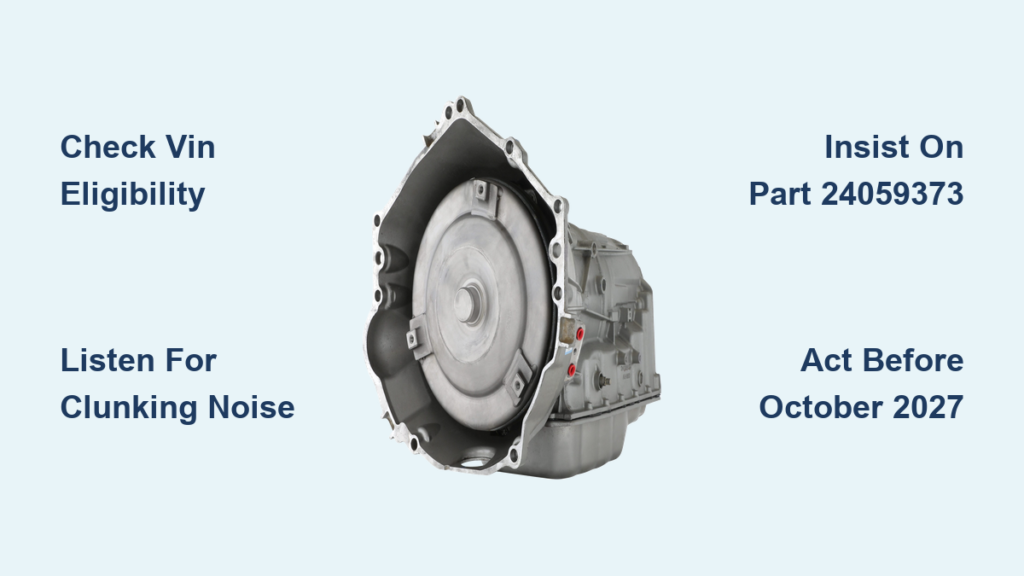
Your Chevy Silverado suddenly loses drive mid-tow, or a harsh clunk echoes from under the hood every time you shift gears. These are not minor annoyances. They point to a defective transmission reaction carrier, a critical internal component now linked to failures across multiple Silverado model years and transmission types. The defect spans both the newer 8L80/8L90 8-speed units and the long-standing 4L60E, raising serious durability concerns under heavy load.
General Motors has launched a no-charge repair program for eligible vehicles, covering parts and labor until October 31, 2027. This guide covers which models are affected, how to catch symptoms early, what the official fix entails, and how to ensure your repair is done correctly at zero cost. You will also get part numbers, technician protocols, and real owner experiences so you can act fast.
Affected Silverado Models and Model Years
2025 Silverado 1500 With 8L80 or 8L90 Transmission
Chevrolet has issued Customer Satisfaction Program N252517790 targeting 2025 Silverado 1500 trucks equipped with the 8L80 or 8L90 8-speed automatic transmission. These vehicles are automatically enrolled in a no-cost inspection and repair program if the VIN is flagged in GM’s system. The reaction carrier in these transmissions may fracture under high torque, leading to sudden transmission failure.
Dealers are required to hold all affected inventory, including new, CPO, and loaner units, until the carrier is inspected and replaced if necessary. Owners will receive a formal notification letter, but proactive verification is strongly recommended.
2023–2025 Silverado 1500 With 4L60E Transmission
Separate reports and owner complaints highlight a parallel issue in 2023–2025 Silverado 1500 models with the 4L60E transmission. While no official recall exists for this variant, widespread symptoms including clunking during shifts and total loss of drive point to the same reaction carrier weakness. Many owners report failures during towing or aggressive acceleration.
Though not covered under the formal N252517790 program, affected 4L60E owners may still qualify for goodwill repair or warranty claims, especially if failure occurs under factory warranty terms. Documenting symptoms and pushing for inspection increases chances of a free fix.
Other Affected Chevrolet Models
The reaction carrier defect also extends beyond the Silverado 1500 line. The following models are flagged under the same concerns:
- Chevrolet Colorado: 2023–2026 model years (both 4L60E and 8L80/8L90 variants)
- Chevrolet Express: 2023–2025 model years (both 4L60E and 8L90 variants)
If you own any of these vehicles, the same inspection and repair steps apply.
How the Reaction Carrier Fails
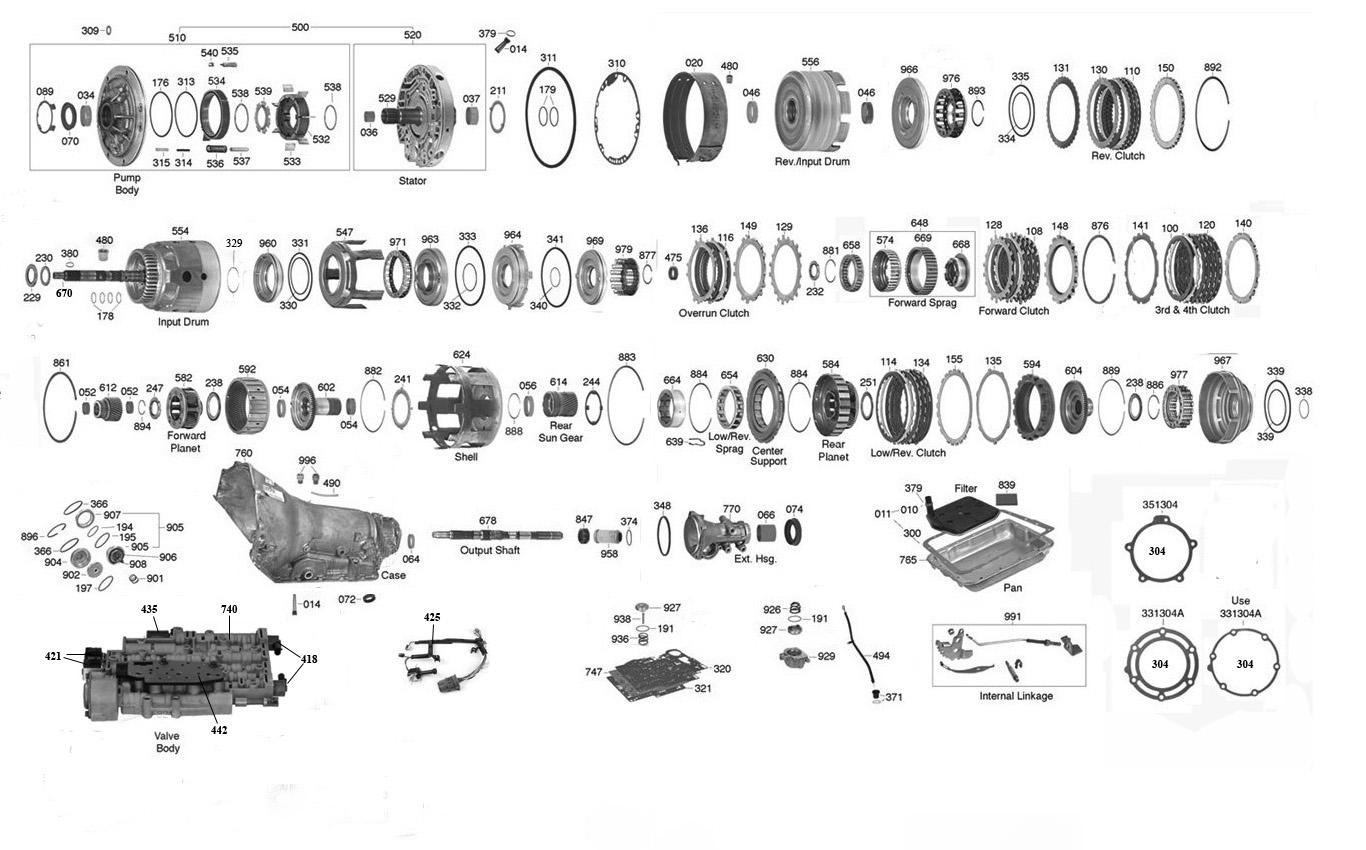
Role Inside the Transmission
The reaction carrier is the structural backbone of the planetary gear set inside the transmission. Unlike rotating gears, it acts as a fixed anchor point that absorbs torque when gear ratios change. When you accelerate or shift, the gears push against the carrier to multiply engine power. In trucks like the Silverado, this component endures extreme stress, especially during towing or hard launches.
If the carrier is made from substandard material or has a design flaw, microscopic cracks can form. Over time, these grow until the carrier fractures, collapsing the gear set’s integrity.
Why It Breaks Under Load
Cracking typically occurs during high-torque events such as towing uphill, rapid acceleration, or engine braking on steep descents. The 4L60E and 8L80/8L90 transmissions are both engineered for heavy-duty use, but weakened carriers cannot sustain peak loads. Once the fracture begins, the transmission loses its ability to hold gear ratios, leading to slippage and eventual complete mechanical failure.
Owners often report the problem starts subtly with slight hesitation or a soft clunk before escalating to grinding and total loss of drive within days or weeks.
Recognizing Early Warning Signs

Audible and Physical Symptoms
Listen for these telltale signs of reaction carrier degradation:
- Grinding noise from transmission: A metallic grinding or growling sound during acceleration or shifting.
- Clunking on gear change: A sharp clunk when shifting into drive or reverse, or between gears while driving.
- Transmission slip: Engine revs rise without corresponding speed increase, especially under load.
- Vibration through drivetrain: Shuddering felt in the floor or steering wheel during gear engagement.
These symptoms may come and go at first, making diagnosis tricky. However, their recurrence, especially under similar driving conditions, should trigger immediate inspection.
Dashboard Warnings and Failure Modes
Do not ignore these electronic alerts:
- Check Engine Light (CEL): Often triggered by transmission pressure or speed sensor anomalies due to internal slippage.
- Transmission Warning Light: Illuminates when the TCM detects abnormal operation.
- Failure to engage gears: Shifter moves, but no forward or reverse drive is achieved.
In catastrophic failure, the vehicle may lose all drive function abruptly. Some owners report being stranded on highways with no prior severe symptoms, emphasizing the importance of proactive checks.
Official GM Repair Program Details
No-Charge Fix Until October 2027
General Motors is covering the inspection and replacement of the reaction carrier at no cost for eligible vehicles under Customer Satisfaction Program N252517790. This coverage includes:
- Labor and parts
- Transmission disassembly and reassembly
- Post-repair testing
The program runs until October 31, 2027, regardless of mileage or ownership duration. Even high-mileage or previously serviced vehicles qualify if the VIN is flagged.
How to Check Eligibility
- Contact your GM dealership and provide your VIN.
- Ask them to check GM Global Warranty Management and the Investigate Vehicle History database.
- Confirm if your vehicle is listed under Program N252517790.
- Request a formal eligibility letter if approved.
Even if you have not received a mailed notice, your truck may still qualify. Proactive outreach is key, especially for 2025 models.
What the Repair Involves
Technician Inspection Steps
GM-certified technicians follow a strict protocol:
- Scan for DTCs: Use a GM-compatible scanner to check for transmission-related diagnostic trouble codes.
- Visual and physical inspection: If the transmission is removed or accessible, inspect the reaction carrier for hairline cracks or deformation.
- Internal teardown (if needed): In some cases, partial disassembly is required to confirm damage.
- Replace carrier if defective or at-risk: Even if no visible crack is present, carriers from affected production batches must be replaced.
The repair typically takes 6–10 hours, depending on shop workflow and transmission accessibility.
Updated Part Numbers Used
GM has superseded older reaction carrier assemblies with improved versions:
- Old Part No.: 24281171 (discontinued)
- New Part No.: 24059373 (current replacement)
Technicians must install the updated part to complete the repair. Using the old number may indicate incorrect parts or incomplete service.
Other related components sometimes replaced include:
- Internal Gear Retainer Ring (24266574) at a discounted price of $7.80
- Sun Gear and Clutch Assembly (24278791) at a discounted price of $64.88
Dealer Protocols and Vehicle Holds
Inventory Hold Rules
Dealerships must follow strict rules for affected units:
- Hold all inventory vehicles (new, CPO, shuttle, loaners) if the VIN is flagged.
- No transfers or auctions until repair is completed.
- Service hold during customer visits: If a customer brings in an eligible vehicle, the dealership may require it to remain on-site until inspection and repair are finished.
This prevents potentially unsafe vehicles from being sold or driven off the lot.
Courtesy Transportation Options
Some dealers offer loaner vehicles or rental reimbursement while your Silverado is being repaired. While not guaranteed, it is worth asking about. Availability depends on dealership policy and regional GM support.
DIY and Aftermarket Considerations
Not a DIY-Friendly Repair
Replacing the reaction carrier is not a do-it-yourself job. It requires:
- Complete transmission removal or deep internal disassembly
- Specialized tools (transmission jack, torque wrenches, alignment tools)
- Expertise in automatic transmission rebuilds
- Calibration of the transmission control module post-repair
Attempting this without experience risks further damage or improper reassembly.
Aftermarket Parts Risk
While aftermarket carriers exist, GM strongly recommends using genuine OEM parts like 24059373. Aftermarket units may not meet the upgraded material or heat-treatment standards designed to prevent future failures. Given that the original defect stems from material weakness, cutting corners on parts is not advised.
Real-World Owner Experiences
“I’m Having 4L60 Nightmares”
User “MrScottly” (October 20, 2025) shared this blunt assessment after his 2024 Silverado 1500 with the 4L60E transmission failed mid-tow. He reported a sudden loss of drive and grinding noise, symptoms consistent with reaction carrier fracture. Despite being outside the N252517790 program, he successfully argued for a goodwill repair by documenting consistent issues and citing community trends.
Other owners echo similar frustration: failures occurring just outside warranty, inconsistent dealer responses, and fear of repeat failures even after repair.
Why Proactive Inspection Matters
Many owners stress that early detection could have prevented total transmission rebuilds. One Colorado owner avoided a highway breakdown by bringing in their truck after noticing a faint clunk. The carrier was cracked but not yet failed, and it was replaced under warranty before catastrophic damage occurred.
Action Plan for Silverado Owners
Step-by-Step: Get Your Fix
-
Verify your model and transmission type:
– 2025 Silverado 1500 with 8L80/8L90? Likely eligible.
– 2023–2025 with 4L60E? Push for inspection regardless. -
Call your GM dealer:
– Provide VIN.
– Ask: “Is my vehicle part of Customer Satisfaction Program N252517790?” -
Schedule inspection:
– Request the reaction carrier be checked, even if no severe symptoms exist. -
Document everything:
– Save service records, symptom logs, and correspondence. -
Demand OEM parts:
– Confirm the technician uses Part No. 24059373, not the older 24281171. -
Follow up:
– If denied, contact GM Customer Care at 1-800-222-1020 and reference the program.
Preventative Maintenance Tips
Reduce Stress on Transmission
Even with a repaired carrier, protect your transmission:
- Use tow/haul mode when carrying heavy loads.
- Avoid aggressive launches from stoplights.
- Maintain transmission fluid levels and change per schedule (every 50,000–100,000 miles, depending on use).
- Monitor fluid condition: Dark, burnt-smelling fluid indicates overheating or wear.
Consider an auxiliary transmission cooler if you tow frequently. It reduces thermal stress on internal components.
Schedule Regular Scans
Have your transmission control module scanned annually for hidden codes. Soft faults may not trigger a warning light but can indicate early slippage or pressure issues.
Frequently Asked Questions About Chevy Silverado Transmission Reaction Carrier Fix
Which Chevy Silverado models are affected by the reaction carrier defect?
The defect affects 2025 Silverado 1500 models with 8L80/8L90 transmissions under the official program, and 2023–2025 Silverado 1500 models with 4L60E transmissions based on owner reports. Chevrolet Colorado (2023–2026) and Express (2023–2025) models are also affected.
What are the most common symptoms of reaction carrier failure?
The most common symptoms include grinding noises during acceleration, clunking when shifting gears, transmission slipping under load, drivetrain vibrations, and dashboard warning lights. In severe cases, the vehicle may lose all drive function without warning.
Is the reaction carrier repair free under the GM program?
Yes. Under Customer Satisfaction Program N252517790, eligible vehicles receive inspection and reaction carrier replacement at no charge, covering both parts and labor. The program is valid until October 31, 2027, regardless of mileage.
What part number replaces the defective reaction carrier?
The updated replacement part number is 24059373, which supersedes the older part number 24281171. Technicians must use the new part to ensure the repair meets GM’s updated standards.
Can I repair the reaction carrier myself?
No. This repair requires complete transmission removal or deep internal disassembly, specialized tools, and expert knowledge of automatic transmission rebuilds. Improper handling can cause further damage or safety risks.
What should I do if my dealer denies the repair?
If your dealer denies coverage, contact GM Customer Care at 1-800-222-1020 and reference Program N252517790. Document all symptoms and communications to strengthen your case, especially if your vehicle falls within the affected model years.
Key Takeaways for Fixing Your Chevy Silverado Reaction Carrier

The Chevy Silverado transmission reaction carrier defect is a serious but fixable issue. First, verify whether your truck falls under the official N252517790 program or the parallel 4L60E concerns. Second, watch for early symptoms like clunking, slipping, or grinding, and act before catastrophic failure occurs. Third, insist on the updated OEM part (24059373) and full documentation throughout the repair process.
With the repair deadline set for October 31, 2027, there is time, but waiting for complete failure is never worth the risk. Contact your GM dealer today, provide your VIN, and schedule an inspection to protect your investment.