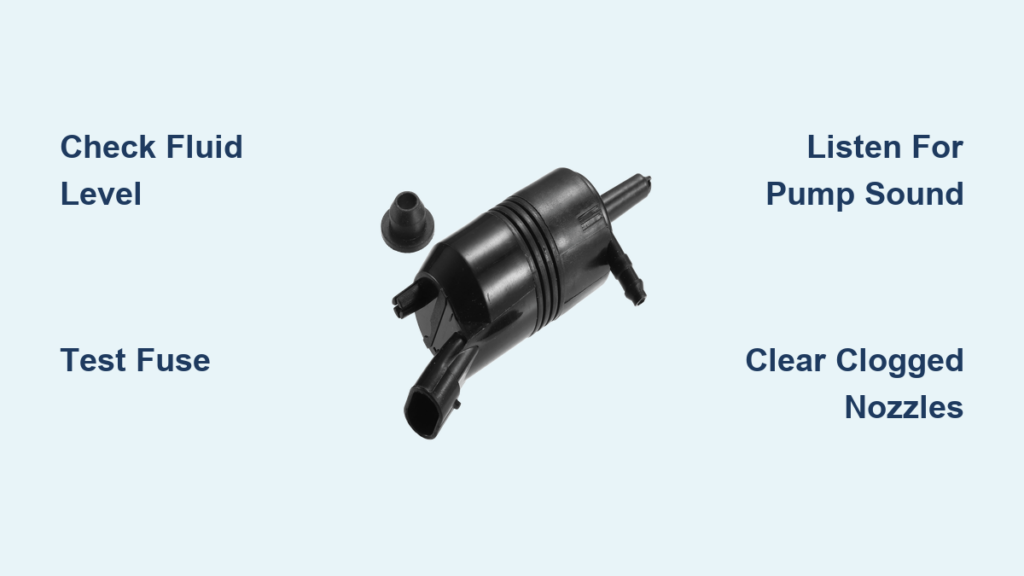
You press the washer button on your Chevrolet Silverado and nothing happens. No spray, no clean windshield, just a smudged view of the road ahead. If your Silverado washer fluid not spraying, this is a well-documented issue, especially in 2012–2016 models where drivers report complete failure despite a full reservoir and intact fuse. The problem usually traces back to a dead pump, clogged nozzles, or electrical faults.
This guide walks you through every diagnostic step, repair option, and prevention tip. Whether you hear silence or a humming sound when activating the washer, you’ll learn exactly what to check, what to replace, and how to keep your system running smoothly for years to come.
Confirm Basic Fluid and Fuse Status
Before diving into complex diagnostics, rule out the simplest causes first. Many washer failures stem from overlooked basics that take only minutes to verify.
Check Fluid Level and Quality
Open the hood and locate the windshield washer reservoir. It’s typically a white or translucent container with a blue cap near the firewall. Ensure fluid sits between the “min” and “max” lines. Running the pump dry causes it to overheat and burn out from lack of lubrication. If the tank is low, refill with quality washer fluid containing freeze protection and cleaning agents. Avoid plain water, which lacks detergents and can freeze or promote algae growth.
Inspect the Washer Fuse
A blown fuse is a common silent killer of washer systems. Locate your Silverado’s underhood fuse box, usually on the driver side near the battery. Refer to the lid diagram to find the washer pump fuse, typically a 10A or 15A blade fuse. Pull it out and inspect the metal strip inside. If it’s broken or discolored, replace it with an identically rated fuse. Even if the fuse looks good, test it with a multimeter for continuity to confirm it’s functional.
✅ Pro Tip: Carry spare fuses in your glove box. A $2 fuse can save you from a costly misdiagnosis and a trip to the auto parts store.
Listen for Pump Activation
The sound (or lack thereof) when you trigger the washer switch tells you whether you’re dealing with an electrical or mechanical problem.
No Sound? Diagnose Electrical Failure
If you hear complete silence, the pump isn’t receiving power. This points to several possible causes:
- Blown fuse (already checked above)
- Failed pump motor
- Broken wiring
- Corroded connector
- Faulty washer switch
Even with a good fuse, voltage must actually reach the pump. Use a multimeter to test for power at the pump’s electrical connector when the switch is pressed. If you detect no voltage, trace the circuit back to the fuse box and switch to locate the break.
Pump Runs But No Spray? Look for Blockages
If you hear a hum or buzz but no fluid sprays, the motor is alive but something is blocking flow. Common culprits include:
- Clogged nozzles
- Kinked or disconnected hoses
- Internal pump impeller failure
- Clogged intake screen
This scenario represents mechanical failure despite electrical function. In many cases, it’s fixable without replacing the entire system.
Test the Washer Pump Directly
To confirm whether the pump itself is the problem, bypass the vehicle’s wiring and test it independently.
Power the Pump Outside the Vehicle
- Remove the pump from the reservoir (requires wheel well liner removal on 2012–2016 models).
- Submerge the pump in a container of washer fluid.
- Use jumper wires to connect the pump terminals to a 12V power source, such as your truck battery.
- Watch for fluid discharge from the outlet port.
🔧 Fluid sprays? The pump works, so the problem is upstream (electrical) or downstream (hoses/nozzles).
❌ No spray? Replace the pump.
Clear Clogged Nozzles and Hoses

Even a perfectly working pump can’t push fluid through blocked lines. Clogs rank among the most common causes of poor spray performance.
Unclog Nozzles with a Pin or Needle
Locate the spray nozzles on your hood or cowl. Activate the washer briefly to identify which ones aren’t working. Use a fine sewing needle or pin to gently clear the tiny orifice. Work carefully to avoid enlarging the hole, which can misdirect the spray pattern.
⚠️ Warning: Don’t use a drill bit or metal rod. These can permanently damage the nozzle.
Flush Hoses with Compressed Air
- Disconnect the hose at the pump or nozzle end.
- Attach a compressed air nozzle using low pressure (20–30 PSI).
- Blow air through the line to dislodge debris.
- Reconnect and test the system.
If the hose is cracked, kinked, or brittle, replace it. OEM or auto parts store hoses are inexpensive and easy to install with basic tools.
Replace a Failed Washer Pump

When the pump is dead or internally damaged, replacement is the only reliable fix. The pump itself costs approximately $20, making this an affordable DIY repair.
Access the Reservoir on 2016 Silverado
- Remove the driver’s side front wheel.
- Unclip the wheel well liner (plastic fender liner) using a trim tool.
- Pull back the liner to expose the washer reservoir mounted in the fender area.
- Drain remaining fluid into a container.
- Disconnect the electrical connector and outlet hose.
- Unclip the pump from the bottom of the reservoir.
🛠️ Difficulty: Moderate (30–60 minutes for first-timers). No special tools required.
Install the New Pump
- Insert the new pump (OEM or aftermarket) into the reservoir.
- Reconnect the hose and electrical plug.
- Reinstall the wheel well liner and wheel.
- Refill the reservoir with washer fluid.
- Test the spray function immediately.
✅ Best Practice: Apply dielectric grease to the electrical connector to prevent future corrosion and ensure a solid connection.
Prevent Future Washer Failures
A little routine maintenance goes a long way toward avoiding repeat issues and extending system life.
Use Quality Fluid Year-Round
Always use proper windshield washer fluid, not just in winter. Summer formulas cut through bugs and road film, while winter blends prevent freezing. Never substitute plain water.
Clean Nozzles Every 3 Months
Buildup from wax, road grime, and dried detergent clogs nozzles over time. A quick monthly check keeps them clear and spray patterns accurate.
Test the System Weekly
Run the washers even when not strictly needed. This prevents fluid stagnation, keeps seals lubricated, and alerts you early if performance drops.
Avoid Dry-Running the Pump
Never activate the washer when the tank is low. Running without fluid overheats the pump motor and wears out the impeller quickly, leading to premature failure.
When to Seek Professional Help
While most washer repairs are DIY-friendly, consider professional service in certain situations:
- You’re uncomfortable working near electrical systems.
- The issue persists after replacing the pump and clearing all lines.
- You suspect a faulty multifunction switch or body control module (rare but possible).
For under-warranty vehicles, especially 2015–2016 models, file a claim with GM even if the time warranty has recently expired. Some owners report success with Customer Care intervention due to the high failure rate documented across these model years.
Frequently Asked Questions About Silverado Washer Fluid Not Spraying
Why is my Silverado washer fluid not spraying even though the reservoir is full?
A full reservoir with no spray typically indicates pump failure, a clogged nozzle, or an electrical issue like a blown fuse or bad switch. The pump motor is the most common culprit in 2012–2016 models, with documented failures occurring as early as 687 miles.
Where is the washer pump fuse located on a Silverado?
The washer pump fuse is in the underhood fuse box, usually on the driver side near the battery. Check the lid diagram for the exact slot. It’s typically a 10A or 15A blade fuse.
How do I access the washer pump on a 2016 Silverado?
Access requires removing the driver’s side front wheel and unclipping the wheel well liner. This exposes the reservoir mounted in the fender area, where the pump attaches to the bottom of the tank.
How much does it cost to replace a Silverado washer pump?
The pump itself costs approximately $20 for OEM or aftermarket options. Since labor at dealerships often involves long wait times, many owners choose DIY replacement to save money.
Can I unclog washer nozzles without removing them?
Yes. Use a fine sewing needle or pin to gently clear the tiny orifice on each nozzle. Avoid using drill bits or metal rods, which can permanently damage the nozzle and misdirect spray patterns.
Is washer pump failure common in Chevy Silverados?
Yes, particularly in 2015–2016 models. Community reports describe it as a “fairly common problem,” with some users noting failures under 1,000 miles. The frequency has led some owners to suggest it could be a recall candidate.
Key Takeaways for Fixing Your Silverado Washer Fluid System
A Silverado washer fluid not spraying issue is usually simple to fix once you know where to look. Start with the basics: verify fluid level and inspect the fuse. Then listen carefully. Silence means electrical failure or a dead pump, while humming means clogs or disconnections. Replace the $20 pump if needed, clear any clogged nozzles, and maintain the system regularly to avoid future headaches.
Your next step: grab a multimeter and a fuse puller, then run through the diagnostic sequence above. In under an hour, you’ll likely identify the problem and have your washers spraying like new, giving you a crystal-clear view of the road ahead.