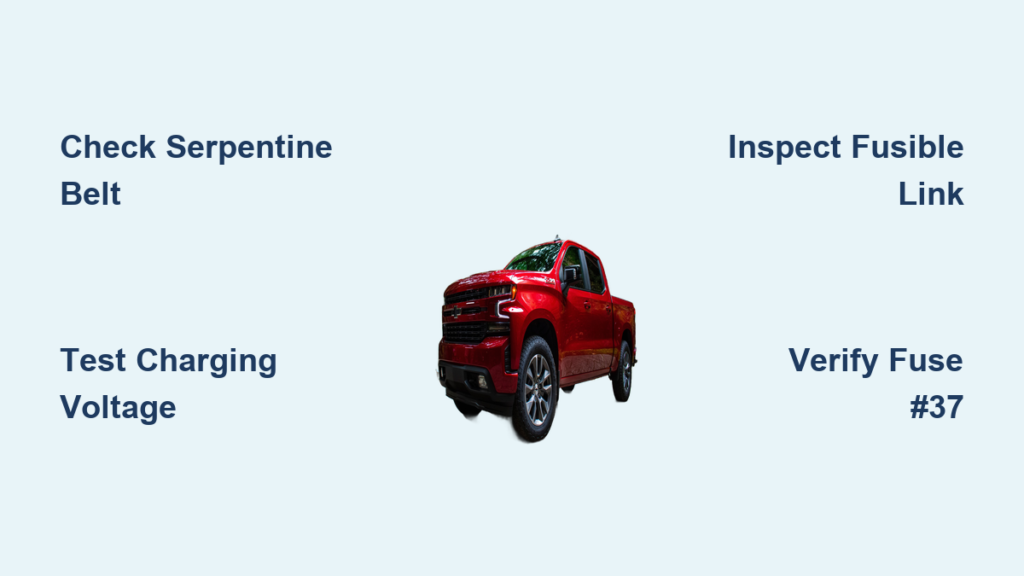
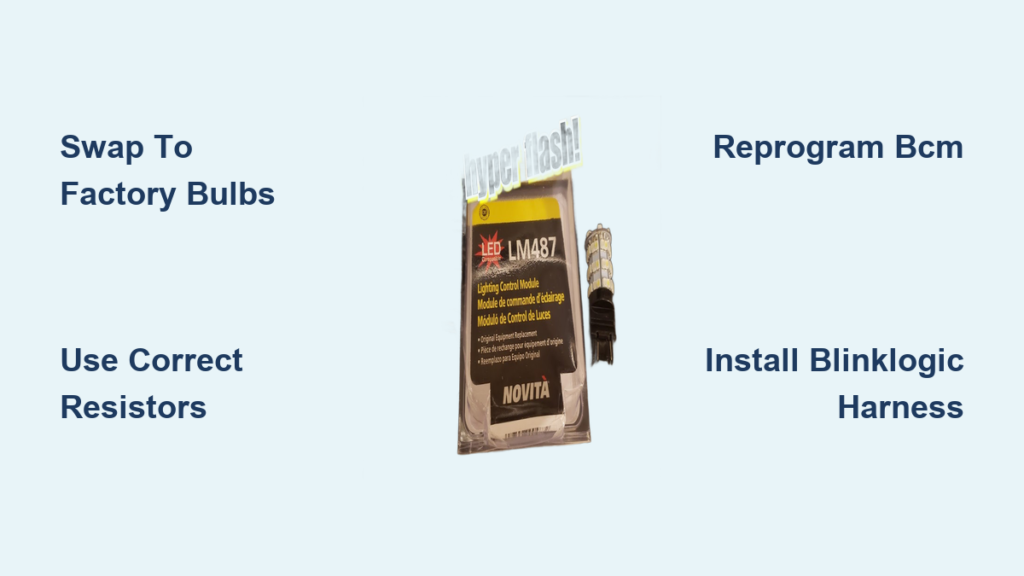
You flip on your turn signal and instead of a steady blink, your Silverado goes into overdrive with rapid flashing, a dashboard warning, and an annoying beep. This is hyper flash, and it is more than just irritating. It can make your truck appear unsafe or signal a real electrical problem. The most common cause is upgrading to LED bulbs without adjusting the electrical load. The Body Control Module (BCM) detects the lower current draw and assumes a bulb has failed. The good news is that this issue is completely fixable.
In this guide, you will learn how to diagnose the exact cause, choose the right fix for your specific model year, install the solution safely, and avoid the common mistakes that leave most DIYers stuck. Whether you drive a 2007 classic or a 2024 OE LED model, you will get clear steps to permanently stop hyper flashing and restore reliable turn signals.
Diagnose the Real Cause Before Buying Parts
Before installing resistors or modules, confirm the hyper flash is due to LED conversion and not a deeper electrical fault.
Read Your DIC Error Message
The Driver Information Center (DIC) often displays “Turn Signal Failure” within seconds of activating the signal. Note the location, such as “Front Left” or “Rear Right.” This pinpoints the affected circuit. If the message appears after three flash cycles, it is likely a load issue. If it shows immediately or persists with factory bulbs, inspect the wiring or BCM.
Swap Back to Factory Bulbs
Reinstall original incandescent bulbs in the suspect position. If hyper flashing stops and the DIC clears, the problem is confirmed as an LED load mismatch. This “factory revert” test is the gold standard for diagnosis. If the issue remains, check for poor grounds, damaged sockets, or trailer wiring interference.
Test Battery Voltage Under Load
Monitor your dashboard gauge or use a multimeter. Normal operating voltage is around 14V. If it drops below 11V when signaling, you may have a failing alternator, weak battery, or corroded ground. The BCM interprets voltage drops as open circuits, triggering hyper flash even with correct bulbs.
Choose the Right Fix for Your Model Year

Not all Silverados respond to the same solution. Your model year and lighting type determine the best approach.
2007–2013: Replace the Flasher Relay
Early models use a physical flasher relay under the dash. If your truck hyper flashes after LED installation, swap the OEM relay with an LED-compatible flasher module. These modules ignore load changes and maintain a steady flash rate. No resistors or splicing needed.
Key details for this fix:
– Location: Fuse box beneath the steering column
– Part Type: Plug-in 3- or 4-pin module
– Cost: $15 to $30
– Installation Time: 2 minutes
2014–2023: Resistors or BCM Reprogram
These trucks have integrated BCMs with no replaceable relay. The BCM actively monitors circuit load. Two proven fixes exist for this generation.
Install Load Resistors on Front and Rear
Add resistors to simulate incandescent load. Use 6 ohm, 5+ watt resistors for front turn signals and 3 ohm, 5+ watt resistors for rear signals. If 3 ohm resistors are unavailable, wire two 6 ohm resistors in parallel per rear light to achieve the correct resistance.
Follow these installation steps:
1. Cut or tap into turn signal wires at the bulb socket
2. Wire the resistor in parallel across positive and ground
3. Secure the resistor to a metal chassis or housing for heat dissipation
4. Insulate all connections
Cheap resistors often fail or drift in resistance. Use branded units to avoid lingering error messages.
Reprogram the BCM for a Clean Fix
Use a programmer like HP Tuners or visit a dealer to reprogram the BCM for LED bulbs. This adjusts the current threshold so the system no longer flags LEDs as failures.
- Best For: Tech-savvy owners or those avoiding heat-generating resistors
- Cost: $50 to $150 for dealer service or tool investment
- Result: No hyper flash, no error messages, zero heat
2024+ Silverado: Use the BlinkLogic Harness
Factory-equipped LED models from 2024 to 2026 use digital communication between the BCM and Lighting Control Module (LCM). Resistors will not work because they cannot mimic the data handshake.
BlinkLogic Solves OE LED Hyper Flash
BlinkLogic is a plug-and-play harness designed specifically for GM’s latest architecture. It maintains proper BCM and LCM communication, eliminating errors after accessory installs like flatbeds or aftermarket lights.
Key features include:
– OEM Molex 12-pin connectors
– No wire cutting or splicing
– Restores full signal functionality
– Fails safe by reverting to fast flash, never total failure
– Minimal heat compared to resistor banks
Complete the installation in four steps in under five minutes:
1. Disconnect rear tail light connectors
2. Plug the driver-side harness into the BlinkLogic module
3. Connect the passenger-side lead
4. Reconnect tail lights to the module
The cost is $295, with dealer pricing available. This harness is not for trucks with factory incandescent bulbs; use resistors instead.
Avoid Common Installation Mistakes
Even with the right parts, poor installation causes ongoing issues.
Wrong Resistor Values Cause Errors
Using 6 ohm resistors on rear lights instead of 3 ohm may still trigger “Turn Signal Failure.” The BCM expects a specific load profile. Always match 6 ohm for front and 3 ohm for rear positions.
Poor Heat Management Melts Components
Resistors reach 300°F or higher during use. Never zip-tie them to plastic, wiring, or carpet. Mount directly to metal such as fender liner brackets, frame rails, or light housing backplates. Use thermal adhesive or metal brackets for secure, long-term mounting.
Polarity Errors Block LED Function
LEDs are polarized. If plug-in LEDs do not light, try flipping the connector 180 degrees. Some aftermarket harnesses allow reverse insertion, which kills the circuit. Verify correct orientation before assuming a resistor issue.
Ignoring Rear Lights Causes Front Hyper Flash
Many users install resistors only on front LEDs but skip the rear. The total circuit load is still too low, so the front signals hyper flash. If you have converted all four corners, treat all four with resistors or digital correction.
Why Some Fixes Fail and How to Correct Them
Even with correct parts, hyper flash can persist. Here is why and how to resolve it.
No-Name Resistors Do Not Hold Resistance
Cheap resistors often have high tolerance and degrade under heat. They may read 6 ohm cold but drift when hot, triggering the BCM. Replace with precision 6 ohm and 3 ohm resistors from reputable brands.
Voltage Dips Mimic Bulb Failure
If your battery gauge drops to 11V when signaling, the BCM sees this as an open circuit. Test the alternator output (should be 13.8 to 14.7V at idle), battery health with a load test, and ground connections. Fix electrical issues first since no resistor or module will work on a dying system.
Aftermarket Lights Have Faulty Built-In Resistors
Some Spyder or LED tail light assemblies claim “no resistor needed.” If hyper flash occurs, the internal resistor may be undersized or failed. Test by installing factory bulbs in the aftermarket housing or using OEM housing with LED bulbs. If the problem follows the housing, the internal wiring is faulty.
Quick-Signal Works But Full Signal Fails
If tap-to-signal works fine but holding the lever causes hyper flash, the resistor may be overheating. As resistance drifts with temperature, the BCM detects a fault after a few seconds. Upgrade to higher-wattage resistors and improve heat sinking.
Compare All Fix Options

| Feature | Load Resistors | BCM Reprogram | BlinkLogic Harness |
|---|---|---|---|
| Best For | 2007–2023 incandescent-to-LED | 2014+ with tech access | 2024+ OE LED models |
| Heat Generated | High (requires heat sink) | None | Minimal |
| Install Difficulty | Moderate (wiring required) | High (tools or dealer) | Low (plug-and-play) |
| Error Message Fix | Sometimes (quality-dependent) | Yes | Yes |
| Cost | $10 to $40 | $50 to $150 | $295 |
| Reliability | Moderate (thermal stress) | High | High |
Frequently Asked Questions About Silverado Hyper Flash
What causes hyper flash on a Silverado after installing LED bulbs?
The BCM detects lower current draw from LEDs compared to incandescent bulbs. It interprets this reduced load as a burnt-out bulb and triggers rapid flashing along with a “Turn Signal Failure” message on the DIC.
Do I need resistors on all four turn signals?
Yes. If you convert both front and rear bulbs to LED, you should install resistors on all four corners. Treating only the front often leaves total circuit load too low, causing the front signals to hyper flash.
Can I use load resistors on a 2024 or newer Silverado with factory LEDs?
No. OE LED trucks use digital communication between the BCM and LCM. Resistors cannot mimic this data handshake and will not resolve hyper flash. Use a specialized harness like BlinkLogic instead.
Why does my quick-signal work but holding the lever causes hyper flash?
The BCM performs a more rigorous load check during sustained operation, or your resistor is overheating and drifting in resistance. Upgrade to higher-wattage resistors and ensure proper heat sinking.
How do I know if my hyper flash is from LEDs or a real electrical problem?
Swap back to factory incandescent bulbs. If hyper flashing stops, the issue is LED load mismatch. If it persists, check battery voltage, alternator output, and ground connections for faults.
Will BCM reprogramming eliminate the need for resistors?
Yes. Reprogramming adjusts the current threshold so the system recognizes LED loads as normal. This eliminates hyper flash and error messages without adding any components or heat.
Final Tips for a Lasting Silverado Hyper Flash Fix
Test both tap-to-signal and full engagement after installation to confirm everything works. Seal all connections with heat shrink tubing or dielectric grease to prevent moisture corrosion. Convert all turn signal positions including front, rear, left, and right. Avoid combining resistors with BCM reprogramming since this can confuse the system. BlinkLogic offers a 30-day return policy, while custom resistor jobs are typically final sale.
Hyper flash is your Silverado’s way of telling you the electrical system does not recognize your new LEDs. With the right fix for your specific model, you can silence the rapid blink, clear the error message, and drive with confidence. Start by confirming the diagnosis with the factory bulb swap test, then choose the solution that matches your model year. Your turn signals will be back to normal before you finish your next drive.