A rhythmic ticking from your Silverado’s engine can stop you in your tracks. Is it harmless injector chatter or the first warning of a failing lifter? The silverado lifter tick fix process begins with knowing exactly what you are hearing. Many owners rush to conclusions and spend thousands on unnecessary repairs, while others ignore a real problem until a cam lobe grinds away. The difference between these outcomes comes down to proper diagnosis.
This guide walks you through every step of identifying, treating, and preventing lifter tick in your 5.3L or 6.2L Silverado. You will learn how to separate normal engine noise from mechanical danger, which oil and filter combinations actually quiet cold-start ticks, and when a full cam and lifter replacement becomes unavoidable. Whether your truck ticks for ten seconds on a cold morning or rattles under load, this roadmap will help you protect your engine and your wallet.
Decode the Ticking Noise Before Touching Anything

Not every tick means lifter failure. Before you order parts or schedule a repair, confirm where the sound is actually coming from. Misdiagnosis leads to wasted money and unresolved problems.
Pinpoint the Source with a Mechanic’s Stethoscope
A long screwdriver or mechanic’s stethoscope lets you isolate noise by placing the tip on different engine components and listening through the handle.
- Fuel injectors: Produce a sharp, high-pitched click that stays consistent across RPMs. This is normal on GM V8s.
- Valve covers: Generate a deeper, metallic tap that often comes and goes. This points to lifters or rocker arms.
- Exhaust manifold: Creates a tick that grows louder under throttle. Look for soot trails or broken bolts.
If the noise changes with engine load or fades once the engine warms up, it is likely mechanical rather than just injector chatter.
Compare Injector Tick vs. Lifter Tick
| Feature | Injector Tick | Lifter Tick |
|---|---|---|
| Sound Quality | Sharp, consistent click | Dull, irregular tap |
| RPM Response | Linear increase | May worsen under load |
| Temperature Effect | None | Often worse when cold |
| Check Engine Light | No | Possible (P030X codes) |
| Required Action | None | Diagnose further |
Injector tick is normal operation. Lifter tick is a warning that deserves attention.
Confirm Your AFM or DFM Engine Type
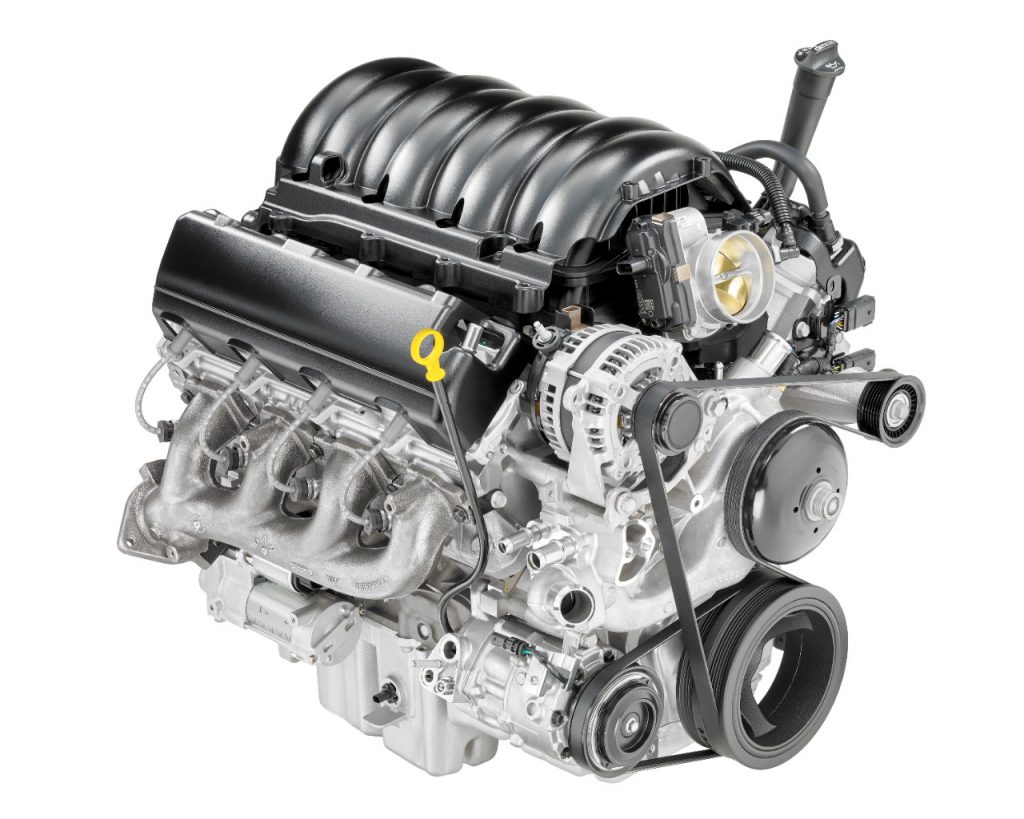
Your repair path depends entirely on whether your engine uses cylinder deactivation. Installing the wrong lifter type can cause immediate engine damage.
Check for the DFM Badge or RPO Code
- Open the hood and look for a DFM badge on the engine cover.
- Check the glovebox or window sticker for RPO code PO7, which confirms Dynamic Fuel Management.
- Most 2014 and newer 5.3L and 6.2L Silverados have DFM. Older models typically use basic AFM.
Match Lifters to Your Specific Engine
- Non-AFM engines: Use LS7 or DOD Non-AFM lifters.
- AFM or DFM engines: Require DOD-AFM lifters only.
- Never install non-AFM lifters in an AFM system. They will not collapse correctly and will damage the camshaft.
Using incorrect parts voids warranties and risks catastrophic engine failure.
Run the Diagnostic Checklist in Order
Follow this sequence to rule out simple causes before assuming the worst.
Step 1: Check Oil Level and Condition
Low oil or fuel-diluted oil causes aeration and prevents lifters from filling properly.
- Park on level ground.
- Warm the engine, shut it off, and wait five minutes.
- Pull the dipstick. Oil should sit between the “add” and “full” marks.
- Inspect the color. Milky oil indicates coolant contamination. Thin, gas-smelling oil points to fuel dilution.
Top off with the correct viscosity if low. Retest after a two-hour soak period.
Step 2: Scan for Trouble Codes
Use an OBD2 scanner to check for stored codes.
- P0300 through P0308: Cylinder misfires
- P0521 or P0523: Oil pressure issues
- P0087: Fuel rail pressure low
- Cylinder Deactivation Disabled messages
No codes usually mean you are not dealing with a hard mechanical failure yet. The problem likely involves aeration or temporary oil flow issues.
Step 3: Test Oil Pressure with a Mechanical Gauge
Low oil pressure starves lifters and causes ticking. Connect a mechanical gauge at the sender port.
- At hot idle (normal operating temperature): Should read 20 to 30 psi
- At 2,500 RPM: Should exceed 55 psi
Readings below 18 psi at idle signal a problem with the oil pump, pickup tube, or bearing wear.
Follow the TSB 10-06-01-007D Repair Protocol
GM’s official fix for cold-start lifter tick appears in TSB 10-06-01-007D, which superseded PIP4499A. Following this bulletin ensures you address the problem correctly.
Understand Aerated Oil at Startup
Aerated oil causes lifters to fill slowly, creating a tick that can last up to ten minutes after a cold start.
Common root causes include:
- Oil drain-back from a failed anti-drain back valve
- Suction-side air leaks at the oil pump pickup O-ring
- Low oil level or incorrect viscosity
- Contaminated oil with high aeration
Perform a Power Balance Test
Use a Tech 2 scanner or a comparable tool to isolate the noise.
- Start the engine and listen for the tick.
- Disable each injector one at a time.
- If the tick stops when a specific cylinder is cut, the problem is likely piston slap rather than lifter failure.
- If the tick persists at valve train frequency, this confirms air trapped in the lifters.
Only proceed to lifter replacement if the tick is valve-speed and oil pressure reads normal.
Replace All AFM Lifters as a Set
The TSB is clear: do not replace just one lifter. Replace all eight (or sixteen) AFM lifters together.
- Use OEM or certified AFM-compatible lifters.
- Never substitute non-AFM parts.
- Flush oil passages to remove debris before installation.
- Replace lifters only after ruling out oil pump or pickup issues.
Skipping these steps leads to repeat failures and additional engine damage.
Upgrade Your Oil and Filter Strategy

Oil formulation and filtration directly impact lifter longevity, especially in high-mileage trucks or cold climates.
Choose the Correct Oil Viscosity
Follow GM specifications for your engine.
- 5W-30: Standard for most 5.3L and 6.2L engines
- 5W-20: Used in some newer models (verify in your owner’s manual)
- 0W-30: Offers better cold flow and eliminates cold tick for some owners
Never use thicker oil like 10W-40 to quiet the engine. It delays oil flow and worsens aeration.
Select High-Quality Oil Brands
User reports confirm that oil brand matters.
- Mobil 1 0W-30: Delivers fast cold starts and reduces tick
- Pennzoil Platinum High Mileage: Provides better flow with fewer cold tick reports
- Castrol Edge: Has higher CCSV viscosity, which means slower cold flow and may contribute to tick
Switching from Mobil 1 to Pennzoil has triggered ticks in some cases because additive packages affect how lifters fill and damp.
Use Filters with Silicone Anti-Drain Back Valves
The anti-drain back valve (ADBV) prevents oil from draining out of lifters overnight.
- Nitrile ADBV (found in some AC Delco PF48 filters): Hardens over time, leaks, and causes dry-start tick
- Silicone ADBV: Stays flexible and prevents drain-back
Top filter choices include:
- Wix XP or SuperTech Extended Life with silicone ADBV
- Fram Ultra with silicone ADBV
- AC Delco UPF48: OEM-grade and essentially a rebranded Mobil 1 filter
Avoid generic filters that lack proper ADBV design or filtration efficiency.
Target 30-Micron Filtration for Engine Protection
SAE Paper #881825 provides clear data on filtration and wear.
- 30-micron filtration reduces engine wear by 50%
- 15-micron filtration reduces wear by 70%
Royal Purple filters use microglass media to trap particles above 30 microns, making them ideal for protecting lifters.
Fix Suction-Side Oil Leaks That Cause Aeration
Air entering the oil pump pickup causes aeration. When lifters cannot fill properly, they tick.
Inspect the Oil Pump and Pickup Tube
- Remove the oil pan (requires engine drop or subframe removal on some models).
- Check the pickup tube O-ring and replace it if cracked or missing.
- Inspect pickup tube welds, which are a common failure point on high-mileage engines.
- Confirm the pickup sits between ¼ inch and ½ inch from the pan floor.
Even a small suction leak introduces air, creating foam and poor lifter function.
Replace the Oil Pump When Necessary
If the pickup O-ring was damaged or oil pressure reads low, replace the pump.
- Use an OEM or high-flow performance pump.
- Prime the oil system before startup to prevent a dry run.
Repair AFM Lifter Collapse the Right Way

When lifters fail mechanically, replacement is the only lasting fix. But stopping at lifters alone often leads to repeat failures.
Recognize the Symptoms of Lifter Collapse
- Tick grows worse over time
- Intermittent cylinder deactivation
- Misfire codes (P0300 through P0308)
- Check engine light with AFM warnings
A collapsed AFM lifter cannot collapse properly. The cam lobe grinds down and sheds metal into the oil system.
Replace the Cam and Lifters Together
Never install new lifters without inspecting the camshaft.
- Remove the cylinder heads.
- Inspect every cam lobe for flattened or worn profiles.
- If any lobe shows wear, replace the entire camshaft.
- Replace all lifters, not just the failed one.
- Flush oil galleries and the valley pan.
The cost is significant, but a new cam and lifters prevent repeat failures and protect your investment.
Prevent Future Lifter Tick with Smart Maintenance
Avoid becoming another TSB statistic by staying ahead of problems.
Follow a Strict Maintenance Schedule
- Change oil every 5,000 miles, or every 3,000 miles if you tow or idle frequently.
- Use full-synthetic oil with high ZDDP (zinc) levels for lifter protection.
- Replace the filter with every oil change. Never reuse old filters.
Flush the System After Any Lifter Failure
If you experienced a lifter collapse, thorough flushing is mandatory.
- Remove the oil pan, valley cover, and oil pickup.
- Flush all oil passages with solvent or compressed air.
- Install a magnetic drain plug to capture any remaining metal.
Skipping this step guarantees repeat failure.
Monitor Oil Pressure Regularly
Install an oil pressure gauge or use a Bluetooth OBD2 reader with live data.
- Watch for drops below 20 psi at idle.
- Shut off the engine immediately if pressure suddenly drops.
Know When an Engine Swap Makes More Sense
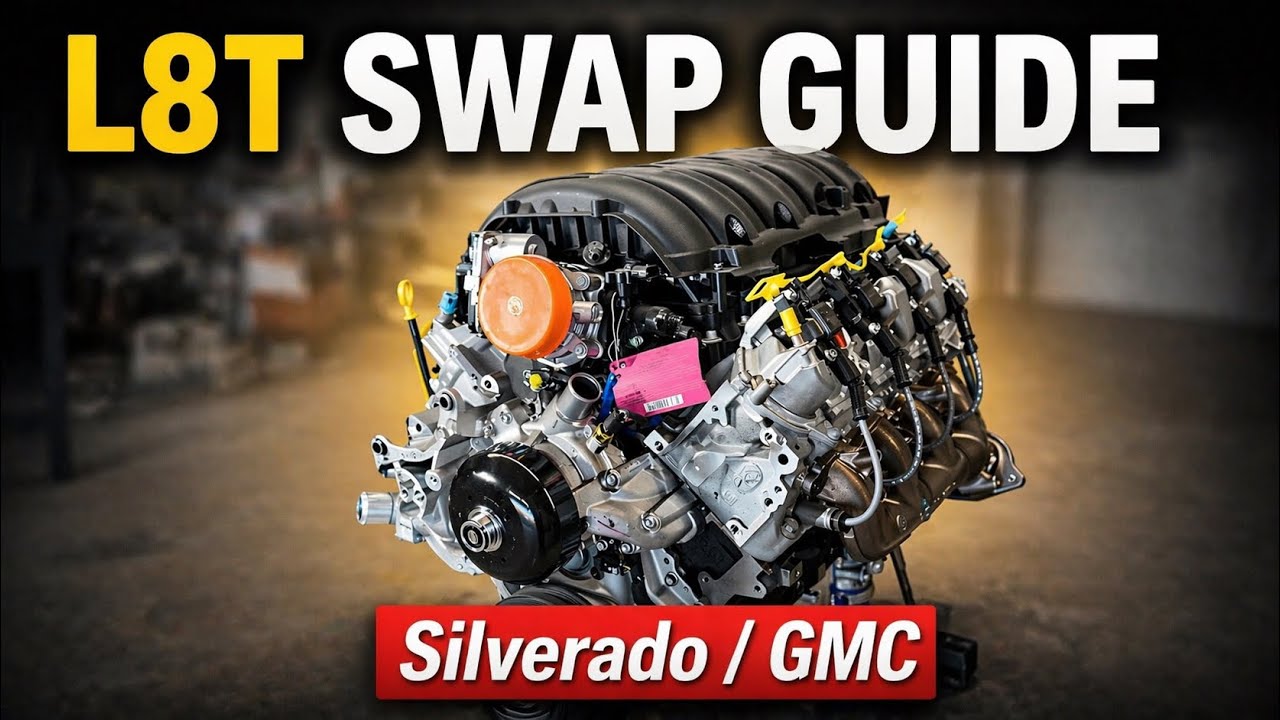
If damage is severe, repair may not be the best financial decision.
Apply the 50 Percent Cost Rule
Compare repair costs to the price of a replacement long block.
| Scenario | Cost Range | Recommendation |
|---|---|---|
| Exhaust leak | $200 to $500 | Repair |
| Single lifter | $1,200 to $1,800 | Repair with full inspection |
| Cam and lifters | $2,500 to $3,500 | Weigh against long block cost |
| Long block replacement | $3,000 to $4,000 | Often the better value |
If repair costs exceed 60 percent of long block cost, consider replacement, especially for high-mileage trucks.
Frequently Asked Questions About Silverado Lifter Tick Fix
What causes lifter tick in a Silverado?
Lifter tick in a Silverado usually stems from aerated oil at startup, suction-side air leaks, low oil pressure, or mechanical failure of AFM/DFM lifters. Cold weather and extended sitting make the problem worse because oil drains from the lifters overnight.
Can I fix lifter tick by switching oil brands?
Sometimes. Owners report that switching to Mobil 1 0W-30 or Pennzoil Platinum High Mileage reduces cold-start ticks. However, brand changes alone will not fix mechanically collapsed lifters or suction-side leaks.
How long can I drive with a lifter tick?
A minor cold-start tick that disappears within minutes is low risk. A persistent tick that worsens under load signals impending lifter collapse. Continuing to drive risks camshaft damage, bent pushrods, and complete engine failure.
Is lifter tick covered under warranty or a TSB?
GM issued TSB 10-06-01-007D to address cold-start lifter tick. Coverage depends on your truck’s age, mileage, and warranty status. Contact a dealer with your VIN to confirm eligibility.
Do I need to replace all lifters or just the bad one?
Replace all AFM lifters as a set. The TSB explicitly states that replacing only the failed lifter leads to repeat failures because the remaining lifters have experienced similar wear and oil exposure.
How much does a Silverado lifter repair cost?
Costs vary widely. A single lifter replacement runs $1,200 to $1,800. A full cam and lifter overhaul costs $2,500 to $3,500. A long block replacement ranges from $3,000 to $4,000 or more depending on your location and engine type.
Key Takeaways for a Lasting Silverado Lifter Tick Fix
The silverado lifter tick fix is not a single repair but a diagnostic process. Start by confirming the noise source, check your oil and filter quality, and rule out exhaust leaks and injector chatter. Follow GM’s TSB guidelines for AFM engines and use only the correct lifter type for your configuration. When mechanical failure occurs, replace all lifters together and inspect the camshaft before reassembly. Finally, commit to a strict maintenance schedule with quality oil and silicone-ADBV filters. With proper care, your 5.3L or 6.2L can run reliably past 200,000 miles, but lifter neglect is the fastest path to a costly engine rebuild. Start with an oil and filter change today, then work through the diagnostic checklist to catch problems before they escalate.