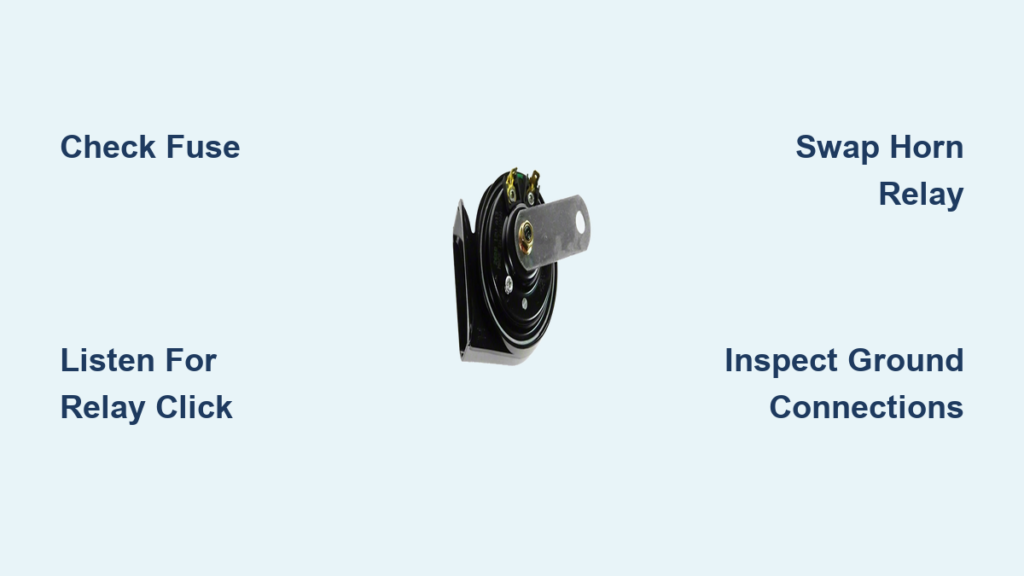
You press the horn and nothing happens. No beep, no click, just silence in a critical moment. A Silverado horn not working is more than an inconvenience. It is a safety hazard that can leave you vulnerable in traffic. Many truck owners assume the horn button or the horns themselves are to blame. They replace parts, spend money, and still drive in silence.
The truth is that horn failure on Chevrolet Silverado trucks often traces back to hidden culprits like burnt PCB relays, loose grounds under the brake pedal, or a failed clock spring. This guide walks you through a proven diagnostic sequence based on real technician case studies. You will learn how to test each component in the right order, avoid wasted money, and restore your horn for good.
Confirm Power and Fuse Status
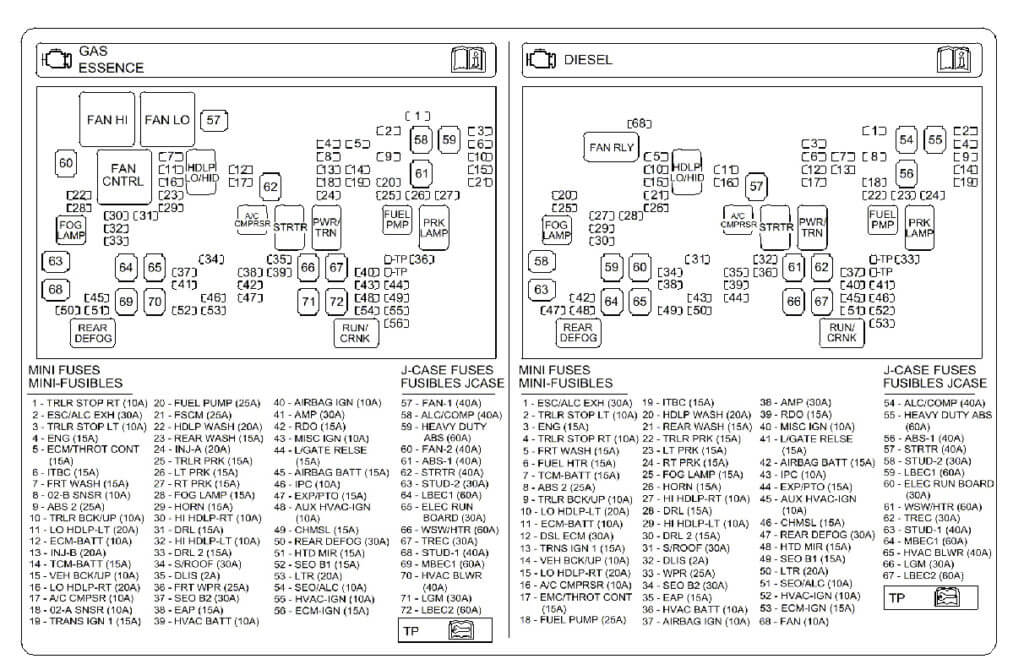
Before touching the steering column, verify the basics. A blown fuse is the simplest fix, but a good fuse does not always mean power is flowing where it should.
Check the Horn Fuse
Open the under-hood fuse panel, also called the Power Distribution Center. Use the diagram on the lid to locate the horn fuse. Pull it out and look at the metal strip inside. If it is broken or blackened, replace it with a fuse of identical amperage.
Even with a perfect fuse, voltage may never reach the circuit if the relay or internal fuse panel has failed.
Test for Voltage at the Fuse Terminals
With the fuse removed and the ignition turned to ON, use a multimeter or test light to check both terminals while an assistant presses the horn button.
- No voltage on either side points to an upstream failure, likely the relay or power feed.
- Voltage on one side only means the circuit is not completing, suggesting a relay or control signal issue.
- Voltage on both sides when pressed confirms power is reaching the fuse, so the problem lies downstream.
If there is no power despite a good fuse and a clicking relay, suspect the internal PCB relay inside the fuse box.
Listen for the Relay Click
The relay click is one of the most important diagnostic clues in the entire process. It tells you whether the control signal is reaching the relay coil.
What a Click Confirms
When you press the horn button, the Body Control Module sends a low-voltage signal to the horn relay. A distinct click means:
- The BCM is sending the signal.
- The horn switch in the steering wheel is functional.
- The low-voltage control circuit is intact.
Do not stop here. A click only proves the coil is energized. It does not prove power is actually passing through the relay contacts.
No Click Means a Control Circuit Problem
If you hear nothing when pressing the horn:
- Recheck the horn fuse.
- Inspect the BCM signal path.
- Consider a failed clock spring or steering wheel contact.
If the relay clicks but the horn stays silent, move directly to the relay swap test.
Swap the Horn Relay

Relays wear out. Even when the coil clicks, the internal contacts may be burnt, corroded, or welded open.
Perform a Quick Swap Test
Find a matching relay in the same fuse box, such as the A/C or fuel pump relay. Swap it with the horn relay.
- If the horn works after the swap, the original relay is bad. Replace it.
- If the horn still does not work, the problem is not the relay coil. It is likely the fuse panel PCB or the wiring harness.
This test takes minutes, costs nothing, and rules out one of the cheapest possible fixes.
Test the BCM Horn Signal
If the relay clicks and the fuse is good but no power reaches the horn, the next step is to test the BCM output directly.
Locate the BCM and Pin 18
Find the Body Control Module, usually mounted near the firewall or under the dash. Identify the brown connector on the module. Locate Pin 18, which carries the tan wire responsible for the horn relay control signal.
Ground Pin 18 Briefly
With the ignition on, use a jumper wire to briefly ground Pin 18.
- If the horn sounds, the BCM signal path is the issue. Likely causes include a faulty clock spring, a bad steering wheel contact, or an open circuit in the column wiring.
- If nothing happens, the problem is downstream, in the relay, fuse panel, or horn assembly itself.
This single test cleanly separates the control side from the power side of the circuit.
Inspect Critical Ground Connections

A loose or corroded ground can kill the horn circuit even when power is perfect. This is one of the most overlooked causes of a Silverado horn not working.
Find the Breakout Box Under the Brake Pedal
In 2001 and later models, a junction box under the brake pedal houses critical grounds for the horn and other systems. Remove the lower dash panel to access it.
Look for Loose or Corroded Wires
Inspect every terminal for:
- Wires pulled loose from their connectors
- Green or white corrosion on metal contacts
- Previous repair work using twisted wires or electrical tape
In one documented case, a Silverado owner replaced a horn and still had no sound. The real cause was a loose ground in this exact junction box. Fixing it restored full function.
Clean and Secure Every Ground
Disconnect the battery before working. Scrub terminals with a wire brush until the metal shines. Reconnect firmly and apply dielectric grease to prevent future corrosion.
Diagnose Fuse Panel PCB Failure

For 2007 to 2013 Silverado models, the fuse panel itself can fail. This is a hidden but surprisingly common issue.
Why PCB Relays Fail
Some models use a relay that is soldered directly onto the fuse panel’s printed circuit board. There is no removable relay to swap. Over time, heat and high current can:
- Burn the internal copper traces
- Corrode the solder joints
- Break the power path between the relay and the fuse
Even when the relay clicks, power cannot pass through the damaged board.
How to Confirm PCB Failure
You can suspect PCB failure when all of these conditions are true:
- The fuse is good.
- The relay clicks.
- There is no voltage at the fuse during activation.
- The relay swap test does not help.
- Grounding BCM Pin 18 does not sound the horn.
Repair or Replace the Panel
You have three options:
- Replace the entire fuse box with an OEM unit. This is the most reliable but also the most expensive.
- Have a specialist shop rework the PCB by re-soldering traces or adding jumper wires. Cheaper, but results vary.
- Install an aftermarket panel. Verify compatibility with your exact model year before buying.
This is not a quick fix, but it is the only true solution when the PCB itself is dead.
Test the Horn Units Directly

Do not assume both horns are bad. One may have failed, making the other sound so weak that it seems like total silence.
Apply Direct Power to Each Horn
Disconnect the horn connectors. Use jumper wires to apply 12 volts and ground directly to each horn unit.
- If the horn sounds, it is functional.
- If it does not sound, replace that unit.
Silverados use a dual-horn system with one high-tone and one low-tone horn. Both must work for normal volume. A single working horn may be nearly inaudible.
Inspect the Wiring Between Fuse Box and Horns
Trace the wires from the fuse panel to each horn. Look for:
- Rodent damage under the hood
- Chafing where wires pass over the radiator support
- Corrosion inside the connectors
A break anywhere along this path can kill one or both horns.
Evaluate the Clock Spring and Steering Wheel
If every other test passes, the clock spring becomes the prime suspect. This is especially true if the horn failed after recent steering wheel work.
What the Clock Spring Does
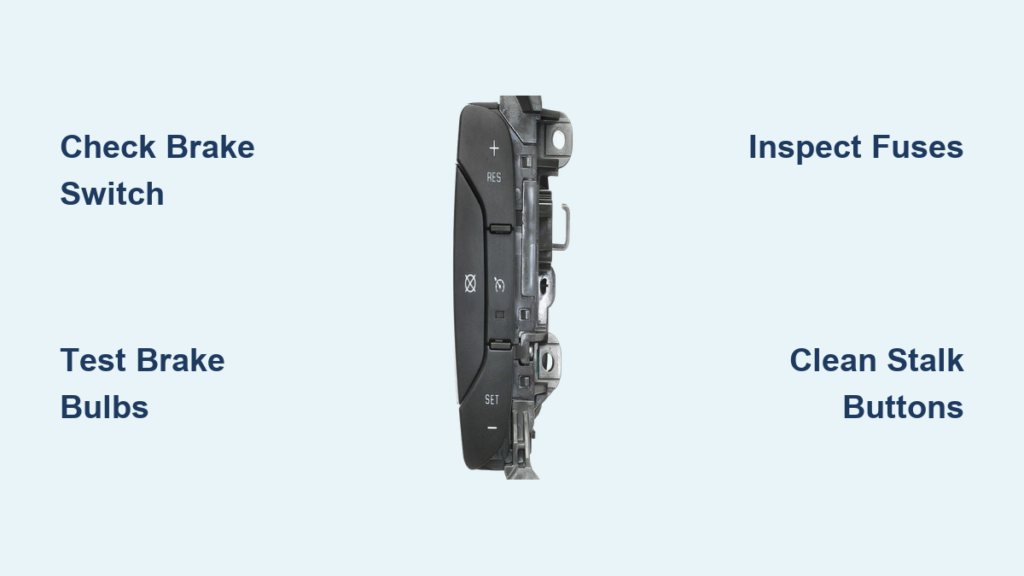
The clock spring is a spiral cable that maintains electrical connection between the stationary steering column and the rotating steering wheel. It carries the airbag circuit, the horn switch signal, and often the cruise control wiring. When it fails, the horn signal cannot reach the BCM.
When to Suspect the Clock Spring
Watch for these clues:
- The horn works only when the wheel is pointed straight ahead.
- The horn stopped working right after the airbag light came on.
- The horn failed immediately after replacing the steering wheel or contact pad.
Test Before You Replace
Do not rush to replace the clock spring. It costs between 100 and 200 dollars and requires significant labor. First confirm that:
- All grounds are clean and tight.
- The fuse panel is functional.
- The BCM signal is missing, meaning no click occurs when grounding Pin 18.
If those checks pass, the clock spring is likely the failure point.
Replacement Safety Warnings
The clock spring sits behind the airbag. Follow these rules:
- Disconnect the battery and wait at least 15 minutes before starting.
- Accidental airbag deployment can cause serious injury.
- Mark the steering wheel position before removal to keep alignment correct.
- Use a proper steering wheel puller to avoid damage.
If you are not confident with airbag systems, let a professional handle it.
Replace the Steering Wheel Contact Pad
The contact pad is the most frequently replaced part in Silverado horn repairs. It is also the most frequently replaced unnecessarily.
Signs of a Failing Contact Pad
- The horn works only when you press a specific spot on the wheel.
- The horn is completely silent but the airbag light stays off.
- Operation is intermittent, working one day and silent the next.
Replacement Tips
- Buy OEM or high-quality aftermarket parts.
- Align the spring contacts carefully during installation.
- Test the horn before fully reassembling the steering wheel.
Remember that a new contact pad will not fix a bad ground, a dead PCB relay, or a failed clock spring.
Final Diagnostic Flowchart
Follow this sequence to avoid wasted time and money:
- No horn at all? Check the fuse, then listen for the relay click.
- No click? Test the BCM signal by grounding Pin 18. If still no horn, suspect the clock spring or contact pad.
- Click but no horn? Swap the relay. Test voltage at the fuse. If no power, inspect the ground under the brake pedal. If the ground is good, suspect the fuse panel PCB.
- Power at the fuse? Test both horns directly and inspect the wiring to each unit.
- One horn sounds weak? Test both horns individually and replace the failed unit.
Prevent Future Horn Failures
A few simple habits can keep your horn working for years:
- Clean contacts annually using electrical contact cleaner on horn buttons and connectors.
- Inspect grounds during every oil change by peeking under the dash for loose wires.
- Avoid pressure-washing the engine bay near the fuse box to keep water away from the PCB.
- Replace both horns at the same time when one fails, since the other is usually near end-of-life.
Frequently Asked Questions About Silverado Horn Problems
Why does my Silverado horn click but not sound?
A clicking relay only proves the control signal is reaching the relay coil. It does not prove power is flowing through the relay contacts. Common causes include a burnt PCB relay inside the fuse panel, a bad ground under the brake pedal, or a failed horn unit.
Where is the horn relay on a 2007 to 2013 Silverado?
The horn relay is located in the under-hood fuse panel, also called the Power Distribution Center. On many GMT 900 models, the relay is soldered directly onto the panel’s printed circuit board and cannot be removed or swapped like a traditional relay.
Can a bad ground cause the horn to stop working?
Yes. The junction box under the brake pedal is a known weak point for ground connections. A loose or corroded ground here can prevent the horn circuit from completing, even when the fuse and relay are in perfect condition.
How do I test the clock spring for horn failure?
First rule out every other possibility: verify the fuse, relay, grounds, and BCM signal. If all of those check out but the horn still does not work, the clock spring is the likely cause. Horns that work only at certain steering wheel angles also point to clock spring failure.
Is it safe to replace the steering wheel contact pad myself?
It can be safe if you follow strict airbag protocols. Disconnect the battery and wait at least 15 minutes before touching any steering wheel components. Accidental airbag deployment can cause serious injury, so many owners choose to have a professional handle this repair.
Do both horns need to work on a Silverado?
Yes. Silverados use a dual-horn system with one high-tone and one low-tone unit. Both must function for normal volume. A single working horn often sounds so weak that drivers assume the entire system has failed.
Key Takeaways for Fixing Your Silverado Horn
A Silverado horn not working rarely comes down to a single bad part. The most important lesson is that a clicking relay does not guarantee power delivery. The fuse panel PCB, the ground under the brake pedal, and the clock spring are all common failure points that many owners overlook.
Always test in the right order: fuse, relay click, relay swap, BCM signal, grounds, horns, and finally the steering column. This sequence saves time, prevents wasted parts, and leads you straight to the real cause.
Start with the fuse and the relay click today. In most cases, you will find your answer within minutes and have your horn working before the day is done.