You’re driving your Chevy Silverado when the yellow check engine light suddenly appears on your dashboard. It’s not always a crisis, but it should never be ignored. Many online guides skip straight to the reset button, but the smartest approach starts with understanding why the light came on in the first place. The check engine light is your truck’s diagnostic messenger, alerting you to anything from a loose gas cap to a catalytic converter on its last legs. Resetting it without diagnosing the cause can hide serious problems, lower your fuel economy, increase harmful emissions, and lead to expensive repairs later.
This guide covers safe, proven methods to reset the check engine light on a Chevy Silverado, starting with essential diagnostics and ending with step-by-step reset procedures. You’ll learn when a simple reset is appropriate, when to call a professional, and which mistakes to avoid. Whether you prefer using an OBD-II scanner, disconnecting the battery, or letting a passive drive cycle do the work, you’ll know exactly what to do.
Decode the Warning Before You Reset
The check engine light is not just an annoyance. It is a direct signal from your truck’s onboard computer telling you something needs attention.
Start With Simple Visual Checks
Some triggers have quick fixes that don’t require special tools:
– Tighten the gas cap: A loose, cracked, or missing fuel cap is one of the most common reasons the light activates. Snap it securely in place and drive normally for 50 to 100 miles. The system may reset on its own.
– Switch fuel brands: Low-quality or contaminated gasoline can cause sensor errors. Fill up with a higher-octane fuel from a trusted station and let the old fuel cycle through.
– Watch for performance symptoms: If your Silverado runs rough, stalls, or makes unusual noises, do not reset the light. These signs indicate serious issues that need immediate professional attention.
Read the Stored Error Codes
Every check engine light corresponds to a specific trouble code stored in your truck’s OBD-II system. Accessing these codes is essential before any reset:
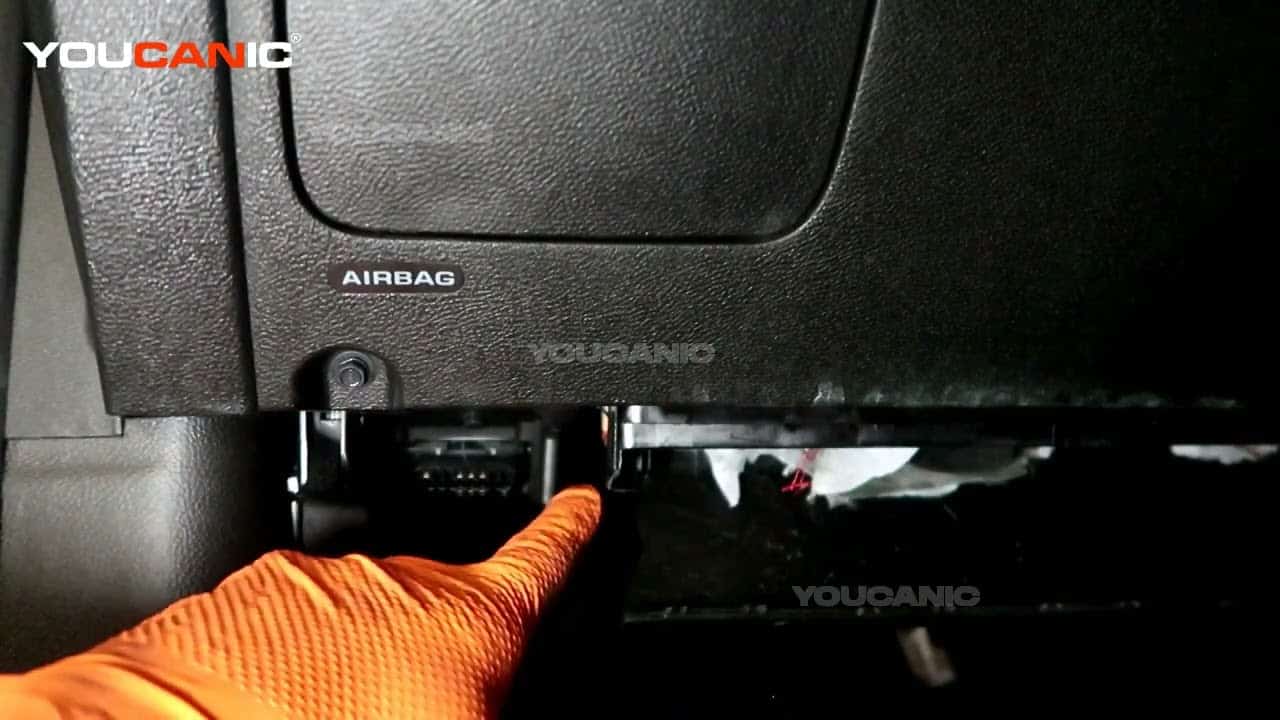
– Plug an OBD-II scanner into the diagnostic port under the dashboard, near the steering column.
– Turn the ignition to the “On” position without starting the engine.
– Follow the scanner’s prompts to read the stored codes.
Write down every code (such as P0420 or P0171) before clearing them. These codes tell you whether the issue is minor or major. Many auto parts stores offer free code reading, so you don’t need to buy a scanner to get started.
Use an OBD-II Scanner (Recommended Method)
This is the safest and most accurate way to reset the check engine light while preserving your vehicle’s settings.
Connect the Scanner and Read Codes
- Locate the OBD-II port: Found under the dash on the driver’s side, near the brake pedal.
- Plug in the scanner: Make sure the ignition is off before connecting.
- Turn the key to “On”: Power the system without cranking the engine.
- Select “Read Codes”: Wait for the scanner to display all stored trouble codes.
Take note of every code. Some indicate urgent repairs like misfires or emissions failures, while others may be temporary sensor glitches.
Clear the Codes Safely
- Select “Clear Codes” or “Erase DTCs” on the scanner.
- Wait for confirmation that the codes have been erased.
- Turn off the ignition and unplug the scanner.
- Start the engine. The check engine light should now be off.
Pro Tip: After clearing codes, drive the truck for 30 to 50 miles. The computer runs self-tests during this period. If the light returns, the underlying problem still exists.
Disconnect the Battery (Hard Reset Method)
This method forces a complete system reboot by cutting power to the Engine Control Unit. It works, but there are trade-offs to consider.
Understand the Risks First
- Loses saved settings: Radio presets, clock time, seat positions, and navigation memory may all reset.
- May require reprogramming: Infotainment systems on newer Silverados often need recalibration after a power loss.
- Does not fix the problem: This only clears the code. If the fault remains, the light will come back.
Perform the Battery Disconnect
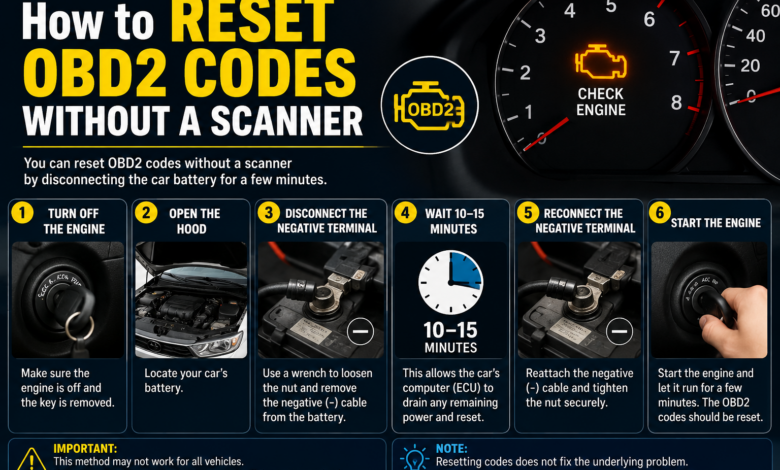
- Park safely: Turn off the engine, remove the key, and engage the parking brake.
- Put on gloves: Protect your hands from corrosion or accidental contact.
- Open the hood: Locate the battery near the driver’s side fender.
- Find the negative terminal: Look for the black cable marked with a minus (–) symbol.
- Loosen the nut: Use a wrench (typically 10mm) to loosen the terminal clamp.
- Remove the cable: Pull it away and tuck it aside so it cannot touch the terminal.
- Wait 15 minutes: This allows the ECU’s capacitors to fully discharge and clears the memory.
- Reconnect securely: Place the cable back on the terminal and tighten the nut.
- Start the engine: Check whether the check engine light is off.
Time Required: About 20 minutes
Warning: On some models, you may need to reset the TPMS (tire pressure monitoring system) or re-enter the radio security code after this process.
Try Manual and Passive Reset Techniques
When tools aren’t available, these methods can work, but only if the underlying issue is already resolved.
Cycle the Ignition Switch
A quick trick that sometimes clears temporary glitches:
1. Turn the key to “On” so the dash lights come on.
2. Turn the key back to “Off.”
3. Repeat this cycle three times in quick succession.
4. Start the engine.
This forces the computer to recheck system status. It occasionally works for intermittent faults but should never replace proper code reading.
Drive the Truck Normally (Passive Reset)
If you’ve already fixed the problem, such as tightening the gas cap or replacing a sensor, the light may turn off on its own:
– Drive 50 to 100 miles under normal conditions.
– Include a mix of city and highway driving to complete the drive cycle.
– The ECU runs internal monitors during this period. If no faults are detected, it clears the light automatically.
Ideal Conditions for a Drive Cycle:
– Cold start after the truck has sat overnight
– Accelerate to 45 to 55 mph
– Maintain steady cruising speed
– Decelerate without using the brakes
– Idle for 1 to 2 minutes
This method preserves all your settings and is completely safe, but it only works if the repair was actually successful.
Remove the ECM Fuse (Older Models)
On pre-2010 Silverados, pulling a specific fuse can reset the system:
1. Open the fuse box under the hood or inside the cabin.
2. Consult the owner’s manual to locate the ECM or PCM fuse.
3. Use a fuse puller to remove it.
4. Wait 1 to 2 minutes.
5. Reinsert the fuse.
This approach is less reliable than battery disconnection and is not recommended for newer models with complex electronics.
Fix It Permanently When the Light Returns
If the check engine light comes back within a few days or miles, the problem wasn’t solved.
Diagnose Recurring Trouble Codes
Re-scan with an OBD-II reader. Common repeat codes include:
– P0300 (Random Misfire): Often caused by worn spark plugs or failing ignition coils.
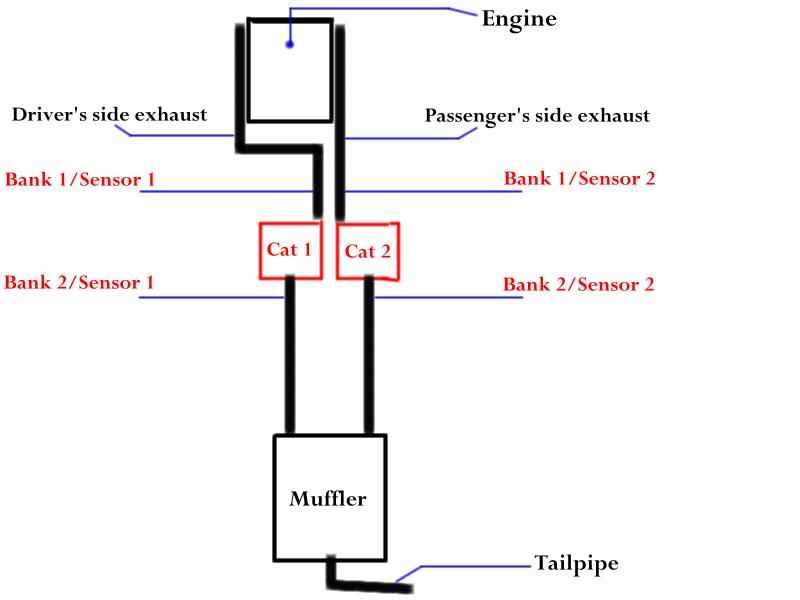
– P0420 (Catalyst Efficiency Below Threshold): Points to a failing catalytic converter, which is expensive but critical.
– P0171/P0174 (System Too Lean): Could indicate vacuum leaks, MAF sensor issues, or fuel delivery problems.
Each code requires targeted inspection. Don’t guess. Use the code as your roadmap.
Replace Faulty Sensors When Needed
Common culprits behind recurring lights include:
– Oxygen (O2) sensors: Typically last 60,000 to 100,000 miles. Replace if sluggish or contaminated.
– Mass Airflow (MAF) sensor: Clean with sensor-safe spray or replace if dirty.
– Crankshaft position sensor: Failure can prevent starting or cause stalling.
Some sensors are easy to swap out. Others require special tools or significant disassembly.
Seek Professional Help for Complex Issues
Visit a certified mechanic if:
– The light returns immediately after a reset.
– The truck runs poorly with hesitation, stalling, or rough idle.
– You receive multiple or complex trouble codes.
A professional can perform advanced diagnostics such as live data stream analysis, fuel pressure testing, exhaust gas analysis, and smoke tests for vacuum leaks. Ignoring persistent issues can lead to engine damage, failed emissions tests, or roadside breakdowns.
Compare Reset Methods at a Glance

| Method | Tools Needed | Time Required | Keeps Settings? | Best For |
|---|---|---|---|---|
| OBD-II Scanner | Scanner | 5 to 10 min | Yes | Most users seeking safe, precise results |
| Battery Disconnect | Wrench, gloves | 15 to 20 min | No | Hard reset when a scanner fails |
| Ignition Cycling | None | 1 min | Yes | Temporary glitches only |
| Drive Cycle | None | 2 to 5 days | Yes | After confirmed repairs |
| Fuse Removal | Fuse puller | 5 min | Varies | Older Silverado models |
Bottom Line: Use an OBD-II scanner first. It’s affordable (around $20 to $50), reusable, and gives you real diagnostic insight. Avoid resetting blindly. Always know what the code means before erasing it.
Frequently Asked Questions About Resetting the Check Engine Light
Will disconnecting the battery reset the check engine light on a Chevy Silverado?
Yes, disconnecting the negative battery terminal for about 15 minutes will clear the codes and reset the light. However, this method also erases radio presets, clock settings, and other saved data. In some newer models, the infotainment system may require reprogramming after reconnection.
How long does it take for the check engine light to reset itself?
If the underlying issue is resolved, the light typically turns off after 50 to 100 miles of normal driving. The ECU needs to complete several drive cycles and run internal self-tests before confirming that no faults remain.
Can I reset the check engine light without an OBD-II scanner?
Yes. You can disconnect the battery, cycle the ignition three times, or pull the ECM fuse on older models. However, using an OBD-II scanner is strongly recommended because it lets you read the trouble codes first and avoid masking a serious problem.
Is it safe to drive with the check engine light on?
It depends. If the light is steady and the truck runs normally, you can usually drive short distances. However, if the light is flashing, the engine is misfiring, or the truck runs poorly, stop driving immediately and seek professional help to avoid catalytic converter damage or engine failure.
Will resetting the check engine light fix the actual problem?
No. Resetting only clears the code and turns off the light. It does not repair the underlying issue. If the fault remains, the light will return after the ECU completes its next monitoring cycle.
How much does an OBD-II scanner cost?
Basic OBD-II scanners start around $20 and work well for reading and clearing codes. More advanced models with Bluetooth connectivity and live data streaming range from $50 to $150. Many auto parts stores also offer free code reading if you’d rather not buy one.
Key Takeaways for Resetting the Check Engine Light on Your Silverado
Resetting the check engine light on a Chevy Silverado is straightforward, but it should always follow a proper diagnosis. The light is a diagnostic tool, not just a warning. Start by checking simple causes like a loose gas cap, then use an OBD-II scanner to read the trouble codes before clearing them. If the light returns, address the underlying issue rather than resetting repeatedly.
Your next step: invest in a basic OBD-II scanner if you don’t already own one. It pays for itself the first time it saves you a diagnostic fee at the shop and helps you keep your Silverado running reliably for years to come.