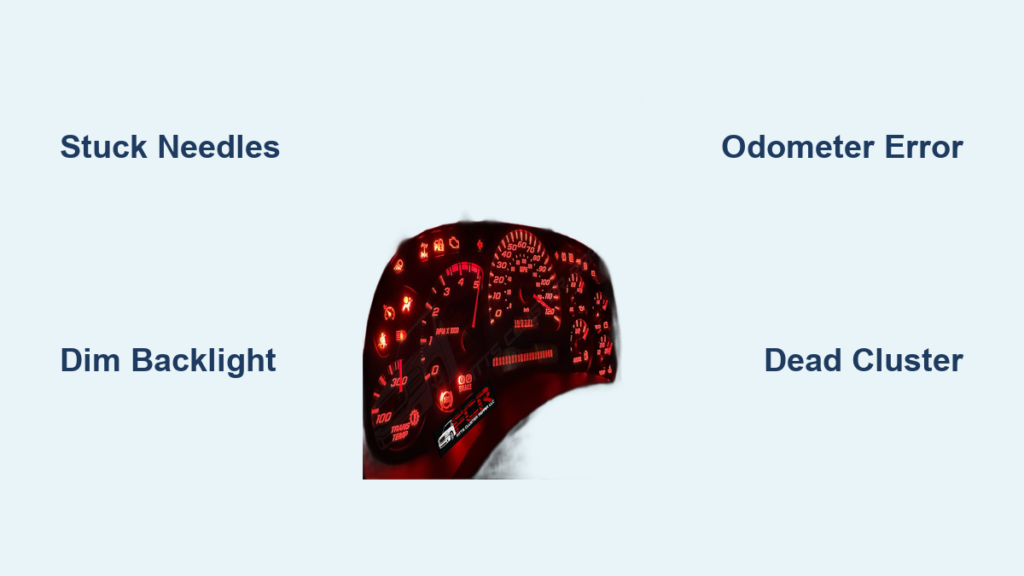
If your Silverado’s speedometer is stuck, the backlight is dim, or the odometer flashes an error message, you’re facing one of the most common issues in GMT800 trucks. Instrument cluster failure strikes thousands of 2003–2006 Silverados every year, usually because fragile stepper motors and aging circuit boards give out under heat and vibration. Left alone, one dead gauge often leads to total cluster failure. The good news is that most problems are fixable without replacing the entire unit. This guide covers every symptom, repair option, pricing detail, and upgrade available for your Silverado cluster repair project.
Decode Common Failure Symptoms

Stuck or Jumping Gauge Needles
Needles that freeze at zero, peg at maximum, or jump erratically are classic signs of failing stepper motors. These tiny electric motors control every needle on your dash, including the speedometer, fuel gauge, tachometer, and temperature readout. When one motor dies, the others usually follow soon after. If your fuel gauge reads empty with a full tank or your speedometer jumps from 30 to 80 mph in a split second, stepper motor failure is the likely culprit. Heat, vibration, and age break down these motors over time. Even if the ECU is still sending accurate data, the needle simply cannot move. Treat a single bad gauge as a warning that your entire Silverado cluster repair is approaching.
Dim or Dead Backlighting
A cluster that is hard to read at night or completely dark usually points to LED or circuit board failure. In 1999–2002 models, the PRNDL gear indicator and odometer display tend to dim or flicker first. In 2003–2006 trucks, the entire backlight may fade or cut out entirely. The root cause is an overheated power supply circuit on the main board that damages resistors and capacitors. Sometimes only part of the display works, such as the speedometer but not the warning lights. Tapping the dash might bring it back temporarily, but that is a sign of deeper electrical failure. Upgrading to LED backlighting during your Silverado cluster repair prevents this from happening again.
Odometer or “Odometer Error” Message
A blank odometer, an intermittent display, or the dreaded “Odometer Error” message (especially common in 2005 models) points to memory chip or solder joint failure. The odometer relies on a dedicated chip that stores your mileage data. When solder joints crack or the chip fails, the display cuts out. In some cases, the odometer stays lit even when the truck is off, which drains your battery. For 2005 models showing “Odometer Error,” do not ship the cluster without consulting a technician first. Standard repair protocols may not apply, and improper handling could lock the unit permanently. These issues require micro-soldering or chip replacement, not a simple reset.
Cluster Completely Dead or Intermittent
If the entire cluster powers off, flashes on and off, or scrolls through languages on its own, you are dealing with board-level failure. Common causes include failed voltage regulators, corroded connectors, or parasitic battery draws. A dead cluster is not always the unit’s fault, so check fuses and ground wires first. If power is confirmed but the cluster still will not stay on, the internal circuitry is compromised. Intermittent operation often means a cold solder joint or cracked trace on the board. Ignoring this can lead to a dead battery or a no-start condition.
Choose: Repair vs. Exchange
Repair Your Original Cluster
Repairing your existing cluster is the most cost-effective option and preserves your original mileage and VIN data. The process involves a full teardown that includes replacing failed stepper motors, repairing cracked solder joints, and fixing the power supply circuit. For 2003–2006 models, a complete rebuild starts at $175 and includes return shipping. Repairs for 2007–2013 models start at $189.99. The biggest advantage is keeping your factory unit intact. Most reputable shops offer a lifetime warranty on repairs, backed by tens of thousands of five-star reviews. Turnaround is fast, often 24 hours once the cluster is received. The trade-off is downtime while the unit is in the mail.
Exchange for a Pre-Programmed Unit
An exchange gives you a rebuilt, plug-and-play cluster shipped directly to your door. You swap it in, and it works immediately with no waiting. These units come pre-programmed with your VIN (where required) and calibrated to your mileage. The 2003–2006 GM exchange cluster costs $299.99 and fits Silverado, Sierra, Tahoe, Suburban, Yukon, and Avalanche models. The biggest benefit is zero downtime, which makes this option ideal if you drive your truck daily. The downside is that you lose your original cluster, which some owners prefer to keep for resale value. Always confirm the shop programs the odometer correctly, since this is a legal requirement and prevents inspection issues down the road.
When Repair Isn’t Possible
Not every cluster can be saved. If you attempted a DIY fix and damaged the board with excessive heat or broken traces, the unit may be beyond repair. Shops will charge a bench test fee plus return shipping if they determine the cluster is unfixable. Prior damage from amateur repairs is a common reason for rejection. If your cluster has been opened, warped, or shows signs of burnt components, contact the repair service before shipping. They will tell you whether it is worth sending. In extreme cases, an exchange is your only option.
Follow DIY Troubleshooting First
Check Fuses and Grounds
Before pulling the cluster, rule out simple electrical faults. Locate the instrument cluster fuse, usually found in the dash or under-hood fuse box. Check for a blown fuse or corrosion, and replace it if needed. Next, inspect the cluster’s ground wire, which is typically bolted to the metal dash frame. Remove it, clean the contact point thoroughly, and reattach it. A loose or corroded ground causes erratic gauges, dim lights, or total failure. This five-minute fix solves many “dead cluster” cases. Use a multimeter to confirm continuity if you are unsure.
Reboot the System
Sometimes the cluster just needs a reset. Turn off the truck, remove the key, and wait two to three minutes. If issues persist, disconnect the negative battery terminal for one full minute. This clears any ECU glitches and resets the instrument module. Reconnect and test. This hard reboot fixes temporary communication errors, especially after a battery replacement or recent electrical work. If the cluster works after the reboot, the issue was likely a software hiccup rather than hardware failure.
Clean Connectors and Test Power
Unplug the cluster connectors and inspect them for dust, corrosion, or bent pins. Use electrical contact cleaner and a soft brush to clean them, then reconnect firmly. While the cluster is out, test for power at the harness using a multimeter. You should see 12 volts when the key is in the on position. If there is no power, the issue is upstream in the fuse, relay, or wiring. If power is present but the cluster is still dead, the fault is internal. Cleaning connectors often restores function in older trucks where grime gradually breaks connections.
Understand Repair Pricing
Repair Costs by Model Year
Pricing varies by platform and complexity. For 1999–2002 models, basic repairs start at $99.99, while odometer and PRNDL-specific fixes cost $199.99 due to chip-level work. The 2003–2006 clusters, which are the most common repair, start at $119.99 for standard service and $175 to $199.99 for full rebuilds. The 2007–2013 models cost $189.99 for full repair, and the 2007 Classic edition (old body style) is $199.99. Cadillac Escalade clusters, which are more complex, cost $299.99. Other GM trucks like the Colorado or HHR range from $99.99 to $159.99. Always confirm what is included, since some prices cover return shipping while others do not.
Exchange and Add-On Pricing
The plug-and-play exchange for 2003–2006 trucks is $299.99, which includes VIN programming and a lifetime warranty. Ancillary services add value: odometer correction starts at $59.99, rearview mirror repair for 2003–2006 models is $59.99, and transmission temperature gauge installation is $99.99. DIY LED kits are available separately for interior lighting upgrades. Some shops waive the transmission gauge fee if you purchase premium gauge faces like Stainless Steel or US Speedo Daytona designs.
Avoid Hidden Fees
Shipping to the repair shop is usually customer-paid. Return shipping is often included in the repair price, so confirm this before ordering. However, if your cluster is damaged from prior repair attempts, expect a bench test fee plus return shipping. Never ship a cracked, burnt, or heavily modified cluster without approval. Also, make sure you provide a valid email so you receive tracking updates automatically. Check your spam folder if you do not see them.
Upgrade During Repair
Install LED Backlighting
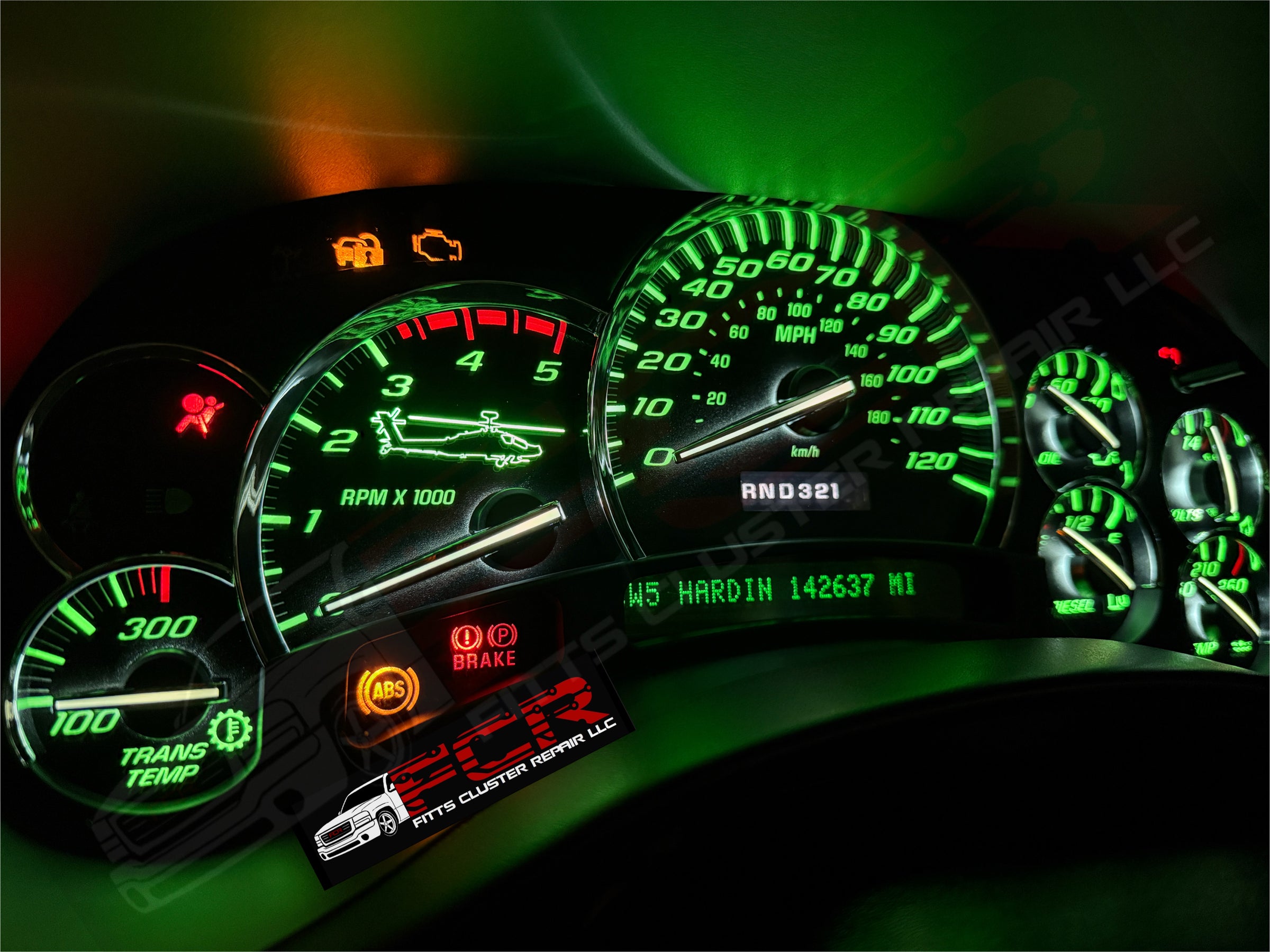
While the cluster is apart, upgrading to LED backlighting is a smart move. Factory bulbs dim over time and generate excess heat. LEDs last longer, run cooler, and provide brighter, more even lighting. Choose from white for a factory look, blue for a modern vibe, or green for a racing feel. The upgrade replaces all internal bulbs and is often included in full rebuilds. DIY kits are available, but professional installation ensures no soldering errors. LEDs also reduce strain on the power circuit, which helps prevent future failures.
Add a Transmission Temperature Gauge
For 2003–2006 Silverados used for towing, adding a transmission temperature gauge is critical. Overheated fluid destroys transmissions fast, and the repair bills can easily exceed $3,000. The good news is that your truck already has the necessary sensor. The upgrade installs a new stepper motor, needle, and custom gauge face with the temperature readout, and programming is included. The cost is $99.99 or free with select gauge face purchases. This upgrade pays for itself the first time it saves your transmission.
Customize Gauge Faces and Needles
Make your dash stand out by replacing the factory gauge faces with custom styles. Options include White, Escalade Black, Stainless Steel, or US Speedo Daytona designs. Needles can also be swapped, with hub and pointer color combinations like black hub with blue pointer or silver hub with red pointer. These upgrades install easily during repair and dramatically change the look of your interior. Stainless Steel faces with white needles offer high contrast for better readability, making your Silverado cluster repair both functional and stylish.
Follow Shipping Protocols
Pack and Ship Safely
Once you decide on repair, proper packaging is critical. Use a double-box system with at least two inches of padding on all sides. Wrap the cluster in anti-static foam and include your contact info plus a symptom description inside the box. Ship with UPS or FedEx using tracking, and avoid USPS Priority Mail since it lacks consistent tracking. Insure the package for at least $300. Damage in transit voids warranties and delays service. Follow the shop’s exact instructions, since they know which components get damaged most often.
Disclose Prior Repair Attempts
If you have opened the cluster or tried to fix it yourself, tell the shop before shipping. Many units arrive with damaged stepper motors, burnt boards, or missing components. If the shop determines the cluster is unfixable, they will charge a bench test fee plus return shipping. Being upfront saves both time and money. If you are unsure, send photos first. Most shops respond quickly and can advise whether repair is even possible.
Trust Warranties and Reviews
Lifetime Warranty Coverage
Reputable shops offer a lifetime warranty on cluster repairs, meaning if it fails again, they fix it for free. This reflects confidence in their workmanship. The warranty covers stepper motors, circuit repairs, and LED upgrades. It does not cover damage from crashes, water, or improper installation. Register your repair online to activate coverage. If issues arise later, contact the shop, and they will usually provide a return label with fast turnaround.
Verify Shop Reputation
Top providers in this niche cite over 37,000 five-star reviews, proving their reliability. Look for shops that specialize in GM clusters rather than general electronics repair. Check for BBB accreditation, secure payment options like credit card or PayPal, and clear communication. Avoid sellers with no reviews or vague service descriptions. A trustworthy shop will answer your questions, provide tracking, and stand behind their work. GM clusters have unique designs and failure modes, so this is not a job for a generic repair shop.
Frequently Asked Questions About Silverado Cluster Repair
What causes Silverado gauges to stop working?
The most common cause is failed stepper motors, especially in 2003–2006 GMT800 trucks. These tiny motors control every needle and degrade from heat, vibration, and age. Circuit board issues like cracked solder joints and overheated power supplies also cause gauge failure.
How much does it cost to repair a Silverado instrument cluster?
Repair costs depend on the model year. Basic repairs for 1999–2002 models start at $99.99. Full rebuilds for 2003–2006 clusters start at $175, and 2007–2013 repairs start at $189.99. Exchange units for 2003–2006 trucks cost $299.99 and include a lifetime warranty.
Can I fix my Silverado cluster myself?
You can handle basic troubleshooting like checking fuses, cleaning ground wires, and rebooting the system. However, stepper motor replacement and circuit board repair require micro-soldering skills and specialized tools. DIY attempts often cause further damage, which can void warranty options.
What is the “Odometer Error” message on 2005 Silverados?
This message indicates a memory chip or solder joint failure on the circuit board. It is specific to 2005 model years and requires professional micro-soldering or chip replacement. Do not ship the cluster for standard repair without consulting a technician first, as improper handling could lock the unit.
Is it worth repairing an old Silverado cluster?
Yes, especially for 2003–2006 models where cluster failure is extremely common. Repairing your original unit preserves your factory mileage and VIN data and costs less than a full exchange. Most repairs come with a lifetime warranty, making it a smart long-term investment.
How long does Silverado cluster repair take?
Most professional repair services offer 24-hour turnaround once the cluster is received. Shipping to and from the shop adds a few days on each end. Exchange programs eliminate downtime entirely by shipping a pre-programmed unit directly to you.
Key Takeaways for Your Silverado Cluster Repair
Start with simple checks like fuses, ground wires, and a system reboot before assuming component failure. Match your symptoms to the right fix: stuck needles mean stepper motors, dim lights mean circuit board issues, and odometer errors mean memory chip problems. Choose repair if you want to keep your original unit and save money, or choose exchange if you need zero downtime. While the cluster is out, consider upgrading to LED backlighting or adding a transmission temperature gauge to prevent future headaches. Always follow shipping protocols and disclose any prior repair attempts to avoid extra fees. With the right approach, your Silverado cluster repair will restore your dash to like-new condition for years to come.