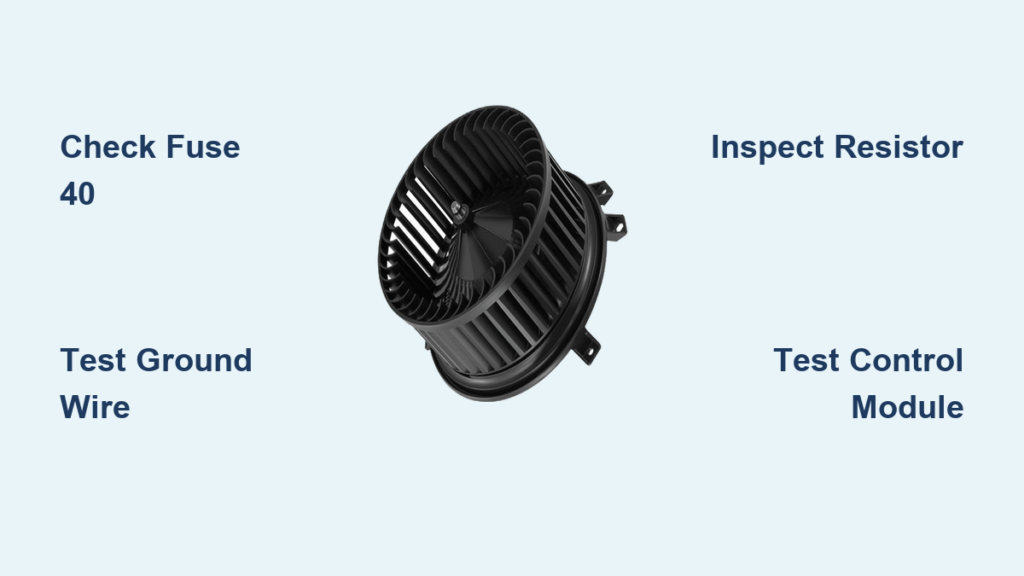
If your Chevrolet Silverado’s blower motor isn’t working, you’re not just dealing with a comfort issue. You might be facing a hidden electrical fault, a fire risk, or a surprisingly simple fix. Whether your HVAC system is completely dead, runs for only 3–4 seconds then quits, or only works on high speed, this guide breaks down the most common causes by model year.
The silverado blower motor not working issue affects models from 2007 to 2021, but the root cause varies significantly. In older trucks, it’s often a melted resistor. In 2014–2016 models, it’s usually the HVAC control module. In newer or high-mileage trucks, wiring, fuses, or even a weak battery could be to blame. With the right steps, you can diagnose and fix it yourself and save hundreds over a dealer visit.
Let’s dive into the real causes, starting with the most critical signs.
Decode Your Symptom First

No Airflow and Burning Smell?
If you smell burnt plastic or rubber when turning on the HVAC, especially in a 2007–2013 Silverado, stop using the system immediately. This is a classic sign of a failed or melting blower motor resistor module, which can overheat to the point of creating a fire hazard. The resistor is located behind the driver’s side lower dash and is known to melt due to poor airflow or a failing motor drawing too much current.
What to do:
– Turn off the HVAC system.
– Open the lower dash panel on the driver’s side.
– Inspect the resistor module for discoloration, melting, or charred wiring.
– Replace it immediately if any damage is visible.
🔥 Pro Tip: Never ignore a burning smell. Even if the blower works intermittently, a damaged resistor can short and ignite surrounding materials.
Blower Runs 3–4 Seconds Then Stops?
This “burst and stop” behavior is almost exclusive to 2014–2016 Silverado models. The fan kicks on at the selected speed, runs for a few seconds, then cuts out completely. It repeats the cycle when you restart the system.
Most dealers incorrectly blame the blower motor, leading to unnecessary replacements. The real culprit is the HVAC control module (the dash switch panel).
This module sends a variable ground signal through the blue wire with gray tracer to control fan speed. If the internal circuit fails, it sends power briefly, then loses the signal.
Quick test:
1. Turn the key to ON.
2. Set the fan to any speed.
3. Use a multimeter to check the blue wire with gray tracer at the blower motor connector.
4. You should see a pulsing ground signal. No signal means a faulty control module.
✅ Save money: Replace the control panel ($120–$180 online) instead of the $300+ motor.
No Noise and No Airflow at All?
If the blower is completely silent, start with the basics: fuse, power, and ground.
In 2014+ models, Fuse 40 in the right-side instrument panel fuse box is the top suspect. It controls the blower motor circuit and can blow due to a short, failing motor, or water intrusion.
Steps to test:
1. Locate Fuse 40 using your owner’s manual or fuse box diagram.
2. Pull the fuse and inspect for breaks in the filament.
3. Use a test light or multimeter to check for 12V on both sides with the key ON.
4. If there is no power on the output side, replace the fuse.
⚠️ Warning: A fuse that looks fine might still be bad under load. Always test with voltage, not just by sight.
Test the Blower Motor Directly
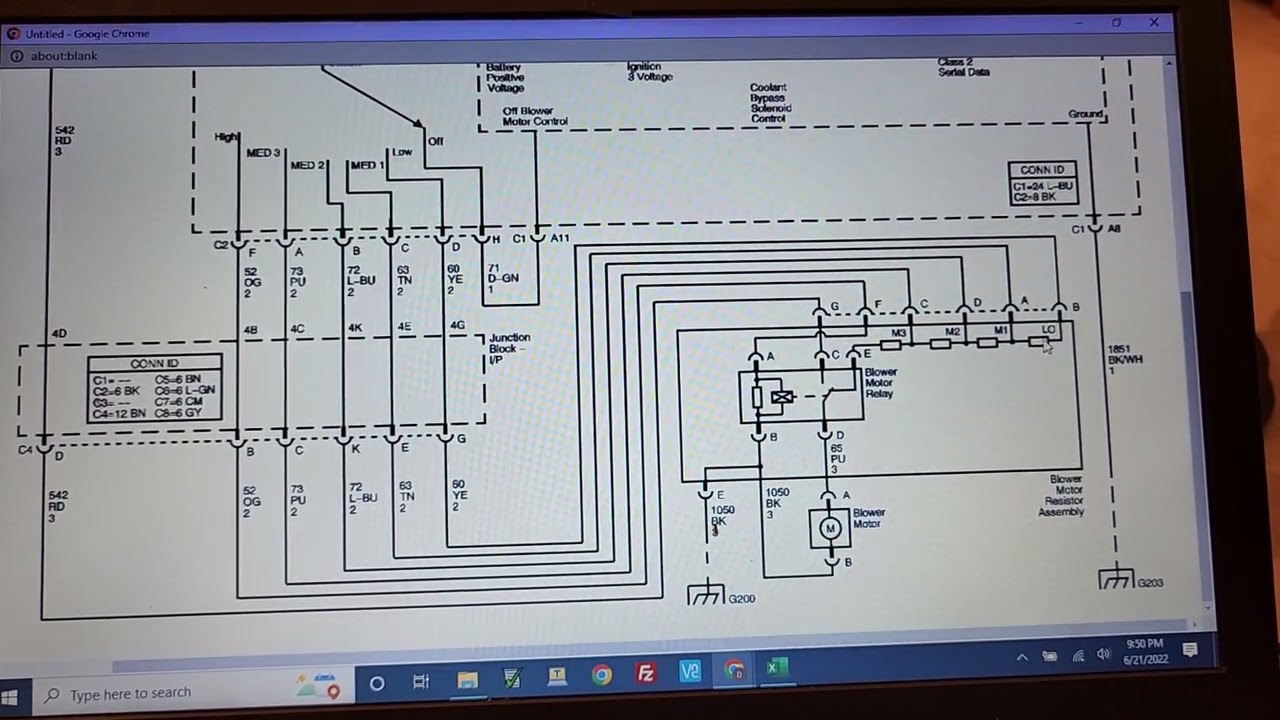
Before replacing any dash components, test the motor itself with a direct power source.
Bench Test the Motor
Tools needed: 12V battery or power supply, jumper wires.
Steps:
1. Disconnect the motor harness (located behind the glove box).
2. Connect positive (+) to the red wire terminal and negative (-) to the black.
3. Observe the result:
– Motor spins freely → Motor is good.
– No spin or weak hum → Motor is bad.
✅ Expert Note: If the motor runs on direct power but not in the truck, the issue is upstream in the resistor, wiring, or control module.
Also, spin the shaft by hand. If it’s stiff or noisy, the bearings are seized and you need to replace the motor.
Check the Ground and Power Wires
Even with a good fuse and motor, a bad ground can kill the entire circuit.
Test the Black Ground Wire
- With the motor disconnected, set your multimeter to continuity (Ω).
- Touch one probe to the black wire terminal on the harness.
- Touch the other probe to a clean metal point on the dash or frame.
- You should see near-zero resistance (0–0.5 ohms).
If not, trace the black wire back to its grounding point (usually near the firewall). Look for:
– Corrosion
– Loose bolt
– Damaged insulation
Clean and reattach the ground securely.
💡 Pro Tip: Apply dielectric grease to the connector after cleaning to prevent future corrosion.
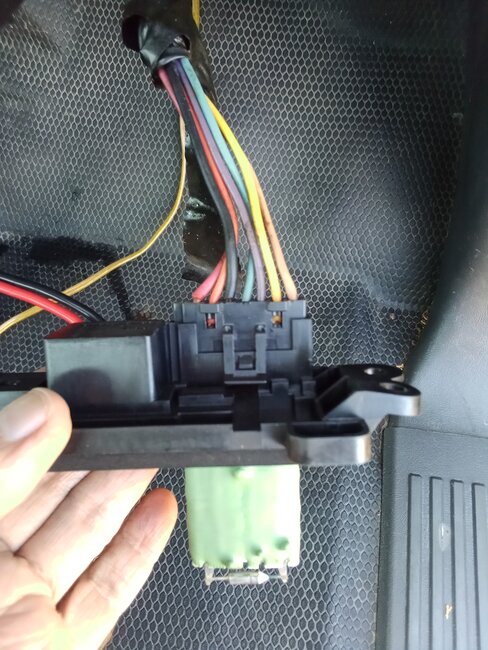
Inspect the Blower Motor Resistor

The resistor controls fan speed by limiting voltage to the motor. When it fails, you lose low and medium speeds, or all speeds entirely.
2007–2013 Models: Behind the Driver’s Side Dash
Location: Behind the lower dash panel, next to the fuse box.
Signs of failure:
– Burnt smell
– Melted plastic housing
– Blackened terminals
– Fan only works on high (which bypasses the resistor)
2014+ Models: Behind the Glove Box
Location: Accessible after removing the glove box and lower panel.
Test with multimeter:
1. Remove the resistor module.
2. Set meter to resistance (ohms).
3. Test across terminals (refer to a wiring diagram).
4. Look for infinite resistance (OL), which means an open circuit.
🔄 Best Practice: Replace the resistor and motor together if the motor was failing. A worn motor draws more current, which can kill a new resistor in days.
Diagnose the HVAC Control Module
In 2014–2016 models, this is the most common cause of blower failure, even if the motor and resistor are fine.
How It Fails
The control module (the knob and button panel on the dash) sends a PWM (Pulse Width Modulation) signal through the blue wire with gray tracer to control speed. If the internal electronics fail, the signal drops after a few seconds.
How to Test
- Turn the HVAC on and set the fan to speed 2.
- Backprobe the blue/gray wire at the motor connector.
- Use a multimeter in DC voltage mode (black lead to ground).
- You should see fluctuating voltage (1–8V), which is the PWM signal.
- No signal? The control module is likely dead.
🛠️ DIY Fix: Remove the panel with a 7mm socket. Swap in a used or aftermarket unit (match the part number to your VIN). The job takes about 15 minutes.
Don’t Ignore Battery Health
Yes, a weak battery can cause your Silverado’s blower to cut out.
2014+ Models Are Voltage-Sensitive
The HVAC control module relies on stable 12V power. If the battery is weak (below 12.4V), the module may reset or fail to send the fan signal.
Symptoms:
– Blower stops after a few seconds
– MyLink displays “Low Battery State of Charge”
– Other electrical gremlins like radio resets or flickering lights
Fix:
1. Test battery voltage (engine off): below 12.4V = weak.
2. Load test at an auto parts store (usually free).
3. If the battery is over 3 years old, replace it.
4. After replacement, disconnect the negative terminal for 30 minutes to reset all modules.
✅ Real-World Case: Multiple Silverado owners report blower issues disappearing after battery replacement with no other parts changed.
Trace Wiring After Replacement

If you’ve replaced the motor, resistor, and control module but the blower still doesn’t work, the problem is likely in the wiring.
Focus on Three Wires
| Wire Color | Function | What to Check |
|---|---|---|
| Red | 12V Power (Fuse 40) | Continuity from fuse to motor |
| Black | Ground | Resistance to chassis under 0.5Ω |
| Blue/Gray | Speed Signal | PWM signal from control module |
How to test:
1. Confirm 12V at the motor connector (red wire) with the key ON.
2. If there is no power, trace the red wire back to Fuse 40 and look for breaks or chafing.
3. If power and ground are good but no signal on blue/gray, the wiring between the dash and motor is broken.
🔍 Hidden Fault: Wires can break inside the harness near the firewall due to vibration. Inspect carefully.
Prevent Future Failures
Clean the Blower Housing
Debris like leaves and pine needles can get sucked into the blower wheel, causing it to bind or overheat.
Prevention:
– Remove the cowl cover (below the windshield).
– Clean out debris from the intake.
– Spin the motor by hand. It should move freely.
🧼 Maintenance Tip: Do this every fall to prevent clogs.
Use Dielectric Grease on Connectors
Moisture and corrosion cause high resistance, leading to overheating and melted connectors.
After any repair:
1. Spray connectors with electrical contact cleaner.
2. Dry thoroughly.
3. Apply dielectric grease to all terminals before reconnecting.
This seals out moisture and prevents future failures.
Replace Resistor and Motor Together
A failing motor draws more amperage. This extra load kills new resistors quickly.
Smart move: When replacing one, replace both. It costs a little more upfront but saves time and money long-term.
🏆 OEM vs Aftermarket: For resistors and control modules, OEM or high-quality aftermarket (ACDelco, Dorman Pro) last longer. Cheap resistors overheat fast.
Summary: Fix It Fast by Model
2007–2013 Silverado
- #1 Cause: Melted blower motor resistor
- Test: Visual inspection behind the driver’s side dash
- Fix: Replace the resistor module immediately if melted
2014–2016 Silverado
- #1 Cause: Failed HVAC control module
- Symptom: Runs 3–4 seconds then stops
- Test: Check the blue/gray wire for PWM signal
- Fix: Replace the dash control panel
2017+ and High-Mileage Trucks
- Check: Fuse 40, battery health, and ground connection
- Test: Apply direct power to the motor
- Fix: Replace the fuse, battery, or repair wiring as needed
Frequently Asked Questions About Silverado Blower Motor Problems
Why does my Silverado blower only work on high speed?
This usually means the blower motor resistor has failed on the lower speed circuits. When the resistor fails open, only the high-speed setting works because it bypasses the resistor entirely. Replace the resistor module to restore all fan speeds.
What causes the blower to run for a few seconds then stop in 2014–2016 Silverados?
This “burst and stop” symptom is almost always caused by a failed HVAC control module (the dash switch panel). The module sends a variable ground signal that drops out after a few seconds when its internal circuit fails. Replacing the control panel fixes the issue.
Where is Fuse 40 located on a 2014+ Silverado?
Fuse 40 is located in the right-side instrument panel fuse box. It controls the blower motor circuit and is the first thing to check when the blower has no power. Always test it with a multimeter, since a blown fuse can sometimes look intact.
Can a weak battery cause the blower motor to stop working?
Yes. 2014+ Silverados are highly sensitive to voltage drops, and a weak battery (below 12.4V) can cause the HVAC control module to reset or fail to send the fan signal. If your battery is over 3 years old, test or replace it before condemning other HVAC parts.
Is a burning smell from the vents dangerous?
Yes, it can be. A burning smell typically means the blower motor resistor is overheating or melting, which creates a real fire risk. Stop using the HVAC immediately and inspect the resistor module for visible damage.
Should I replace the blower motor and resistor at the same time?
Yes, it is highly recommended. A failing motor draws excess current, which can destroy a new resistor within days. Replacing both at once prevents repeat failures and saves labor time.
Final Checklist Before You Buy Parts
✅ Smell for burning? → Replace the resistor immediately
✅ Fuse 40 blown? → Test the motor before replacing the fuse
✅ Motor runs on direct power? → The problem is not the motor
✅ Ground good? → Check black wire continuity
✅ Signal on blue/gray wire? → If not, the control module is bad
✅ Battery over 3 years old? → Test or replace it
A silverado blower motor not working is rarely just a bad motor. By following this guide, you’ll avoid the common trap of throwing parts at the problem. Start with fuses and battery health, test the motor directly, and let the symptoms lead you to the real cause. Whether it’s a $25 resistor, a $150 control module, or a $12 fuse, you can fix it in under an hour with basic tools and keep your cab comfortable year-round.