You’re cruising down the highway when the dashboard suddenly flashes “Service StabiliTrak.” Your traction control light joins in, and your stomach drops. Is this a costly repair? Can you keep driving? The good news: most StabiliTrak fixes are simpler and cheaper than you think, and many don’t even require a mechanic.
The StabiliTrak system is Chevy’s electronic stability control, designed to prevent skids and rollovers by monitoring wheel speed, steering input, and vehicle movement. When it detects a fault, it disables itself and triggers the warning light. The root cause ranges from a loose gas cap to a failing wheel bearing, and engine problems can trigger the light even when the stability system itself is perfectly fine. This guide walks you through a step-by-step diagnostic process, starting with free resets and ending with professional repairs, so you can identify the real problem and restore your Silverado’s safety systems.
Confirm the System Isn’t Manually Disabled
Before diving into mechanical diagnostics, rule out the simplest explanation: someone (or something) turned the system off.
Check the StabiliTrak Button
Your Silverado has a dashboard button with a car-skidding icon. Pressing it toggles StabiliTrak and Traction Control on or off. When disabled, the Driver Information Center displays “StabiliTrak Off” or “Traction Control Off.”
Fix: Press the button once to reactivate. The warning should clear within seconds. If it returns immediately, a fault exists somewhere in the system.
Rule Out Cold Weather Glitches
In temperatures below 0°F, StabiliTrak and ABS lights may appear at startup. Condensation freezing on wheel speed sensors or brief voltage drops from a cold battery can trigger false warnings.
Fix: Turn off the engine, wait 15–30 seconds, then restart. If the light clears and stays off during normal driving, it was likely a transient issue. Recurring cold-weather activation still warrants inspection.
Perform a System Reset
Many StabiliTrak warnings are temporary and clear with a proper reset.
Power Cycle the Vehicle
A simple restart often resolves intermittent faults.
- Turn off the engine completely.
- Wait at least 15 seconds (25 seconds is ideal).
- Restart the truck.
Monitor the light over the next few days. If it returns, move to deeper diagnostics.
Disconnect the Battery for a Hard Reset
This forces all control modules to fully power down and clear stored codes.
- Turn off the truck.
- Disconnect the negative battery terminal.
- Wait 10–15 minutes.
- Reconnect the terminal securely.
- Start the engine.
Note: This method may reset radio presets and learned idle settings. It clears stored codes but cannot fix hardware failures. It’s most effective when low voltage caused the issue.
Read the Diagnostic Trouble Codes
If the light persists, you must read the codes. Guessing wastes time and money.
Use a Compatible Scanner
Basic OBD2 scanners read engine codes (P-codes) but often miss chassis codes (C-codes). You need a GM-compatible scanner capable of accessing the Electronic Brake Control Module (EBCM) and Body Control Module (BCM).
Where to scan:
– Auto parts stores (like AutoZone) may offer free scans, but verify they can read C-codes.
– A GM dealer or trusted mechanic provides the most thorough diagnostics.
Key Codes and Their Meanings
| Code | Likely Cause | Recommended Action |
|---|---|---|
| C1201, C1215 | Wheel speed sensor fault | Inspect front/rear sensors |
| C1230, C0121 | Steering angle sensor fault | Recalibrate or replace |
| C1290 | Throttle position sensor issue | Clean or replace throttle body |
| P0300–P0308 | Engine misfire | Check plugs, coils, fuel system |
| P0171, P0174 | Lean air-fuel mixture | Inspect MAF sensor, vacuum leaks |
Pro Tip: Check for pending codes. These haven’t triggered the Check Engine Light yet but can still disable StabiliTrak.
Inspect the Wheel Speed Sensors

Wheel speed sensors are the most common cause of StabiliTrak warnings. Each wheel has one near the hub or brake assembly, reading a toothed tone ring to monitor rotation.
Signs of a Failing Sensor
- Light activates after driving over bumps
- Intermittent warnings in wet or snowy conditions
- ABS light is also illuminated
How to Check and Replace
- Visual inspection: Look for cracked or frayed wiring, corrosion on connectors, and debris on the sensor tip.
- Clean the sensor: Remove it, wipe with electrical cleaner, reinstall, and test.
- Test the signal: Use a multimeter or scanner to check for proper AC voltage output while spinning the wheel.
- Replace if needed: Parts cost $100–$200 per sensor. Labor runs $100–$300, higher if the hub assembly is seized. A failing sensor often signals a bad wheel bearing, so replace both together.
Recalibrate or Replace the Steering Angle Sensor
The steering angle sensor (SAS) tells the system where you’re steering. If it’s misaligned or faulty, StabiliTrak disables itself.
When to Suspect the SAS
- Light appeared after an alignment or steering repair
- Vehicle pulls slightly or feels “off” after recent work
- Codes C1230 or C0121 are present
Try a Manual Recalibration First
This free fix works for minor calibration drift:
- Turn the steering wheel fully left.
- Turn it fully right.
- Return to center.
- Restart the truck.
Seek Professional Calibration if Needed
If the light persists, the SAS requires electronic recalibration using GM-specific software. This costs $100–$200 at a shop. A failed sensor costs $250–$400 for parts, with total repair bills reaching $500–$1,050 including labor and calibration.
Clean or Replace the Throttle Body

A dirty throttle body disrupts airflow and causes RPM fluctuations, which GM’s system interprets as engine instability. When power delivery is erratic, StabiliTrak shuts off.
Symptoms of a Dirty Throttle Body
- Rough idle
- Hesitation during acceleration
- StabiliTrak light with no obvious cause
Cleaning Procedure
- Remove the air intake hose at the throttle body.
- Spray throttle body cleaner (never brake cleaner) on the bore and butterfly valve.
- Use a soft brush to remove carbon buildup.
- Reinstall and start the engine.
Some models require a throttle relearn procedure afterward:
– Turn the key to “On” without starting.
– Wait one minute.
– Start the engine and idle for three minutes.
Cleaning costs about $20 for supplies, or $100–$200 if a shop handles it. If cleaning fails, replacement runs $150–$300 for parts, with total costs of $300–$600 including recalibration.
Diagnose Engine-Related Triggers
GM disables StabiliTrak whenever engine performance is unstable, even if the Check Engine Light hasn’t appeared yet.
Check for Misfires (P0300–P0308)
Misfires cause RPM spikes that trick the stability system into shutting down. Replace spark plugs every 30,000–100,000 miles (depending on type) and test ignition coils if misfires persist. Full plug and coil service runs $150–$400.
Inspect the Fuel System
Poor fuel delivery creates lean conditions and power loss. Check the following:
– Fuel filter: Replace every 30,000–50,000 miles
– Fuel injectors: Clean with additive or professional service
– Fuel quality: Avoid E85 in non-compatible engines; use top-tier gasoline
For E85-compatible trucks, a tank of E85 can actually clean injectors and stabilize combustion.
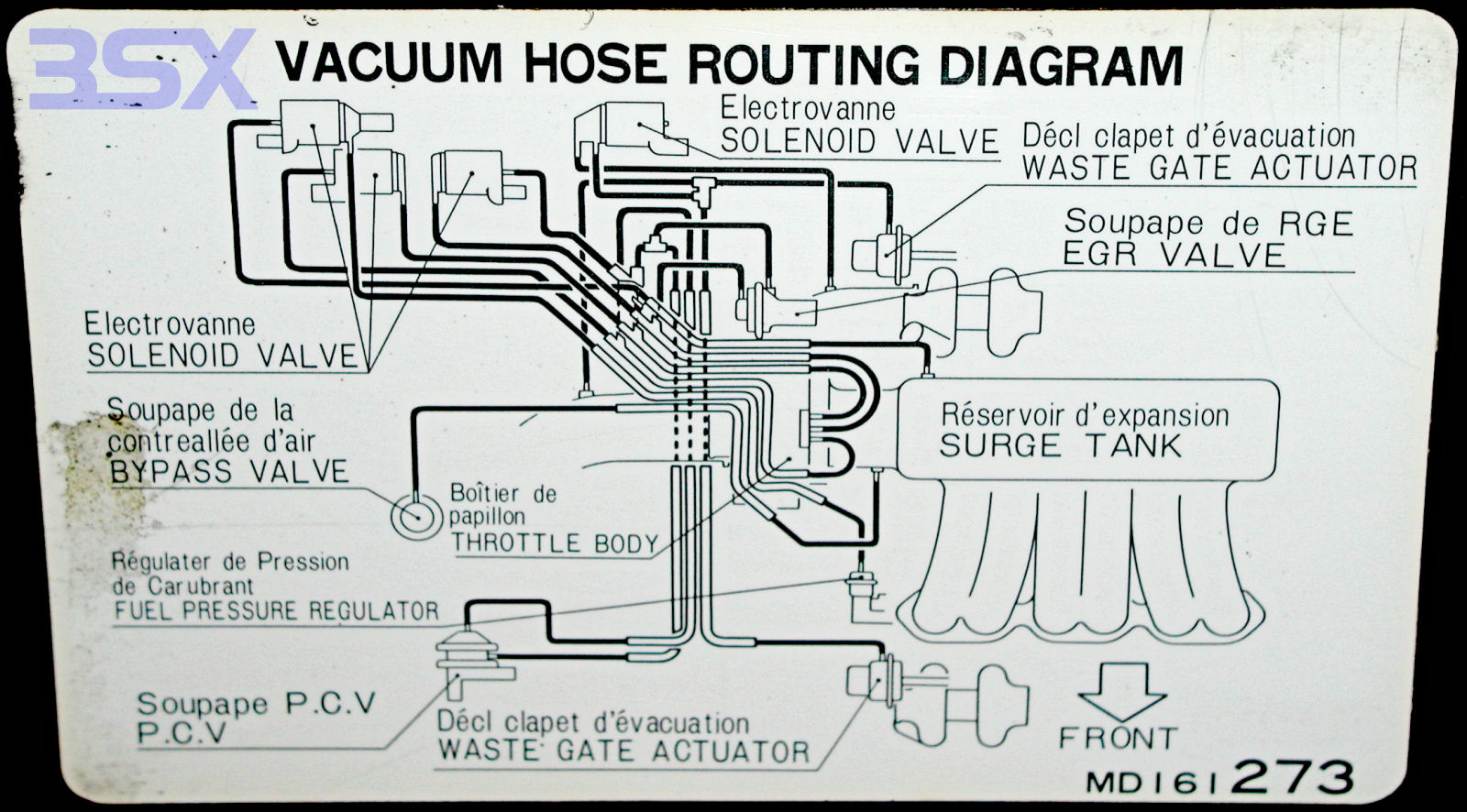
Test for Vacuum Leaks
Unmetered air entering the intake causes lean codes (P0171/P0174). Common leak points include:
– Intake tube at the throttle body (frequent on 2007–2012 models)
– PCV valve hoses
– Brake booster line
A smoke test at a shop is the fastest way to locate leaks.
Address Active Fuel Management Issues
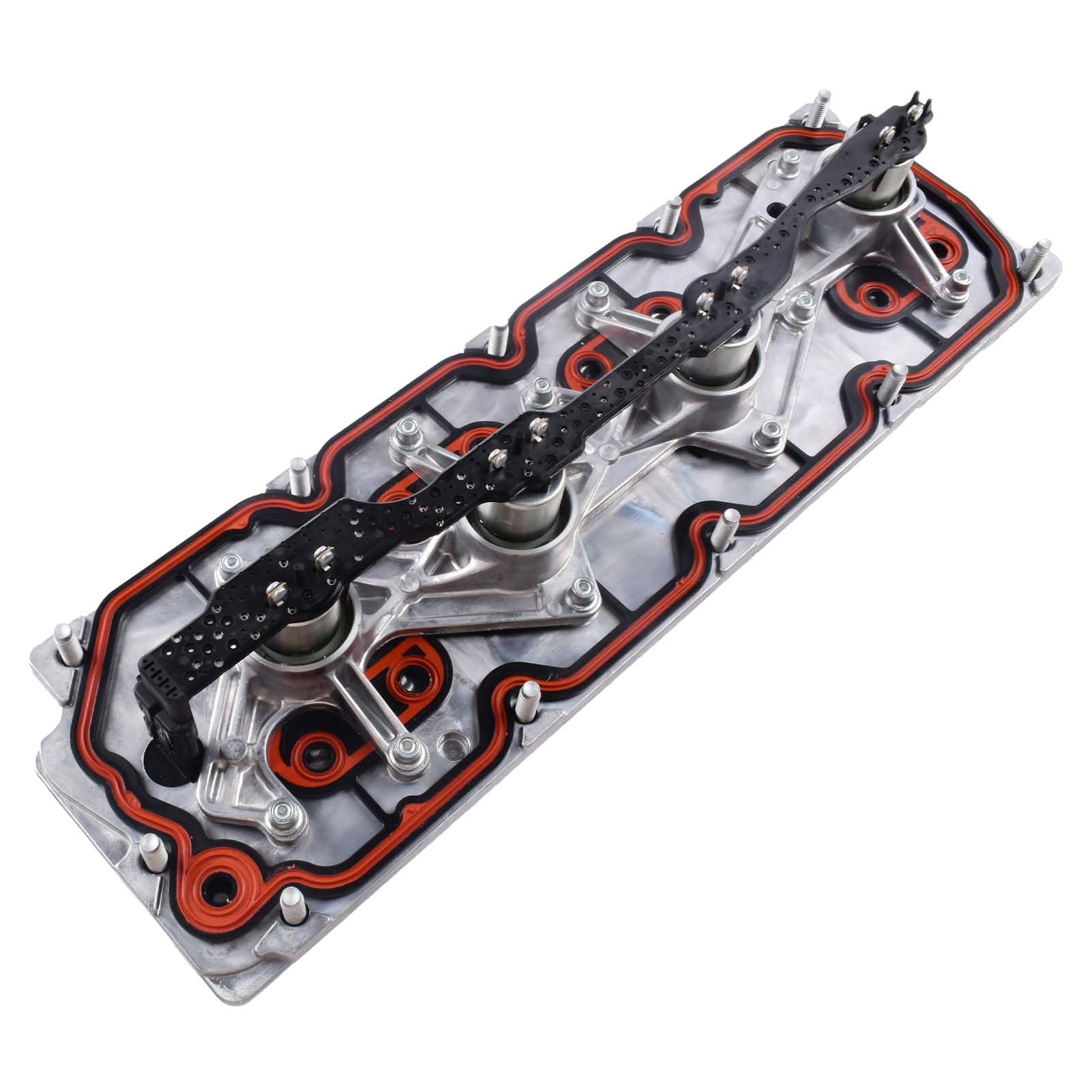
On V6 and V8 Silverados, Active Fuel Management (AFM) deactivates cylinders during low-load driving. When lifters or solenoids fail, the transition becomes rough enough to disable StabiliTrak.
Why AFM Triggers the Light
Cylinder deactivation increases engine vibrations. Failed components make these transitions severe, creating the RPM instability that shuts down stability control.
Available Solutions
- Disable AFM via tuning: A programmer (Bully Dog, Edge) or custom ECU flash eliminates cylinder deactivation and stabilizes idle. Expect a slight drop in fuel economy.
- Repair AFM components: Replace faulty lifters or solenoids. Major repairs cost $2,000–$13,000.
Many owners permanently disable AFM to prevent recurring StabiliTrak issues.
Check Brake and Electrical Systems
Simple issues often trigger complex warnings.
Test Brake Fluid Level
Low brake fluid can disable StabiliTrak. Top off with DOT 4 fluid and inspect for leaks.
Inspect the EBCM Relay
The EBCM relay powers the stability control module. A failing relay causes intermittent faults. Locate it in the under-hood fuse box and swap with a similar relay (like the horn relay). If the light goes off, replace the relay ($20–$50).
Check Battery and Alternator Health
Weak voltage disrupts sensor communication. Test the following:
– Battery voltage: 12.6V when off
– Alternator output: 13.7–14.7V when running
Replace components that fall below spec, especially in older trucks.
Know When to See a Professional
Some repairs require specialized tools and expertise.
Seek Expert Help If:
- You need steering angle sensor calibration
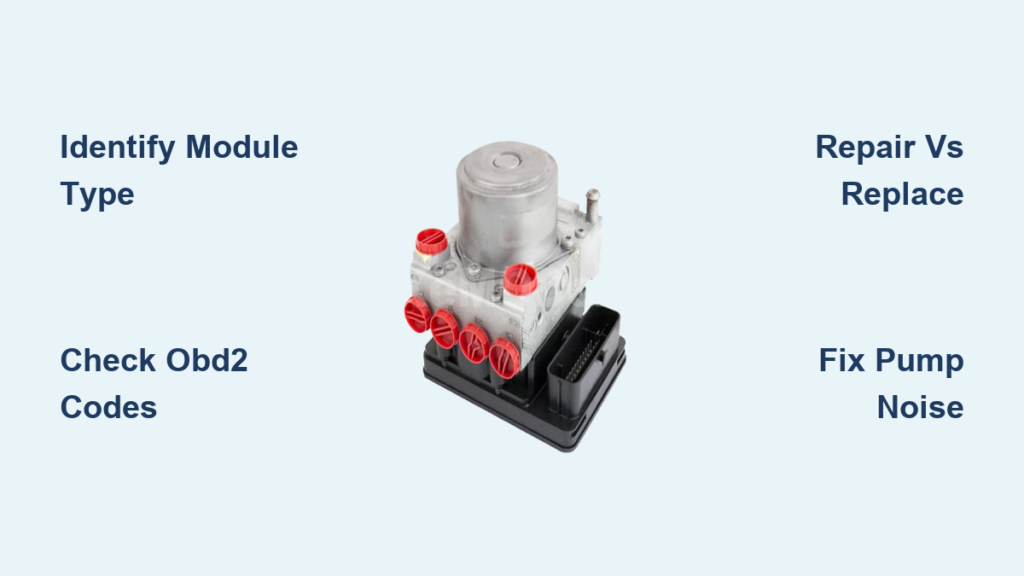
- The EBCM or ABS module is suspected
- Codes point to internal module failure
- DIY fixes haven’t resolved the issue
A dealership has access to GM Technical Service Bulletins and factory software for accurate diagnosis.
Prevent Future StabiliTrak Warnings
Smart maintenance keeps the light from returning.
Key Prevention Tips
- Clean wheel speed sensors during brake jobs
- Replace the battery every 4–6 years
- Use quality fuel and clean injectors regularly
- Maintain proper tire pressure and ensure matched tire sizes
- Address Check Engine Lights immediately to prevent cascading failures
Frequently Asked Questions About StabiliTrak on Chevy Silverado
Can I drive my Silverado with the Service StabiliTrak light on?
Yes, the truck remains drivable, but you lose electronic stability and traction control. This increases skid and rollover risk in rain, snow, or on uneven terrain. Avoid aggressive driving and schedule repairs promptly.
How much does it cost to fix a StabiliTrak light?
Costs range from $20 for a throttle body cleaning to over $1,000 for steering angle sensor replacement. Most sensor-related fixes fall between $200–$500. Major engine repairs related to AFM can reach $13,000.
Will a bad wheel bearing cause the StabiliTrak light to come on?
Yes. A failing wheel bearing disrupts the wheel speed sensor signal, often triggering both the ABS and StabiliTrak lights. If you replace a wheel speed sensor, inspect the bearing and replace both if needed.
Can bad spark plugs trigger the StabiliTrak light?
Absolutely. Engine misfires from worn plugs or faulty coils cause RPM fluctuations that GM’s system interprets as instability. StabiliTrak disables itself as a precaution, even if the stability components are fine.
Why does my StabiliTrak light come on in cold weather?
Temperatures below freezing can cause condensation to form on wheel speed sensors or brief voltage drops from a cold battery. These conditions trigger false warnings. A restart usually clears the light, but recurring activation suggests a marginal sensor.
Will disconnecting the battery reset the StabiliTrak light?
It can clear stored codes and resolve issues caused by low voltage, but it won’t fix mechanical failures. The light will return if the underlying problem persists.
Key Takeaways for Fixing Your Silverado’s StabiliTrak Light
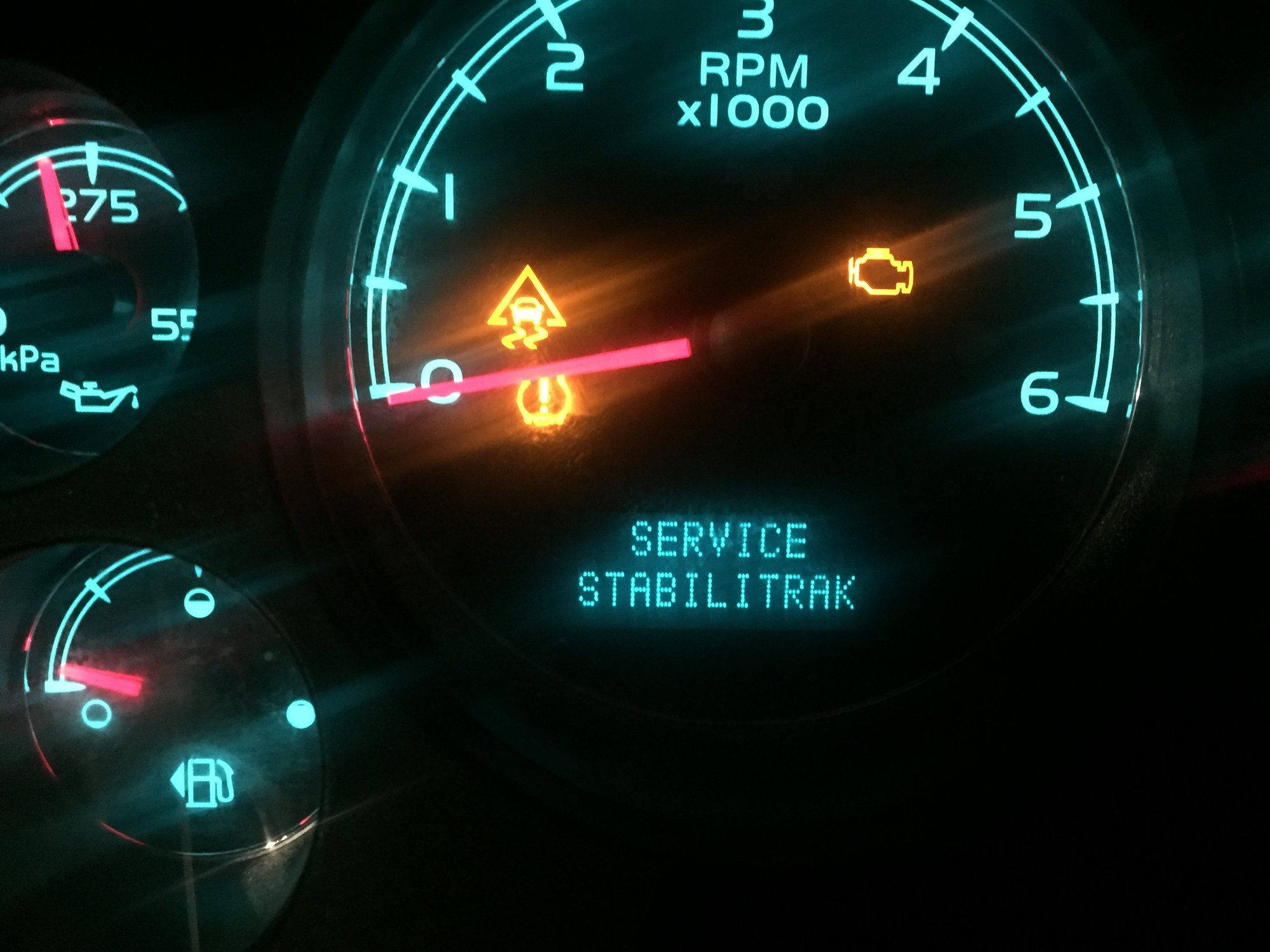
Start with the simplest solutions: verify the system isn’t manually disabled, perform a power cycle, and disconnect the battery for a hard reset. If the light persists, read the diagnostic codes with a GM-compatible scanner. Focus your repairs on the most common culprits: wheel speed sensors, the throttle body, and engine performance issues like misfires or vacuum leaks.
For trucks with Active Fuel Management, consider disabling AFM via tuning if mechanical fixes don’t resolve chronic issues. Cold-weather glitches are usually temporary, but recurring activation warrants sensor inspection.
Driving without StabiliTrak is risky in poor conditions. Even though the truck runs, schedule repairs promptly to restore your full safety suite. With systematic diagnosis and targeted repairs, you can clear the warning light and keep your Silverado performing safely for years to come.