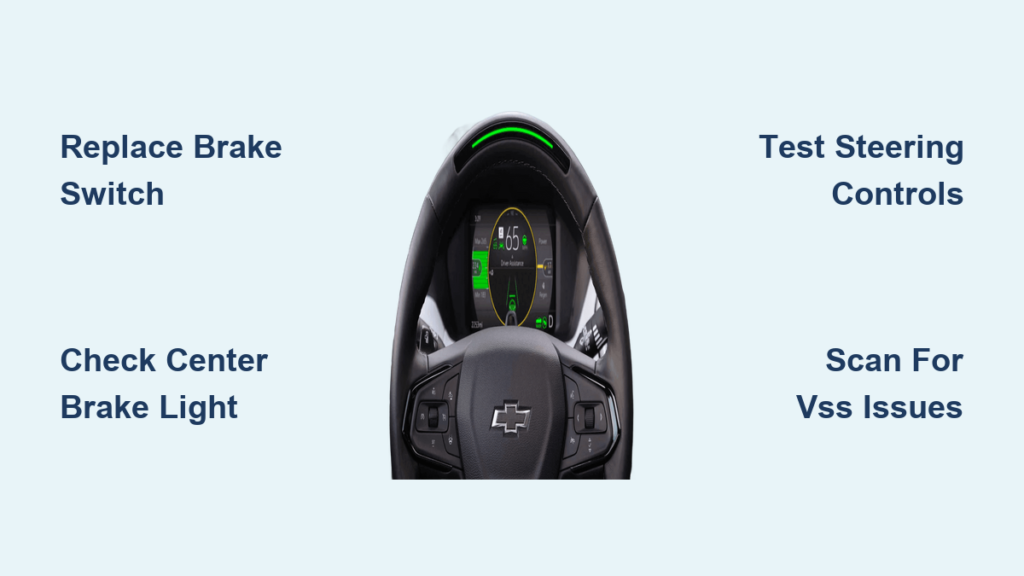
If your Chevy Silverado’s cruise control suddenly stops working, the culprit is almost always a $15 part you can replace in your driveway. For 2007 to 2014 models, a faulty brake pedal switch causes about 90% of cruise control failures. Even when your brake lights look perfectly fine, the switch’s internal circuit can fail independently and silently disable your cruise. The repair takes under 20 minutes with basic tools, and you skip the $300 dealer quote for “calibration” that isn’t actually required.
This guide walks you through the exact diagnostic steps, the part number to buy, and how to confirm your fix works on the road.
Replace the Brake Pedal Switch First
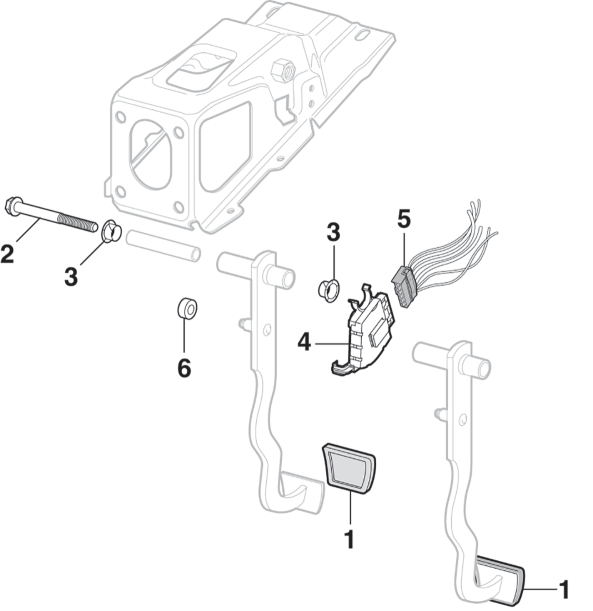
The brake pedal switch is the number one reason cruise control fails on 2007 to 2014 Silverados. It tells your truck’s computer when your foot is on or off the pedal. When it fails, the system thinks the brakes are always pressed and blocks cruise engagement as a safety measure.
Spot the Symptoms of a Bad Switch
A failing switch often sends a false “brake applied” signal even when your foot is off the pedal. Watch for these telltale signs:
- Cruise control won’t set, but the buttons light up
- The green cruise indicator never appears on your dashboard
- Tapping or pushing the brake pedal upward temporarily restores function
- Cruise works for a few minutes, then disengages on its own
Here’s the critical detail: your brake lights may still work perfectly. The internal contacts that control the cruise circuit can wear out independently from the contacts that light your brake lamps. Don’t rule out switch failure just because your lights look fine.
Remove the Old Switch Safely
You’ll need a 10mm socket, a flathead screwdriver, and a flashlight. Start by disconnecting the negative battery terminal to prevent electrical shorts.
Crawl under the dashboard and look up at the brake pedal arm. The switch sits in a bracket near the top of the pedal. Press the release tab on the electrical connector and pull it straight back to unplug it.
Remove the 10mm mounting bolt. Expect some resistance because GM applies thread locker at the factory. Next, pry the metal retaining clip off the brake pedal rod using your flathead screwdriver. Slide the old switch off the rod and take a look at it. If the internal rotating cam is cracked or doesn’t spin freely, you’ve found your problem.
Install the New Switch
Buy GM part number 25981009, ideally an AC Delco unit. This updated version has lower internal spring tension, which prevents the premature wear that kills the original design.
Slide the new switch onto the brake pedal rod with the electrical connector facing the firewall. Press the metal retaining clip firmly into place until it clicks. Reinstall the 10mm bolt and tighten it down. Plug the electrical connector back in until you hear it snap. Reconnect your battery and you’re ready to test.
Check the Center Brake Light
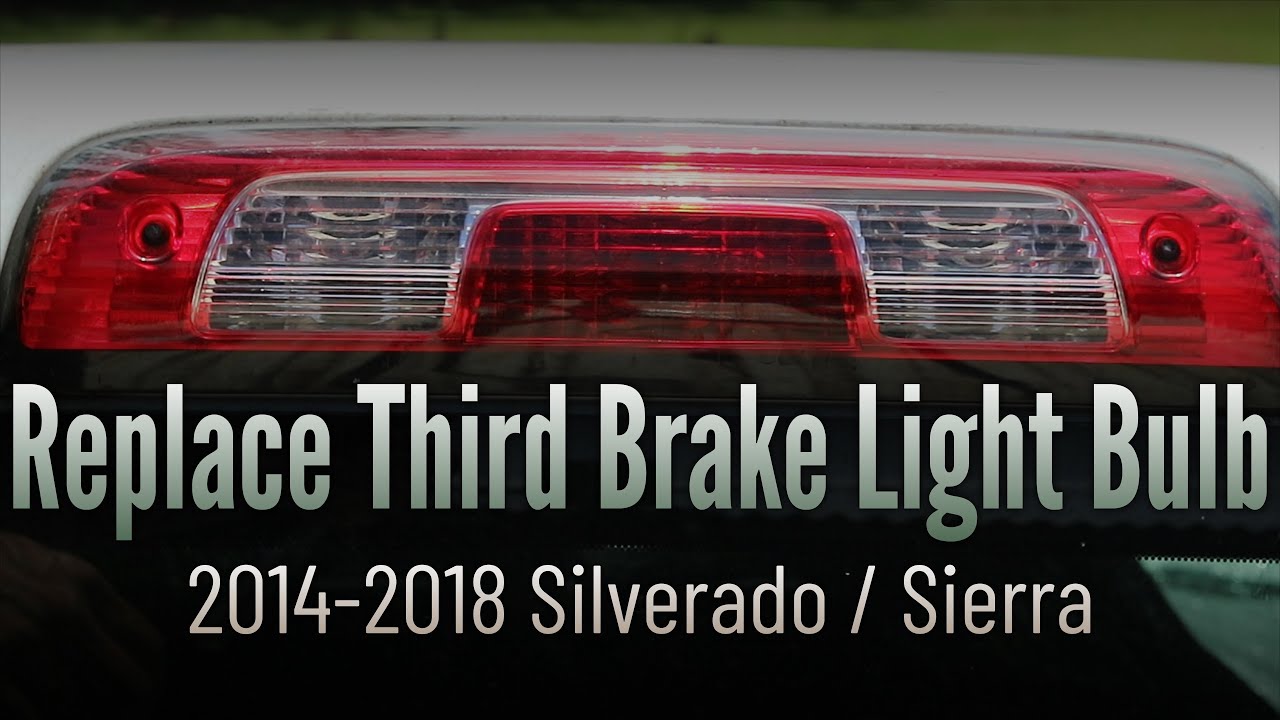
Before assuming the switch is bad, verify your center high-mounted stop lamp works. The cruise control module monitors the entire brake light circuit, and a burned-out center bulb can disable cruise even when your tail lights work fine.
Test All Three Brake Lights
Press the brake pedal and have someone confirm all three lights illuminate:
- Left tail light
- Right tail light
- Center light on the cab roof
If the center light is dark, replace both bulbs. They typically fail together. Most Silverados use 921 or 912 bulbs, but check your owner’s manual to confirm. Clean any corrosion from the socket before installing new bulbs.
Many owners report that cruise control comes back to life immediately after swapping in fresh CHMSL bulbs, with no switch replacement needed.
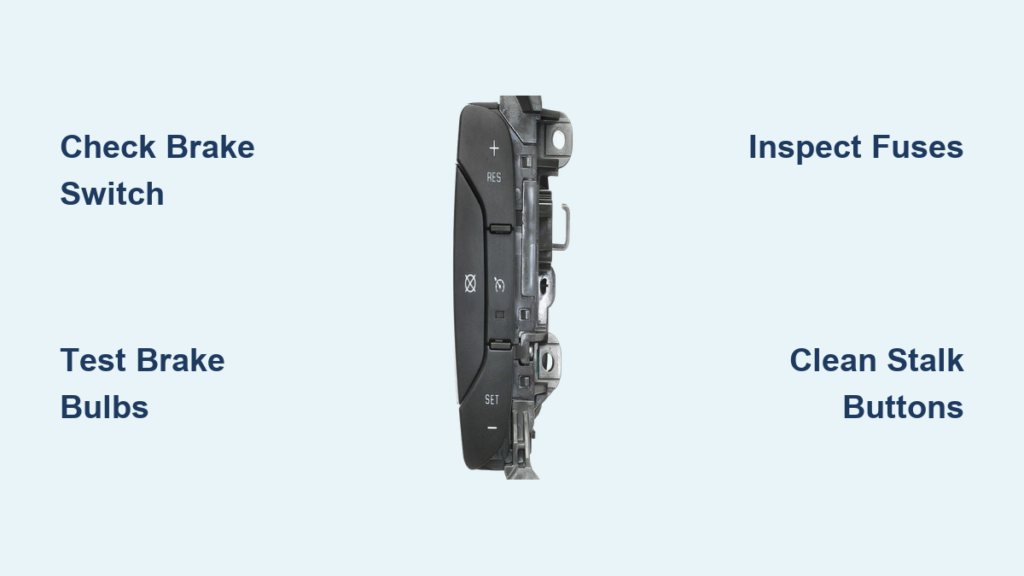
Test the Steering Wheel Controls

If the brake switch and center light check out, turn your attention to the cruise buttons on your steering wheel.
Verify Button Response
Turn the ignition to ON without starting the engine. Press the cruise “On” button and watch your dashboard. The green cruise indicator should appear.
If the dash light never shows up, the signal isn’t reaching the module, which points back to the brake switch or wiring. If the light appears but cruise won’t set, you’re likely dealing with a different issue.
Inspect the Wiring
Look for frayed wires near the clock spring and check for corrosion in the connector behind the airbag. Never probe airbag connectors yourself. If you suspect wiring damage, take the truck to a professional.
Scan for Vehicle Speed Sensor Problems

A failing vehicle speed sensor prevents cruise from locking onto your speed or causes sudden disengagement while driving.
Recognize VSS Failure Signs
Watch for these symptoms:
- Cruise engages but won’t hold speed
- Your speedometer fluctuates or drops to zero
- Check Engine Light appears with code P0500
The VSS sits on the transmission tailshaft and sends speed data to the cruise module. Plug in an OBD2 scanner to read stored codes and watch live VSS data while driving. If the sensor reads 0 mph while you’re moving, it has failed and needs replacement. The job typically takes about 20 minutes with a 10mm socket.
Run a Full Road Test
After any repair, confirm everything works with a systematic test.
Confirm the Dashboard Indicator
Turn the ignition to ON and press the cruise “On” button. The green cruise light should illuminate on your dash. If it doesn’t, go back and recheck the brake switch and center brake light.
Test Cruise on the Road
Get on a clear road and accelerate to at least 50 mph. Press “Set” and confirm cruise engages and holds speed. Test the “+” button to speed up and the “-” button to slow down. Tap the brake and verify cruise disengages immediately. Press “Resume” and confirm the truck returns to your set speed.
If cruise disengages on its own during this test, check for an intermittent brake switch, a weak pedal return spring, or VSS signal dropouts.
Match Symptoms to Causes
Use this quick reference to diagnose faster:
- Cruise won’t set but lights work: Brake switch internal failure
- Center brake light is out: Burned CHMSL bulb
- Intermittent operation: Sticking or worn brake switch
- No dashboard indicator: Brake switch or steering wheel switch
- Cruise disengages randomly: Brake switch or VSS
Prevent Future Cruise Failures
A little maintenance keeps your cruise control reliable for years.
Replace the Switch Proactively
Given the low cost and high failure rate, consider replacing the brake switch every 5 to 7 years or keeping a spare in your glove box. The updated part number resists early wear thanks to its reduced spring tension.
Inspect Brake Lights Monthly
Check all three brake lights after heavy rain, off-road trips, and before long drives. A quick visual check now prevents a cruise failure on the highway later.
Make Sure the Pedal Returns Fully
Confirm your brake pedal reaches its full resting position without obstruction. Floor mats sometimes slide forward and block the pedal. If the pedal sticks down even slightly, the switch stays engaged and cruise won’t activate.
Know When to Call a Professional
Most cruise issues are DIY-friendly, but some situations call for expert diagnostics.
Seek Help If
- All basic checks pass but cruise still won’t work
- You see Check Engine Light with VSS or module codes
- Your trailer brake controller malfunctions
A qualified technician can test wiring continuity, monitor module communication, and reprogram or replace the cruise control module if needed.
Skip Inflated Dealer Quotes
Some dealers charge $300 or more for “fit and tuning” of the brake switch. There’s no calibration required. The part is a direct bolt-on replacement, and you can do it yourself in under 20 minutes.
Frequently Asked Questions About Chevy Silverado Cruise Control
Why does my cruise control not work but my brake lights do?
The brake pedal switch has separate internal circuits for the brake lights and the cruise control signal. The cruise circuit can fail while the brake light circuit still works. Replace the switch with GM part number 25981009 to fix the issue.
What is the most common cause of cruise control failure on a 2007 to 2014 Silverado?
A faulty brake pedal switch causes approximately 90% of cruise control failures in these trucks. It sends a false “brake applied” signal to the computer, which prevents cruise from engaging.
How much does it cost to fix cruise control on a Chevy Silverado?
The DIY repair costs $15 to $23 for the brake switch. Dealer quotes can reach $300 or more, but no special calibration is required. The switch is a direct replacement you can install in under 20 minutes.
Can a burned-out brake light disable cruise control?
Yes. The cruise control module monitors the entire brake light circuit, including the center high-mounted stop lamp on the cab roof. If that bulb is out, the system detects a fault and disables cruise. Replacing both CHMSL bulbs often restores cruise immediately.
Where is the brake pedal switch located on a Silverado?
The switch mounts in a bracket near the top of the brake pedal arm, under the dashboard. You can see it by looking up at the pedal assembly from the driver’s side footwell.
Do I need to reprogram anything after replacing the brake switch?
No. The new switch is a direct bolt-on replacement with no programming or calibration required. Reconnect the battery and test cruise immediately.
Key Takeaways for Fixing Your Silverado’s Cruise Control

Start with the brake pedal switch every time. It causes 90% of cruise failures on 2007 to 2014 Silverados, costs about $15, and takes less than 20 minutes to swap out. Use GM part number 25981009 for the updated design.
Check the center brake light before assuming the switch is bad. A burned-out CHMSL bulb can disable cruise on its own, and replacing both bulbs is even cheaper than a new switch.
Test your repair with a full road test at 50 mph. Confirm the dashboard indicator lights up, cruise sets and holds speed, and the system disengages properly when you tap the brake.
Grab your 10mm socket and head to the parts store. Most Silverado owners walk away with a working cruise control system in under an hour, for less than the cost of a dealer diagnostic fee.