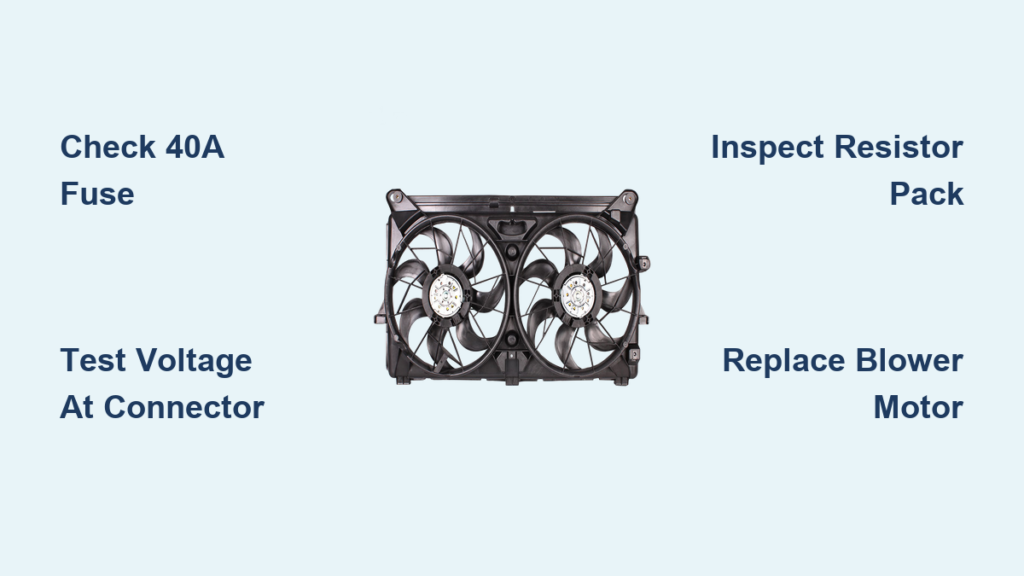
A Chevy Silverado fan not working turns your truck into an oven in summer and an icebox in winter. Beyond discomfort, a failed blower motor can signal deeper electrical problems that may lead to costly repairs or even fire risk if ignored. The blower motor is what pushes air through your vents, and when it dies, you lose heating, cooling, and defrosting all at once.
This guide walks you through every likely cause, from simple fuse checks to resistor replacement. You will learn how to test voltage, identify melted components, and decide whether to DIY or visit a shop. Whether you drive a 2007 GMT900 or a 2021 Z71, these diagnostic steps apply across Silverado generations.
Check the 40-Amp Blower Fuse First

Before removing any panels, rule out the simplest and cheapest fix: a blown fuse.
Locate Fuses 76 and 77
Open the under-hood fuse box on the driver’s side near the battery. Find Fuses 76 and 77, both tied to the HVAC system. The blower motor circuit uses a 40-amp fuse, not 50-amp as some sources claim. Confirm your layout using the fuse box lid diagram or a VIN-specific chart.
Test for Continuity
Pull the fuse and inspect it. Look for:
– A broken metal strip inside
– Charring or discoloration
Use a digital multimeter on continuity mode. Touch both ends of the fuse. If you get no beep, the fuse is dead.
Pro Tip: Replacing a blown fuse may restore fan operation temporarily. However, if an underlying issue like a failing resistor caused the blow, the new fuse will fail too.
Replace with a 40A fuse only unless your vehicle’s diagram specifies otherwise. Never jump a fuse or use a higher rating. This risks wiring damage or fire.
Decode No-Airflow Symptoms

How your fan fails tells you exactly where to look.
Fan Works Only on High Speed
This is a classic sign of resistor pack failure. The high-speed setting bypasses the resistor entirely. So if only “High” works, the resistor is likely burnt out.
Fan Runs Nonstop After Ignition Off
If the blower keeps running even when the truck is off, the resistor module or relay may be shorted. This is dangerous and can drain your battery or overheat components.
No Air at Any Speed
Total failure usually points to:
– A dead blower motor
– No power due to fuse, wiring, or switch issues
– A failed resistor affecting all speeds
Smell of Burning or Smoke
Stop driving immediately. A burnt rubber smell or visible smoke from the vents often means the resistor pack has overheated and melted. This is a known fire risk in Silverados, especially 2007–2013 models.
Expert Note: The resistor pack sits in a high-heat zone. Over time, poor ventilation and electrical stress cause thermal degradation.
Test Voltage at the Blower Connector
Power testing confirms whether the motor is actually receiving electricity.
Access the Blower Motor Connector
- Remove the glove box.
- Look behind the passenger-side dashboard and follow the duct toward the firewall.
- Find the two-wire connector plugged into the blower motor housing.
It is usually accessible without removing the entire motor.
Measure for 12 Volts
Set your multimeter to DC voltage. Turn the ignition on and set the climate control to any fan speed.
Back-probe the connector wires, or disconnect and test the harness side.
- If you read 12 volts: Power is reaching the motor. The motor itself is likely dead.
- If you read 0 volts: No power means the fault is upstream in the resistor, switch, or wiring.
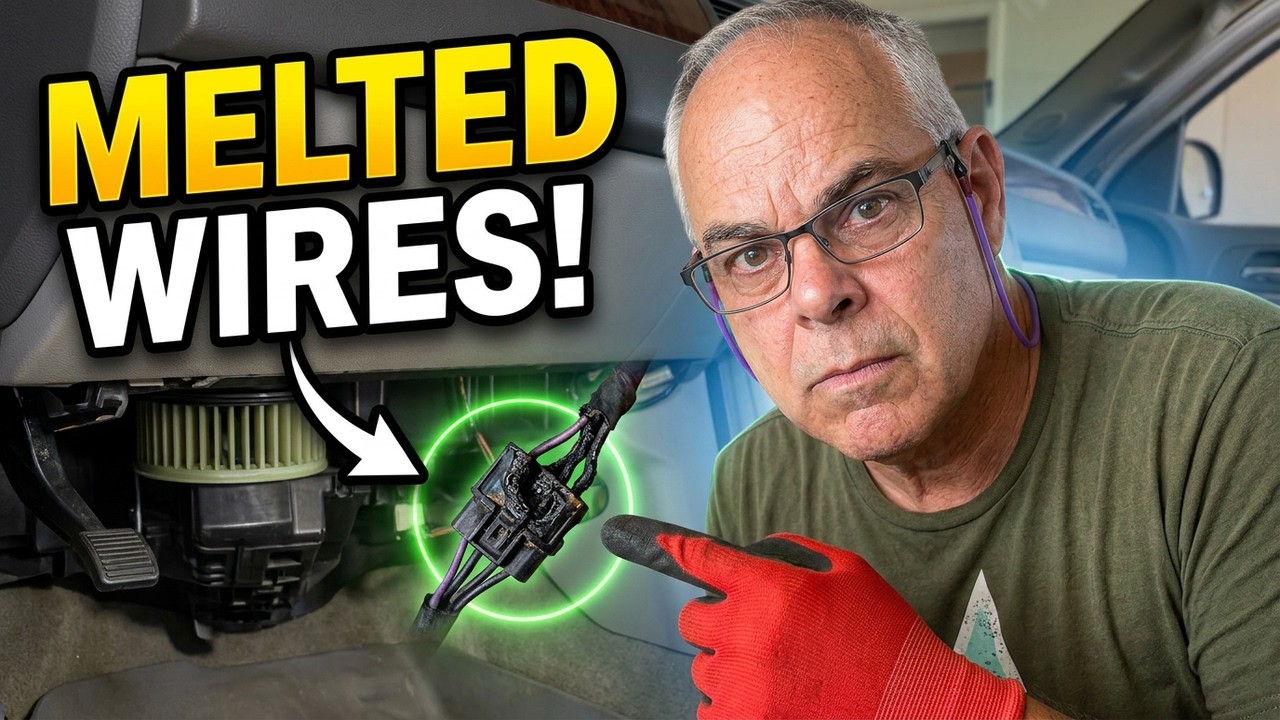
Visual Cue: Corroded or melted terminals indicate arcing or heat damage. Replace the connector or wiring harness section.
Inspect the Blower Motor Resistor
This small module fails more often than the motor itself in Silverados.
Find the Resistor Pack
Location varies by model:
– 2007–2013 Silverado: Behind the driver’s side lower dash, tucked behind the fuse box.
– 2014–2021 Models: Typically mounted near the blower motor under the passenger side.
Remove screws or clips to pull it out.
Look for Burn Damage
Shine a flashlight on the resistor. Signs of failure include:
– Melted plastic housing
– Blackened circuit board
– Burnt smell
– Discolored metal traces
Even slight browning can mean intermittent failure.
Warning: A melted resistor can ignite surrounding materials. If you see damage, replace it immediately and avoid driving until fixed.
Replace the Resistor Module
- Unplug the electrical connector.
- Remove mounting screws.
- Swap in the new unit (OEM or high-quality aftermarket).
- Reconnect and test all fan speeds.
Pro Tip: Buy a kit that includes both resistor and connector. Many harnesses melt along with the resistor. Replacing both prevents repeat failures.
Test the Blower Motor Directly
Bypass the vehicle’s circuit to confirm motor health.
Apply External 12V Power
You will need:
– Jumper wires with alligator clips
– A 12V power source (battery or power probe)
Disconnect the motor from the harness.
Clip the positive wire to the motor’s positive terminal and negative to ground.
- Motor spins? The motor is good. The problem is upstream in the resistor or switch.
- Motor silent? The motor is dead. Replace it.
Safety First: Do not reverse polarity. This can damage the motor or cause sparks. Double-check connections.
Also listen for grinding or seizing. A noisy motor may have worn bearings and fail soon.
Replace the Blower Motor
When power is present but the fan won’t spin, it is time for a new motor.
Access the Motor Assembly
Two common access points:
– Under the hood: On some models, the motor is reachable from the engine bay near the firewall.
– Under the dash: Remove the glove box and lower panel for interior access.
Unplug the electrical connector and remove the mounting screws.
Install the New Motor
- Pull out the old unit.
- Insert the new motor and align it properly with the duct.
- Reconnect the wiring.
- Reassemble panels.
Time Estimate: 30–60 minutes for DIYers. Difficulty: Moderate.
Pro Tip: Replace the resistor pack at the same time. If one failed, the other is under stress. Doing both now saves labor later.
Check the Fan Selector Switch
If power isn’t reaching the resistor, the switch may be faulty.
Remove Dash Trim to Access Switch
- Use a trim tool to remove the HVAC control panel.
- Unplug the switch assembly.
- Inspect the back for burnt contacts or corrosion.
Test Switch Function
Use a multimeter on continuity mode. Rotate through fan speed settings.
- No continuity at any speed? The switch is dead.
- Intermittent contact? Internal wear. Replace it.
Note: The switch sends a signal to the resistor or control module. If it isn’t sending, no fan action occurs.
Replace with a compatible unit. Some trims like dual-climate use different wiring.
Rule Out the HVAC Control Module
Rare but possible: the brain behind the system fails.
When to Suspect the Module
Consider this if:
– The fan doesn’t work at all
– Other HVAC functions like mode doors or A/C are erratic
– Resistor, motor, fuses, and switch all test good
Diagnose with a Scan Tool
Advanced diagnostics require a GM-compatible scanner to:
– Read HVAC module codes
– Perform actuator tests
– Monitor signal output
Expert Advice: If you’ve replaced the motor and resistor with no fix, take it to a shop. Module programming and calibration require professional tools.
Prevent Future Failures
Avoid repeat breakdowns with these maintenance tips.
Upgrade to a High-Flow Motor Kit
Some aftermarket blower motors include:
– Reinforced resistors
– Better heat dissipation
– Durable connectors
Worth the investment if you live in extreme climates.
Clean Vents and Cabin Filter
Restricted airflow forces the motor and resistor to work harder.
- Replace the cabin air filter every 12,000–15,000 miles.
- Vacuum debris from the HVAC intake below the windshield cowl.
Hidden Tip: Leaves and twigs often clog the cowl screen. Clean it seasonally.
Monitor for Early Warnings
Act fast if you notice:
– Fan slowing down over time
– Odd noises from the dash
– Burning smell when turning on heat
Early intervention can prevent meltdowns.
Final Fixes by Model Year
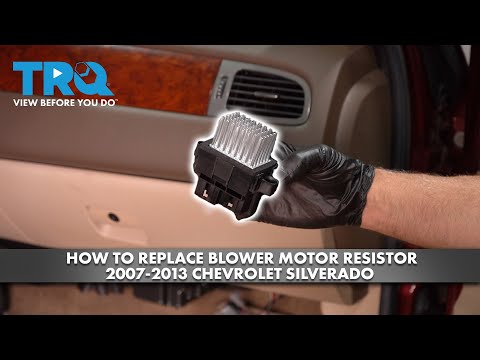
2007–2013 Silverado (GMT900)
- High-Risk Resistor: Located behind the driver’s side dash and prone to overheating.
- Fix: Replace resistor and connector. Use a heat-resistant harness upgrade.
- Fuse: 40A in the under-hood box (Fuses 76/77).
2014–2021 Silverado
- Resistor Location: Near the blower motor under the passenger side.
- Dual-Climate Note: Uses a different resistor or control board. Verify part number.
- Motor Access: Often easier from under the hood.
Frequently Asked Questions About Chevy Silverado Fan Problems
What fuse controls the blower motor in a Chevy Silverado?
The blower motor circuit uses a 40-amp fuse located in the under-hood fuse box. Specifically, check Fuses 76 and 77. Some sources incorrectly list 50 amps, but the confirmed standard is 40A.
Why does my Silverado fan only work on high speed?
This is a classic symptom of a failed blower motor resistor pack. The high-speed setting bypasses the resistor entirely, so if only “High” works, the resistor is likely burnt out and needs replacement.
Can a bad blower motor resistor cause a fire?
Yes. A melted or overheating resistor pack is a known fire hazard in Silverados, especially 2007–2013 models. If you smell burning or see smoke from the vents, stop driving immediately and replace the resistor.
Where is the blower motor resistor located on a 2007–2013 Silverado?
On 2007–2013 GMT900 models, the resistor pack sits behind the driver’s side lower dash, tucked behind the fuse box compartment. You will need to remove some panels to access it.
Should I replace the blower motor and resistor at the same time?
Yes, it is strongly recommended. When one component fails, the other is usually under stress. Replacing both at once saves labor costs and prevents repeat failures down the road.
How do I know if my blower motor is bad?
Test voltage at the two-wire connector behind the glove box. If you read 12 volts with the fan switched on but the motor doesn’t spin, the blower motor is dead and needs replacement.
Key Takeaways for Fixing Your Chevy Silverado Fan
When your Chevy Silverado fan not working, start with the 40-amp fuse, then test voltage at the connector, and inspect the resistor pack closely. Over 80% of cases are resolved by replacing the resistor pack or blower motor, and often both at the same time. If you smell burning, stop driving immediately and address the resistor before anything else.
Your next step: grab a digital multimeter and a flashlight, then start with the fuse box. Most Silverado fan issues take less than an hour to diagnose with basic tools, and the repairs are well within reach of a confident DIYer.