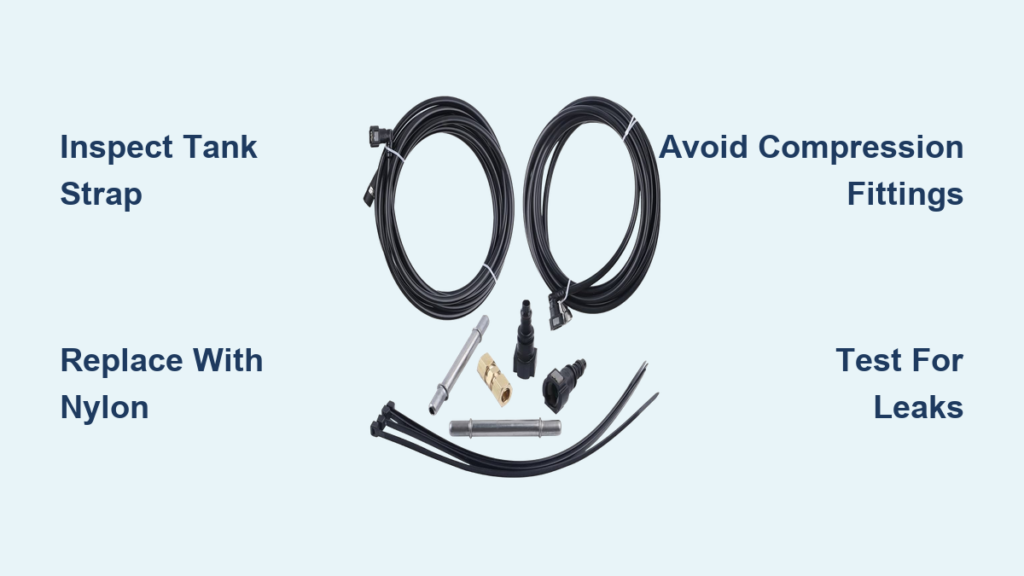
A rusty fuel line can stop your Chevrolet Silverado dead in its tracks. Models from 1999 to 2010 are especially prone to corroded steel lines, brittle plastic fittings, and seized connectors. Because the fuel system runs at 50–60 psi, a weak repair can quickly turn into a fire hazard. Knowing the correct silverado fuel line repair approach protects both your truck and your wallet.
This guide breaks down how to spot failure points, choose the best repair method, and use the right materials. You will learn when to replace the full line with nylon, when a steel splice works, and how to avoid dangerous shortcuts like compression fittings.
Spot Common Fuel Line Failure Points on Your Silverado
Inspect the Rear Tank Strap Area
The rear tank strap is one of the most common failure zones. When the strap breaks or loosens, the fuel tank shifts and yanks the lines. This movement creates kinks, thin spots, or full ruptures, especially on the top feed line. Look for fuel residue, bulging sections, or visible cracks.
Check Plastic Fittings Near the Tank
Plastic quick-connect fittings near the sending unit become brittle after 15+ years. They often turn crusty and crack when touched. If a steel line is seized inside a plastic connector, do not force it. You risk damaging the fuel pump module. Instead, cut the line and use a splice kit designed for this exact issue.
Examine the Frame Rail Routing
Follow the driver’s side frame rail from the engine toward the rear axle. This section faces constant exposure to road salt, moisture, and debris. Look for flaking metal, deep pitting, or lines that flex under light pressure. If the steel is too thin, replacement is the only safe option.
Choose the Best Silverado Fuel Line Repair Method

Replace the Full Line with Nylon (Best for Heavy Rust)
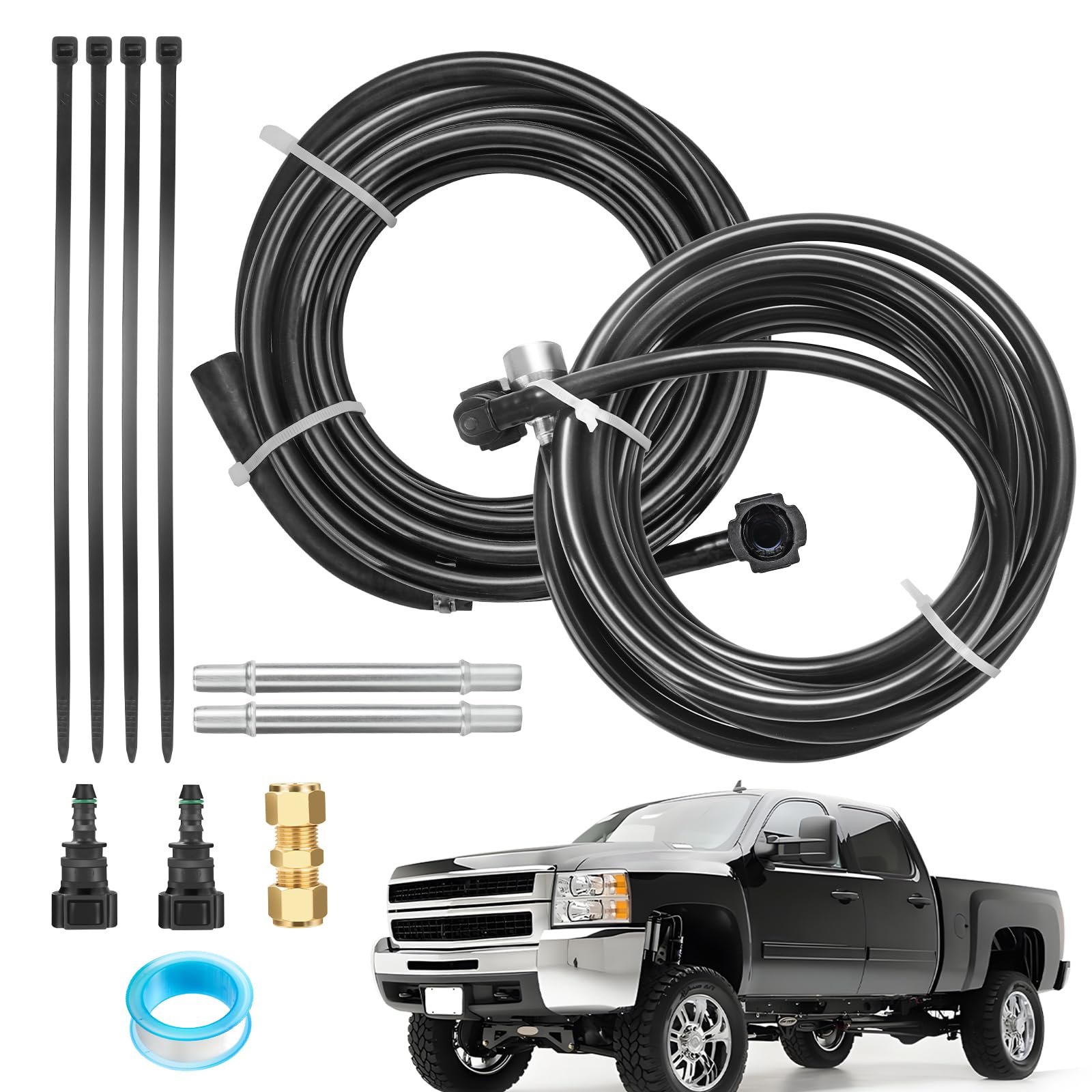
When corrosion affects multiple sections, full nylon replacement offers the most durable fix. Kits like FL-FG0340 or NFR0003 include roughly 15.3 feet of fuel-injection-rated nylon line that snaps into OEM connectors. You can cut the old lines near the engine and tank, then route the new nylon along the factory path. This method avoids dropping the tank and resists future rust. It fits 1999–2010 Silverados with 4.3L to 8.1L engines, though older kits exclude flex-fuel models.
Repair Steel Line with Double Flare (For Localized Damage)
If only a short section is damaged, a sectional steel repair can work. Cut out the rusted segment and install a new steel line with double-flared ends. Connect it using brass unions and matching line nuts. A double-flaring tool is required because single flares will not seal under pressure. This method preserves OEM integrity but demands precision.
Splice at the Tank with a Quick-Connect Kit (Avoid Tank Drop)
When the steel line is seized in the tank’s plastic connector, a splice kit saves hours of labor. The LinesToGo 3071-01 kit includes nylon segments, brass unions, and 90-degree quick connectors. Cut the old line just before the tank, attach the new union, and link the nylon piece to the tank side. Users report a perfect fit without removing the fuel tank.
Use Materials That Match 50–60 PSI System Pressure

Never Use Standard Compression Fittings
Compression fittings are unsafe for silverado fuel line repair. They are typically rated for less than 10 psi, while your fuel system runs at 50–60 psi. Under pressure, they leak or blow apart. Always use double-flared steel connections or OEM-style nylon lines.
Choose FI-Rated Rubber Hose Only
Rubber hose is acceptable only if rated for 100+ psi (Fuel Injection grade). Standard fuel hose fails under sustained pressure. Use it only for short splices or on the low-pressure evap line. Pair it with high-pressure clamps and ensure the host line has solid structure to grip.
Match Line Sizes and Connectors
Silverados use three main diameters:
– 3/8″ for fuel feed
– 5/16″ for return
– 1/4″ for evap (vapor)
The 3071-01 kit includes both 3/8″ and 5/16″ nylon lines with correct quick connectors. Verify sizes before cutting, and remember that 2004–2010 models often use factory nylon from the tank to mid-frame, then steel to the engine.
Access the Tank End Without Dropping the Tank
Lift the Bed for Better Visibility
Unbolting and lifting the truck bed is faster and safer than dropping the fuel tank. Support the bed with 2x4s on the tailgate and wheel wells. This gives you full access to the sending unit and tank-end connectors without wrestling with heavy components.
Cut and Splice If the Connector Is Seized
If the metal line will not release from the plastic connector, do not pry it loose. Use a tubing cutter to remove the seized section, then install a splice kit. The brass union attaches to the cut steel line, and the new nylon segment connects to the tank. This avoids fuel pump damage and eliminates tank removal.
Route and Secure the New Fuel Lines
Follow the Factory Path
Whether you install nylon or steel, follow the original routing. Stay clear of sharp edges, moving parts, and hot exhaust components. Nylon’s flexibility makes it easy to bend around frame rails. Secure the line with zip ties or OEM-style clamps every 12–18 inches.
Protect Against Chafing and Debris
Install rubber grommets where lines pass through frame holes. Add foam wrap or split loom in high-wear areas. This prevents abrasion and extends line life. Tighten clamps firmly but avoid crushing the nylon.
Test the Repair and Prevent Future Rust

Check for Leaks Before Starting the Engine
After installation, turn the key to “ON” without cranking to prime the system. Watch all connections for drips or misting. If you see a leak, depressurize the system by removing the fuel pump fuse and running the engine briefly. Re-tighten or re-flare as needed.
Run the Engine and Reinspect
Once dry, start the engine and let it idle. Visually trace the entire fuel line path. Look for vibrations, movement, or delayed leaks. Pay close attention to flared joints and splice points. Take a short test drive and recheck after shutdown.
Treat the Frame for Rust
Corrosion caused the original failure. Spray rust inhibitor on the frame rail, brackets, and surrounding metal. Products like Fluid Film or Rust-Oleum Rust Reformer work well on flaky areas. This protects not just the new line but the entire undercarriage.
Frequently Asked Questions About Silverado Fuel Line Repair
What is the best repair method for a rusted Silverado fuel line?
For extensive rust, full nylon line replacement (kits like FL-FG0340) is the most durable and easiest to install. It avoids tank removal and resists future corrosion.
Can I use compression fittings on a Silverado fuel line?
No. Compression fittings are rated for less than 10 psi, while the Silverado fuel system operates at 50–60 psi. They will leak or fail, creating a serious fire risk.
How do I disconnect a seized fuel line from the tank?
Do not force it. Cut the line just before the seized connector and use a splice kit like LinesToGo 3071-01. This avoids damaging the fuel pump module and eliminates the need to drop the tank.
What pressure rating does my Silverado fuel hose need?
Any rubber hose used must be Fuel Injection (FI) rated for at least 100 psi. Standard fuel hose will fail under the system’s 50–60 psi working pressure.
Should I lift the bed or drop the tank to access the fuel lines?
Lifting the bed is faster, safer, and provides better access. Dropping the tank is labor-intensive and risks damaging EVAP lines and the sending unit.
How much does a Silverado fuel line repair cost?
Aftermarket nylon kits cost around $57–$59, while OEM dealer parts run about $441. Sectional splice kits like 3071-01 are roughly $55. DIY repair saves significantly compared to shop labor.
Key Takeaways for a Safe Silverado Fuel Line Repair
A proper silverado fuel line repair comes down to three critical choices: the right method, the right materials, and the right testing. Full nylon replacement offers the best long-term value for rust-prone trucks. Double-flared steel repairs work well for localized damage, but compression fittings are never acceptable. Always use FI-rated components, match line sizes, and test every connection before driving.
Your next step is to inspect your truck’s fuel lines today, especially if it is a 1999–2010 model. Catching corrosion early lets you choose a splice kit instead of a full replacement. With the right parts and careful execution, you can restore your Silverado’s fuel system for thousands more miles.