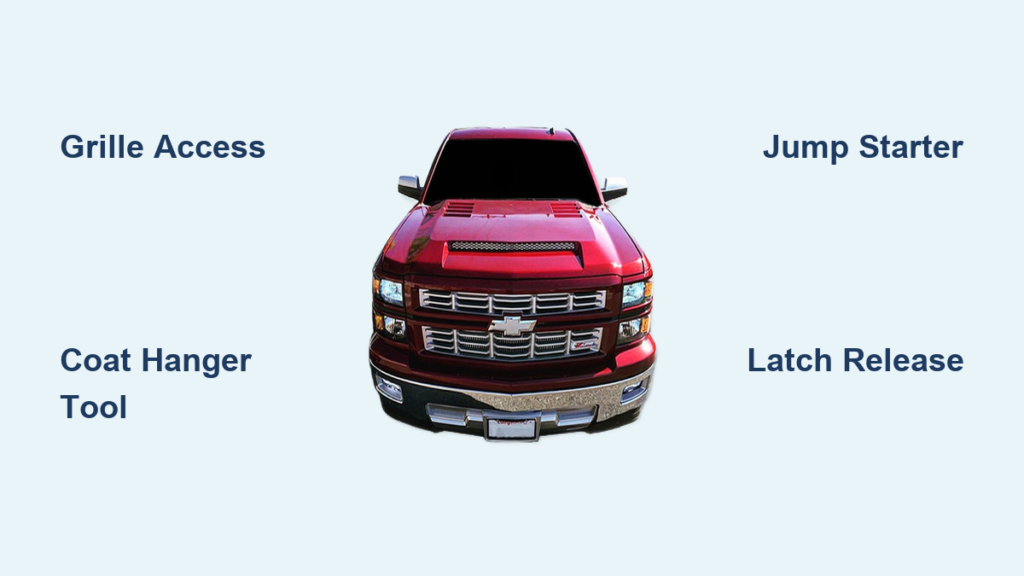
A dead battery, locked doors, and a hood that won’t budge is one of the most frustrating situations a Silverado owner can face. You’re stranded without engine access, the key fob is useless, and the interior release lever is completely out of reach. This scenario hits hard when aftermarket accessories like rock lights drain the battery overnight, leaving you locked out of your own truck.
The good news is that learning how to open a Silverado hood from outside is simpler than most people think. With the right tools and a bit of patience, you can bypass the interior release entirely and pop the hood on virtually any model from 1998 to 2023. This guide walks you through proven techniques used by mechanics and everyday drivers, from the classic coat hanger method to modern grille access strategies.
Standard Hood Release Procedure (When You Have Access)
Before jumping into emergency methods, confirm the normal process works. If you can reach the cabin, this two-step approach gives you reliable hood access every time.
Locate the Interior Release Lever
Sit in the driver’s seat and look under the dashboard, just left of the steering column. You’ll find a small black lever marked with a hood icon. Pull it firmly upward. A loud pop means the primary latch released successfully. If nothing happens, suspect a cable failure or low battery voltage on newer models.
Access the Secondary Latch Outside
Walk to the front of the truck. The hood should be slightly raised. Slide your hand under the center front edge and feel for a metal lever. Push it to the right (passenger side) while lifting the hood. Once disengaged, lift fully and secure with the prop rod. The battery sits on the right side of the engine bay, ready for jump-starting or inspection.
Close the Hood Safely
To close, lower the hood from about 12 inches above the latch. Use firm pressure near the emblem to engage both latches. Never lower it gently; it won’t lock. Walk away only after confirming the hood sits flush and secure.
Emergency Method: Dead Battery and Locked Doors
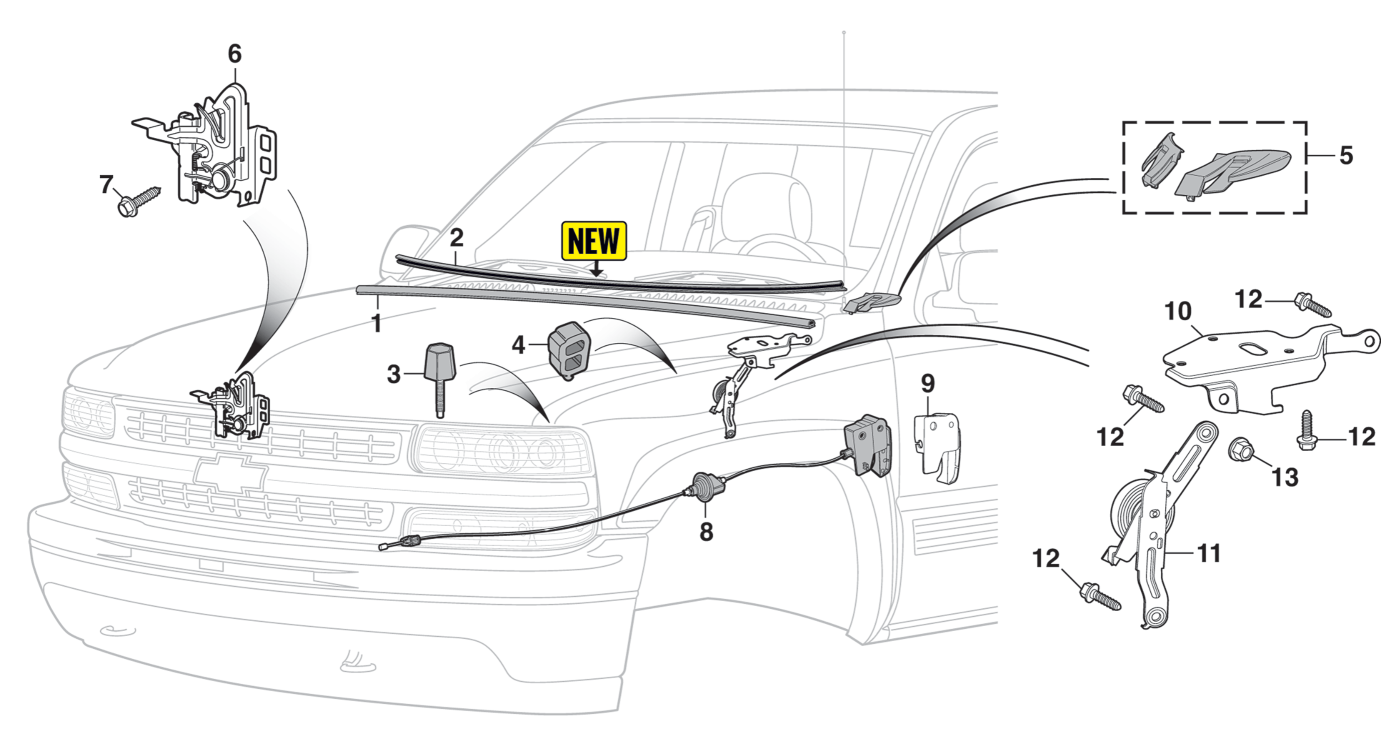
When power is gone and doors won’t unlock, interior access becomes impossible. These external techniques can save you from an expensive tow.
Apply 12V Power to the Starter Terminal
Some Silverados use an electric solenoid to release the hood latch. Without power, the latch won’t fire. Restoring voltage externally can solve this.
Jump Through the Alternator or Starter
Grab jumper cables or a portable power pack. Connect the red clamp to the positive terminal on the alternator or the large bolt on the starter solenoid. Attach the black clamp to a clean metal surface on the engine block for grounding. This sends 12V into the system. Wait 10 to 15 seconds, then try the key fob or pull the interior lever. Sometimes this brief charge powers the latch enough to pop the hood.
Pro Tip: Even if the key fob doesn’t unlock doors, the hood circuit may activate momentarily. Have someone stand at the front ready to lift if it pops.
Reach Through the Grille with a Tool
This is the most reliable method when electronics fail. You’re bypassing the cable entirely and triggering the latch directly.
Gather Essential Tools
- Long, flexible rod: An unbent coat hanger, slim jim, or 18-inch screwdriver
- Needle-nose pliers: For grabbing or pushing small components
- Flashlight: Essential for visibility through the grille slats
Insert the Tool from the Driver’s Side
Face the truck and position yourself on the driver’s side of the grille. Slide your tool through the horizontal slats, angling toward the center where the hood latch sits. Use the flashlight to locate the hood release cable where it connects to the latch assembly. Look for a thin metal wire ending in a lever arm.
Push the Cable Toward the Passenger Side
Once you feel or see the cable end, push it firmly to the right (passenger side). This mimics pulling the interior lever. You may need to wiggle or apply steady pressure. When it works, the hood pops up immediately.
User Confirmed: Drivers of 1998 and 2014 Silverados report success using a coat hanger or long screwdriver. One user noted, “After 10 minutes of fiddling, a firm push to the right and pop, I was in.”
Fix Stuck or Frozen Latches
Cold weather, rust, or lack of use can freeze the latch solid. Even with a working cable, the mechanism won’t budge without extra persuasion.
Try the “Chevy Hood Bop” Method
Have one person apply tension by holding the interior lever (if accessible) or gently pushing the cable through the grille. While they maintain pressure, another person strikes the hood firmly with a fist or rubber mallet directly over the latch (center, just behind the emblem). Vibration breaks ice or frees a corroded pivot point. Some users swear by a 3-pound maul hammer for stubborn cases, but expect minor dents.
Warning: Only use this method as a last resort. It can damage paint or dent the hood.
Lubricate Before It Freezes
Prevention beats emergency fixes. Spray silicone lubricant or white lithium grease on the latch and cable connection every six months. Avoid WD-40 for long-term use since it attracts dust and dries out over time.
Handle a Snapped Release Cable

If the interior lever pulls but nothing happens and there’s zero resistance, you likely have a broken cable.
Diagnose the Break
A snapped cable produces no sound, no pop, and no movement. The break usually occurs near the interior lever or at the latch connection point.
Bypass the Cable Entirely
Since the cable is dead, you must move the latch mechanism directly.
Use a Long Screwdriver
Insert it through the grille and aim for the latch pin or locking lever, not the cable itself. Push or pry it sideways to the right to release the catch. You’re simulating the mechanical action the cable would have performed.
Combine Tools for Better Grip
If the lever is hard to reach, use needle-nose pliers to grab and pull the latch arm while guiding with a flashlight. Patience pays here; this can take 5 to 15 minutes depending on grille tightness.
Force a Gap with Inflatable Bags
Some modern Silverados have tight grilles or sealed fronts that block tool access. When you can’t reach the latch, create space.
Use a Lockout Inflation Kit
Available at Harbor Freight or auto shops, these kits include an inflatable air bag (rubber bladder) and a hand pump or CO₂ cartridge.
Insert and Inflate
Slide the deflated bag between the hood and frame near the latch. Position it slightly off-center to avoid damaging sensors. Pump it up slowly. As it expands, it lifts the hood by 1 to 2 inches, enough to slip in a long screwdriver or even your hand.
Success Tip: Once a gap exists, you can see the latch clearly and manipulate it directly. This method avoids damaging the grille or paint.
Troubleshoot by Model Year

Not all Silverados share the same failure modes. Knowing your generation helps you choose the right fix.
1989–1998 Models: Corrosion Prone
Older trucks suffer from rusted cables and latches. The coat hanger method is legendary here. Push the cable through the grille for a simple and effective fix.
2007–2013 Models: Cable Snaps Common
These years saw weak cable housings. If the interior lever feels loose, the cable is likely broken. Use the direct screwdriver push on the latch lever and skip the cable entirely.
2014+ Models: Electronics Dependence
Newer trucks often have electric latch assist or rely on power for key fob unlock. A dead battery means total lockout. Jump the starter terminal first; if that fails, go straight to grille access.
Prevent Future Lockouts
Avoid the stress altogether with simple maintenance habits.
Check Cable Tension Regularly
Open the hood monthly and pull the interior lever to listen for the pop. If it’s slow or weak, adjust or replace the cable. A loose cable won’t release the latch cleanly.
Upgrade Your Key Fob Battery
A dying fob battery can leave you locked out even with a healthy vehicle battery. Replace it every 18 to 24 months and test remote functions monthly.
Install Fused LED Accessories
Aftermarket lights are a top cause of dead batteries. Use LED light bars with built-in fuses and switches. Wire them to a switched circuit so they turn off with the ignition. Tuck wires under license plate brackets to prevent chafing.
Tools and Methods Quick Reference

| Problem | Best Tool | Action | Success Rate |
|---|---|---|---|
| Dead battery, locked doors | Jumper cables | Apply 12V to alternator/starter | High |
| Frozen cable | Screwdriver + flashlight | Push cable through grille | Very High |
| Snapped cable | Long screwdriver or pliers | Manipulate latch lever directly | High |
| No grille access | Inflatable lockout bag | Create hood gap | Moderate |
| Stuck latch | Hammer + helper | Vibrate while pushing release | Moderate to High |
Frequently Asked Questions About Opening a Silverado Hood from Outside
Can you open a Silverado hood with a dead battery?
Yes. Even with a completely dead battery, you can open the hood by reaching through the grille with a long tool like a screwdriver or coat hanger. Push the release cable or latch lever toward the passenger side to trigger the mechanism manually.
Where is the hood release on a Chevy Silverado?
The primary hood release lever sits inside the cabin, under the dashboard on the driver’s side, just left of the steering column. The secondary safety latch is located under the front center edge of the hood and must be pushed to the right to disengage.
Will a dead battery prevent the hood from opening?
On newer Silverados with electric latch assist, a dead battery can prevent the hood from releasing electronically. However, the mechanical latch can still be triggered manually through the grille using basic tools.
How do you open a frozen Silverado hood?
Apply tension to the release cable (either through the grille or via the interior lever if accessible) while another person strikes the hood firmly over the latch area. The vibration breaks ice or frees corroded pivot points. Lubricating the latch beforehand prevents this issue.
What tools do I need to open a Silverado hood from outside?
At minimum, you need a long flexible tool (coat hanger or 18-inch screwdriver), a flashlight, and optionally needle-nose pliers. For sealed grilles, an inflatable lockout bag from an auto parts store works well.
Key Takeaways for Opening Your Silverado Hood from Outside
Knowing how to open a Silverado hood from outside turns a stressful lockout into a manageable problem. The grille access method is your most reliable option for modern models, while older trucks respond well to a simple coat hanger and some elbow grease. Always carry a flashlight and a long screwdriver in your truck for emergencies. If you’re unsure or risk damaging the vehicle, call roadside assistance. But with these techniques in your back pocket, you’re no longer at the mercy of a locked hood.